

10 How to Deep Clean Your Dishwasher
A dishwasher can look spotless from the outside while collecting food particles, grease, mineral deposits, and grime in places you rarely see. The filter, spray arms, door edges, and rubber seals can quietly become some of the dirtiest parts of the appliance. Over time, that buildup can contribute to unpleasant odors, cloudy dishes, and less effective cleaning.
The good news is that deep cleaning a dishwasher does not have to mean spending an entire afternoon scrubbing. A few household cleaning supplies, a little patience, and a simple routine can make a noticeable difference. The trick is knowing which areas deserve attention and cleaning them in the right order.
If you’re anything like me, the dishwasher is one of those appliances you expect to clean everything else without thinking much about cleaning it yourself. But once you realize how much residue can accumulate beneath the rack and around the filter, regular maintenance starts to make a lot more sense.
This guide walks through 10 practical ways to refresh your dishwasher from top to bottom. You’ll learn how to clean the filter, spray arms, racks, seals, exterior, and hidden areas while also dealing with hard-water deposits and lingering smells.
Before starting, always check your dishwasher manufacturer’s care instructions. Some models have removable parts or specific cleaning recommendations, and those instructions should take priority.
Table of Contents

1. Clear The Interior
Start with an empty dishwasher so every surface and removable component is accessible.
2. Clean The Filter
Remove trapped food particles and greasy residue from one of the most important cleaning components.
3. Wash The Spray Arms
Clear blocked spray holes so water can circulate more effectively during cycles.
4. Scrub The Door Seals
Clean the rubber gasket and surrounding edges where moisture and grime often collect.
5. Refresh The Racks
Remove residue and buildup from the racks, wheels, and hard-to-reach corners.
6. Remove Mineral Buildup
Tackle white, chalky deposits caused by hard water and frequent dishwasher use.
7. Clean The Drain Area
Carefully remove debris around the bottom of the tub and drain opening.
8. Run A Cleaning Cycle
Use an appropriate dishwasher cleaner to freshen the interior and loosen remaining residue.
9. Polish The Exterior
Finish by cleaning the controls, handle, door, and exterior surfaces.
10. Maintain It Regularly
Use a simple maintenance routine to keep the dishwasher cleaner between deep cleans.
1. Clear The Interior
Quick Benefits
- Makes hidden grime easier to spot
- Gives you access to every dishwasher component
- Prevents debris from being overlooked
- Makes the deep-cleaning process more efficient
- Creates a clean starting point
Why It Works
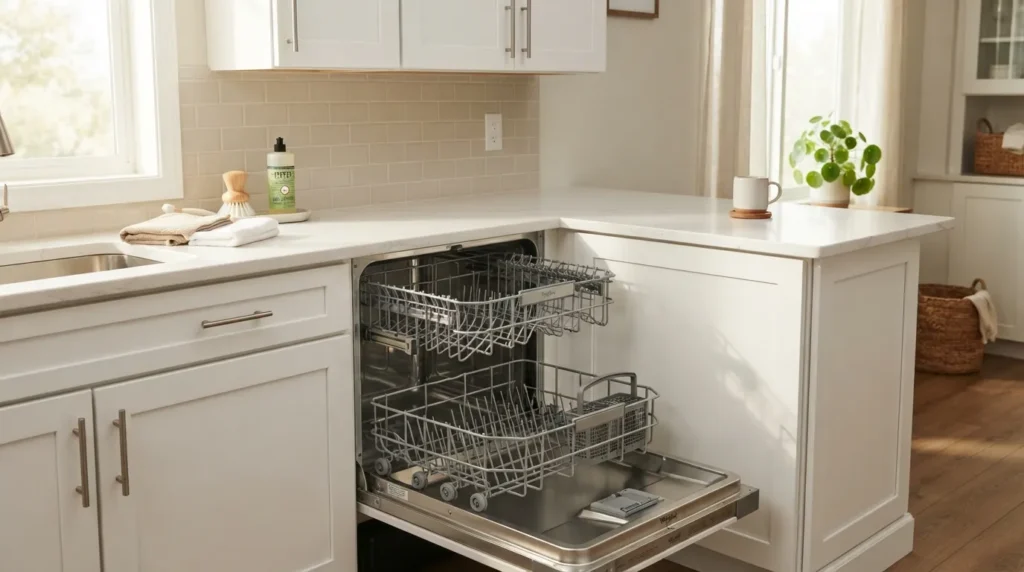
The first step is surprisingly important: empty the dishwasher completely. Plates, utensils, cookware, and even the removable racks can hide food particles and residue, making it difficult to see what actually needs cleaning.
With the dishwasher empty, inspect the bottom of the tub, corners, door edges, and area around the drain. Look for pieces of food, paper labels, broken glass, or other debris that may have fallen beneath the rack. A mistake many homeowners make is immediately running a cleaning cycle without removing visible debris first. A machine-cleaning product cannot replace basic physical cleaning.
Take a few minutes to wipe loose grime away with a damp microfiber cloth. If you notice standing water, unusual debris, or anything that appears damaged, consult the appliance manual before continuing.
How To Style It
For this first step, think less about styling and more about setting up an efficient cleaning station. Pull the bottom rack out and place removable pieces somewhere with enough room to clean them safely.
Keep a microfiber cloth, soft brush, old toothbrush, small bowl, and mild dish soap nearby. If your dishwasher has removable filters or spray arms, place those components on a clean towel after removing them.
Avoid using abrasive scrubbers on stainless steel, plastic, coated surfaces, or delicate components. The goal is to remove buildup without scratching the appliance.
For safety, turn the dishwasher off before working around internal components. If your owner’s manual recommends disconnecting power for certain maintenance tasks, follow those instructions.
2. Clean The Filter
Quick Benefits
- Removes trapped food particles
- Helps reduce unpleasant odors
- Supports better dishwasher performance
- Prevents residue from circulating
- Keeps the bottom of the tub cleaner
Why It Works
The dishwasher filter is one of the first places worth checking when dishes are coming out less clean than expected. Its job is to catch food particles and debris rather than allowing them to repeatedly circulate through the machine.
Over time, that material can become greasy and unpleasant. A dirty filter can also contribute to odors, especially when food residue remains damp between cycles.
Most modern dishwashers have a removable filter located near the bottom of the tub, although designs vary considerably. Before removing it, check the owner’s manual so you know how the locking mechanism works. Do not force a component that seems stuck.
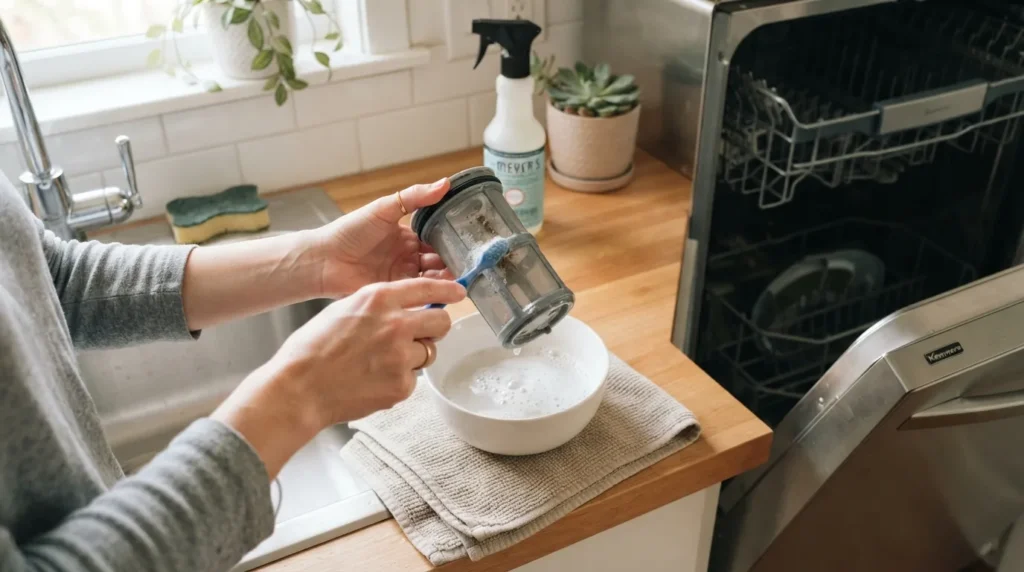
Once removed, rinse the filter under warm running water. Use a soft brush and a small amount of dish soap if needed. Pay attention to the mesh and surrounding grooves where particles can become lodged.
How To Style It
Place the filter in a sink or shallow basin rather than trying to clean it inside the dishwasher. Warm water helps loosen greasy residue, while a soft toothbrush can reach the small openings.
Do not use a stiff wire brush or aggressive abrasive cleaner on delicate mesh. A damaged filter may not function properly.
After cleaning, rinse away all soap and inspect the filter under good lighting. If food particles remain trapped, gently brush them away rather than scraping aggressively.
Before reinstalling it, wipe the area where the filter sits. Make sure the filter is properly locked back into position according to the manufacturer’s instructions.
If your dishwasher has a filter that requires a different cleaning method, follow the appliance manual instead of assuming all filters work the same way.
3. Wash The Spray Arms
Quick Benefits
- Helps improve water distribution
- Clears blocked spray holes
- Removes mineral deposits
- Prevents food particles from lingering
- Supports more consistent cleaning
Why It Works
Spray arms are easy to overlook because they do their job quietly beneath and between the racks. Small food particles and mineral deposits can collect inside the spray openings, gradually restricting water flow.
If several spray holes are blocked, water may not reach dishes evenly. You might notice this as leftover food on certain plates or glasses even though the dishwasher appears to be operating normally.
Remove the spray arms only if your model allows it and the owner’s manual explains how. Some are designed to lift off, while others have a different release mechanism.
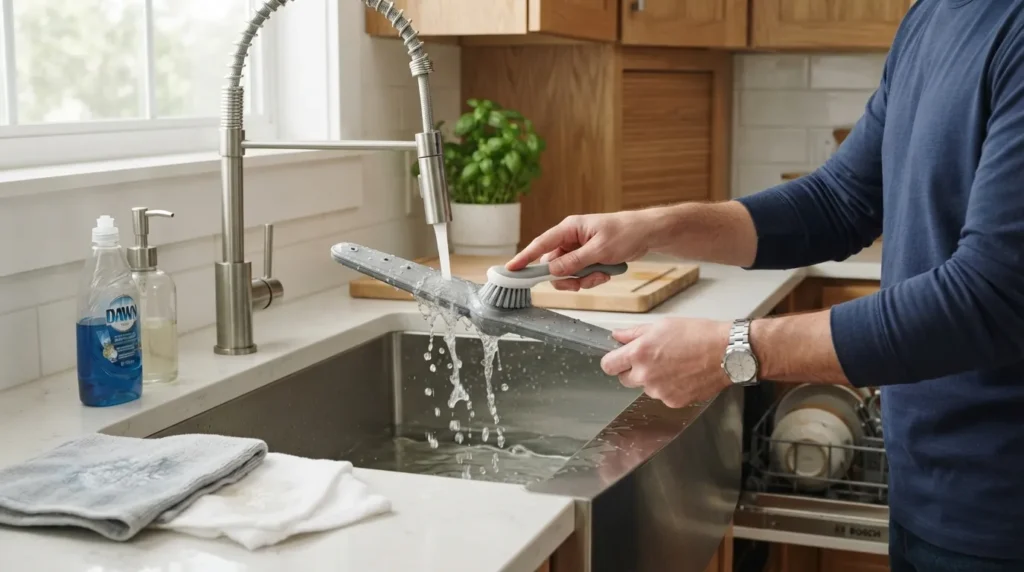
Rinse removable spray arms under warm water. Turn them gently while rinsing so water can move through the openings. A soft brush can help remove residue around the holes.
How To Style It
For a thorough cleaning, place removable spray arms in the sink and inspect every opening. If you see mineral buildup, soak the component according to the manufacturer’s recommendations.
Avoid pushing sharp objects deeply into spray holes. A toothpick or similarly delicate tool may be tempting, but it can damage openings or push debris farther inside.
Instead, start with warm water and gentle brushing. Shake the spray arm carefully after rinsing to see whether water flows freely through it.
Wipe the mounting area inside the dishwasher before reinstalling the arm. Once everything is back in place, rotate the spray arm gently by hand to confirm that it can move freely without hitting the rack or other components.
4. Scrub The Door Seals
Quick Benefits
- Removes trapped grime
- Reduces musty smells
- Cleans hidden moisture pockets
- Helps keep the door area fresh
- Reaches areas missed by normal cycles
Why It Works
The rubber gasket around the dishwasher door does not receive the same water exposure as the main interior. That makes it an easy place for grease, food residue, and moisture to accumulate.
The folds and corners can be particularly troublesome. Even when the inside of the dishwasher looks clean, running a finger along the gasket may reveal a layer of residue.
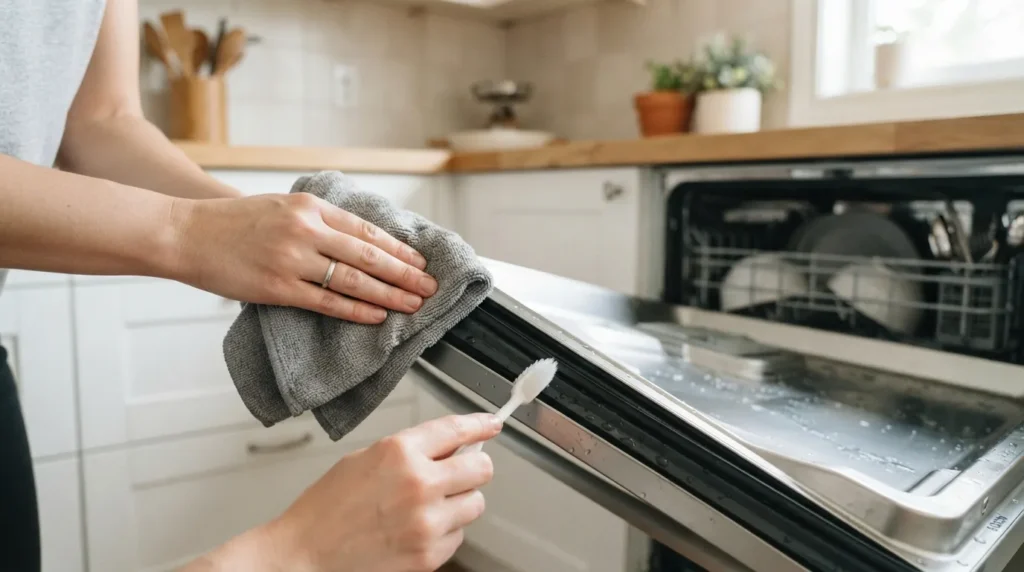
Use a soft microfiber cloth dampened with warm water to wipe the gasket. For stubborn grime, use a small amount of mild dish soap and rinse the cloth thoroughly afterward.
Avoid harsh chemicals unless the manufacturer specifically approves them. Rubber and synthetic seals can react poorly to certain cleaning products.
How To Style It
Open the dishwasher door fully and inspect the entire perimeter. Pay special attention to the bottom corners and the area where the gasket meets the inner door.
An old soft toothbrush can help loosen grime in narrow seams. Work gently rather than pulling or stretching the rubber.
Wipe the gasket with a clean damp cloth afterward to remove soap residue. Then dry the area with a microfiber towel.
While you’re there, inspect the door edge and surrounding frame. These surfaces can collect drips and food particles that never make it into the wash chamber.
Keeping the seal clean is a small task, but it is one of those maintenance steps that can make the appliance feel noticeably fresher.
5. Refresh The Racks

Quick Benefits
- Removes sticky residue
- Cleans rack corners and supports
- Keeps dishes sitting properly
- Helps prevent buildup on wheels
- Makes the entire interior feel cleaner
Why It Works
Dishwasher racks are constantly exposed to food residue, detergent, minerals, and hot water. Their surfaces may develop cloudy spots or sticky buildup, particularly around the corners and wheel assemblies.
Start by removing the racks if your dishwasher allows it. This gives you much better access to the bottom of the tub and makes the rack itself easier to inspect.
Rinse the rack with warm water and use a soft sponge or microfiber cloth to remove residue. For stubborn spots, allow warm soapy water to sit on the area briefly before wiping.
Pay attention to the wheels. Food particles and grime can accumulate around them and affect how smoothly the rack moves.
How To Style It
If you have enough sink or counter space, clean the racks separately. This simple change can make deep cleaning much easier because you’re not working around bulky shelves.
Use mild dish soap and warm water for most rack surfaces. A soft toothbrush works well around wheel housings, rack supports, and narrow joints.
Inspect the coating on metal racks while cleaning. If you see chips or exposed metal, check your manufacturer’s recommendations for repair or replacement options.
Before reinstalling the racks, rinse them thoroughly and dry any excess water. Slide each rack back into position and check that the wheels roll smoothly.
A clean rack also makes loading easier because dishes sit more securely and the entire dishwasher looks more orderly.
6. Remove Mineral Buildup

Quick Benefits
- Reduces chalky white residue
- Helps refresh cloudy interior surfaces
- Addresses hard-water deposits
- Improves the appearance of the tub
- Keeps buildup from becoming harder to remove
Why It Works
Hard water contains minerals that can leave deposits on dishwasher surfaces. Over time, you may notice white or cloudy marks around the tub, heating area, racks, spray arms, or door.
These deposits are not necessarily a sign that your dishwasher is dirty. They can be the result of repeated exposure to mineral-rich water.
A dishwasher-safe descaling or cleaning product can be useful for this problem, but the safest choice depends on your appliance and manufacturer’s recommendations. Check the manual before using acids, descalers, or household cleaning mixtures.
If your manufacturer permits an appropriate descaling method, follow the product directions carefully. Never mix cleaning chemicals together.
How To Style It
For a Pinterest-friendly cleaning routine, keep this step simple and organized. First identify the areas where mineral deposits are visible. Then choose a dishwasher-safe cleaner specifically designed for the job.
Avoid experimenting with strong homemade mixtures when you are unsure how they may affect seals, metal parts, or other components.
If you live in an area with hard water, consider making mineral buildup part of your regular maintenance routine instead of waiting until the deposits become thick.
Wipe visible residue after the cleaning cycle and inspect the spray arms and door edges again.
One practical habit is to look at your glasses and dishes for signs of persistent cloudiness. If the dishwasher is clean but glassware remains cloudy, water hardness, detergent choice, water temperature, or rinse-aid use may also be worth investigating.
7. Clean The Drain Area
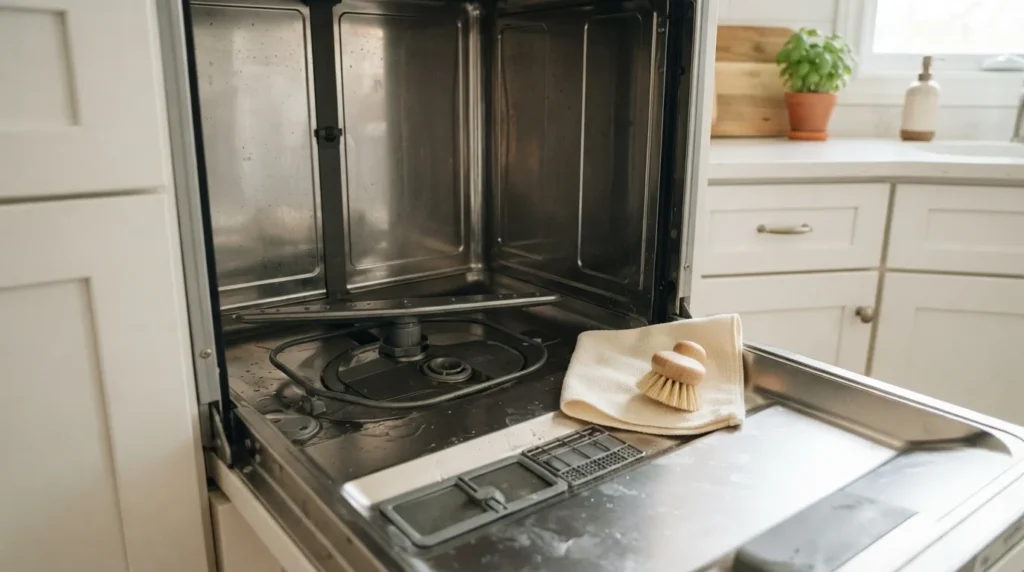
Quick Benefits
- Removes hidden food debris
- Reduces unpleasant odors
- Keeps the bottom of the tub cleaner
- Helps identify unusual buildup
- Complements filter cleaning
Why It Works
The drain area deserves attention because food particles and debris can collect around it even when the filter is reasonably clean. This area sits at the bottom of the dishwasher, where moisture and residue naturally gather.
After removing the bottom rack and following the manufacturer’s instructions, inspect the drain area carefully. Remove visible debris with a paper towel or soft cloth.
Be especially cautious if you see broken glass. Never reach into an area you cannot safely inspect. Use appropriate tools or follow the manufacturer’s guidance if there is a risk of sharp objects.
Do not disassemble the drain assembly unless the appliance instructions specifically explain how to do so.
How To Style It
A small flashlight can make this part of the process easier because the bottom of a dishwasher can be surprisingly dark.
Wipe accessible surfaces with a damp microfiber cloth. If greasy residue is present, mild dish soap can help on compatible surfaces.
After cleaning, check that the area is free from loose debris and that nothing appears to be blocking the drain.
If your dishwasher repeatedly leaves standing water after cycles, that is different from ordinary residue and may indicate a drainage problem. In that situation, consult the owner’s manual or a qualified appliance professional rather than repeatedly pouring cleaning products into the machine.
8. Run A Cleaning Cycle

Quick Benefits
- Refreshes the dishwasher interior
- Loosens remaining residue
- Reaches areas you cannot scrub easily
- Helps address lingering odors
- Finishes the physical cleaning process
Why It Works
Once you have manually removed debris from the filter, drain area, seals, racks, and spray arms, a dishwasher-cleaning cycle can serve as the finishing step.
Dishwasher cleaning products are designed to work inside the appliance and can help loosen grease, residue, and mineral buildup. Choose a product that is specifically labeled for dishwasher use and follow its directions.
Do not automatically substitute laundry detergent, regular dish soap, or random household cleaners. Products that create excessive suds can cause problems inside a dishwasher.
Run the cleaning cycle according to your appliance and cleaner instructions. An empty dishwasher is generally required for this type of maintenance cycle unless the product directions say otherwise.
How To Style It
Before starting the cycle, make sure all removable components are correctly installed. Check the filter, spray arms, and racks one more time.
Place the dishwasher cleaner exactly where the manufacturer or cleaner directions recommend. Some products are designed for the detergent compartment, while others have different instructions.
Select the appropriate cycle based on the product directions and your dishwasher’s manual.
When the cycle finishes, open the door and allow the interior to dry if appropriate. A quick inspection at this point can reveal any areas that still need attention.
If a strong chemical smell remains, follow the cleaner’s instructions for ventilation or additional rinsing rather than adding another product.
9. Polish The Exterior

Quick Benefits
- Removes fingerprints and smudges
- Freshens the handle and controls
- Completes the deep-cleaning routine
- Keeps stainless steel looking maintained
- Improves the overall appearance of the appliance
Why It Works
A dishwasher can be perfectly clean inside while the exterior shows fingerprints, food splashes, and water spots. Finishing with the outside gives the appliance that satisfying freshly cleaned appearance.
The correct cleaning method depends on the exterior material. Stainless steel, painted surfaces, plastic controls, and glass panels may require different care.
For many surfaces, a soft microfiber cloth slightly dampened with water is a good starting point. If your manufacturer recommends a specific cleaner, use that product according to the instructions.
Never spray liquid directly onto electronic controls or openings. Spray or apply the cleaner to the cloth instead when appropriate.
How To Style It
Start with the handle because it receives frequent contact throughout the day. Then wipe the control panel, door edges, and front surface.
For stainless steel, wipe in the direction of the grain rather than using random circular motions. This can produce a more uniform appearance.
Dry the surface with a clean microfiber towel to reduce streaks and water spots.
Don’t forget the area beneath the dishwasher door. It is easy to overlook because it is hidden when the door is closed, but crumbs and dust can accumulate there.
The final result should be clean rather than excessively glossy. Avoid heavy product buildup that can attract dust or leave a slippery residue around the controls.
10. Maintain It Regularly

Quick Benefits
- Prevents heavy buildup
- Makes future deep cleaning easier
- Helps control odors
- Keeps filters from becoming neglected
- Protects your cleaning investment
Why It Works
The easiest dishwasher to deep clean is the one that receives small amounts of maintenance throughout the year. You don’t necessarily need to perform a major cleaning every week. Instead, divide the work into manageable tasks.
Check the filter periodically based on your manufacturer’s recommendations and how frequently you use the dishwasher. Wipe the door gasket when you notice residue. Remove obvious food particles from the bottom of the tub instead of allowing them to accumulate.
If you regularly wash heavily soiled cookware, your dishwasher may need more frequent attention than a household that mostly washes lightly used plates and glasses.
Another useful habit is leaving the dishwasher door slightly open after a completed cycle when appropriate and safe, allowing moisture to escape. Follow your appliance manufacturer’s guidance, particularly if you have children or pets in the home.
How To Style It
Turn dishwasher maintenance into a small household routine rather than a major project.
For example, you might inspect the filter regularly, wipe the gasket during your normal kitchen cleaning, and schedule a dishwasher-cleaning cycle according to the appliance manual and your usage.
Keep your dishwasher-safe cleaning supplies together in one easy-to-find location. A microfiber cloth and soft brush can be enough for many routine jobs.
If you notice persistent odors, cloudy dishes, standing water, unusual noises, or poor cleaning performance despite proper maintenance, investigate the underlying issue rather than simply cleaning more often.
Regular care should make the appliance easier to live with, not become another complicated household chore.
Frequently Asked Questions
How often should you deep clean a dishwasher?
The ideal schedule depends on how often the dishwasher is used, what you wash, your water quality, and the manufacturer’s recommendations. Many households benefit from checking the filter regularly and performing a more thorough cleaning when buildup or odors appear. If you frequently wash heavily soiled cookware, more frequent maintenance may be useful.
Can you use vinegar to clean a dishwasher?
Vinegar is commonly suggested as a household cleaning method, but it is not automatically appropriate for every dishwasher. Repeated exposure to acidic substances may affect certain rubber components or finishes. Check the appliance manufacturer’s instructions before using vinegar or another homemade cleaning solution.
Why does my dishwasher smell bad after cleaning?
Persistent odors can come from food debris, the filter, drain area, gasket, standing water, or buildup in areas that are difficult to reach. Cleaning the filter and accessible drain area is a good starting point. If the odor continues despite proper cleaning, consult the manufacturer’s troubleshooting guidance.
Should the dishwasher filter be cleaned every time?
Not necessarily. The appropriate frequency depends on the appliance and how heavily it is used. However, checking the filter regularly helps prevent food debris from accumulating. If you frequently wash dishes with large amounts of food residue, inspect the filter more often.
Why are my glasses cloudy after washing?
Cloudy glassware can have several causes, including hard water, detergent residue, water temperature, or mineral deposits. Dishwasher cleaning alone may not solve the problem. Check your water hardness, detergent instructions, rinse-aid recommendations, and dishwasher settings before assuming the appliance itself is dirty.
Can you run a dishwasher cleaning cycle with dishes inside?
Most dedicated dishwasher-cleaning products are intended to be used with an empty dishwasher, but always follow the specific product instructions. Running a cleaning product with dishes inside can expose cookware and glassware to chemicals or temperatures that are not intended for normal dishwashing.
How do you know when a dishwasher needs deep cleaning?
Common signs include unpleasant odors, visible food debris, residue around the filter or door gasket, cloudy interior surfaces, and dishes that are not coming out as clean as they once did. These signs do not always indicate a dirty dishwasher, though, so persistent performance problems may require troubleshooting or professional service.
Conclusion
A dishwasher does a lot of work for your household, but it still needs occasional attention of its own. Food particles can collect in the filter and drain area, mineral deposits can build up on internal surfaces, and moisture can leave residue around the door gasket and other overlooked areas.
The most effective approach is not to attack every part of the appliance with harsh cleaners. Instead, work methodically. Empty the dishwasher, remove accessible debris, clean the filter, inspect the spray arms, wipe the seals, refresh the racks, address mineral buildup appropriately, and finish with a dishwasher-safe cleaning cycle.
In my experience, the biggest difference comes from making these tasks part of a simple maintenance routine rather than waiting until the appliance develops a strong odor or noticeable performance problem.
You don’t have to tackle everything at once, either. Start with the filter and door seal, then work through the remaining areas when you have time. Once you’ve established a routine, keeping the dishwasher fresh becomes much less of a chore.
A clean dishwasher is one small part of a well-maintained kitchen, and those small habits can make everyday household routines feel easier and more manageable.
Related Articles
- How to Clean a Washing Machine Naturally
- 10 Kitchen Cleaning Tips That Save Time
- How to Organize a Small Kitchen
- 15 Easy Home Cleaning Habits for a Fresh House
- How to Deep Clean Your Kitchen in One Weekend