
10 How to Clean Your Oven Naturally
A dirty oven can turn an otherwise clean kitchen into a source of frustration. Grease splatters collect around the walls, baked-on food darkens the bottom, and the oven door gradually loses its clear appearance. The longer those residues sit, the harder they can feel to remove.
The good news is that a deep oven clean does not always require a strong commercial oven cleaner. Several simple household ingredients can help loosen grease, soften baked-on food, and freshen the interior with less harsh chemical odor. Baking soda, dish soap, hot water, steam, and vinegar are useful options for different types of oven messes.
In my experience, the biggest difference comes from softening the grime before scrubbing. Trying to scrape away completely dry, hardened grease often takes more effort and can leave scratches. A little soaking time can make the same job much easier.
This guide shares 10 practical ways to clean your oven naturally, from a basic baking soda paste to steam cleaning and targeted methods for the racks, glass door, and stubborn grease. Each approach works best for a particular type of mess, so you can choose the method that fits your oven rather than treating every surface the same way.
Before starting, always check your oven manufacturer’s care instructions. Some interior finishes, heating elements, self-cleaning features, and specialty surfaces require specific cleaning methods.
Whether you are preparing for a seasonal kitchen reset or simply dealing with months of accumulated splatters, these ideas can help you get a cleaner oven using simple supplies already found in many homes.
Table of Contents
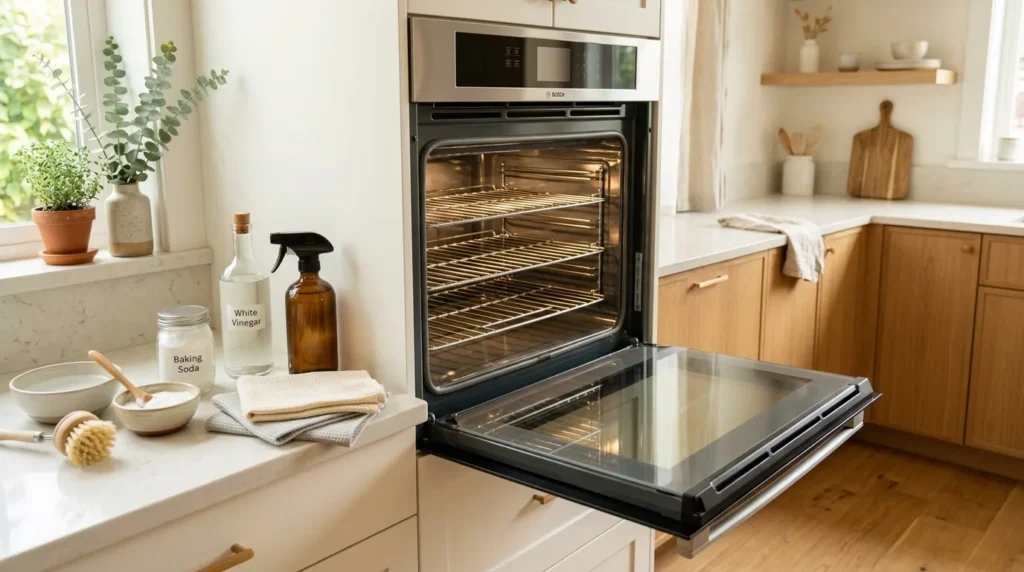
1. Baking Soda Paste
A gentle paste helps loosen baked-on grease and food residue from many standard oven surfaces.
2. Dish Soap Soak
Warm water and dish soap soften greasy buildup before wiping and light scrubbing.
3. Steam Cleaning
Steam loosens fresh and moderate grime while reducing the amount of scrubbing required.
4. Vinegar Wipe
Diluted vinegar helps remove residue and freshen surfaces after the main cleaning step.
5. Lemon Steam
Lemon-infused steam provides a simple way to loosen residue while leaving a fresh scent.
6. Rack Cleaning
A long soak makes oven racks easier to clean without aggressive scrubbing.
7. Glass Door Care
Gentle cleaning techniques remove cloudy grease and baked-on splashes from oven glass.
8. Stubborn Grease
Targeted treatments help break down thick grease around corners, walls, and the oven floor.
9. Oven Floor
Careful spot cleaning removes spills from the bottom without damaging the oven surface.
10. Fresh Oven Routine
Simple maintenance habits reduce future buildup and make regular oven cleaning easier.
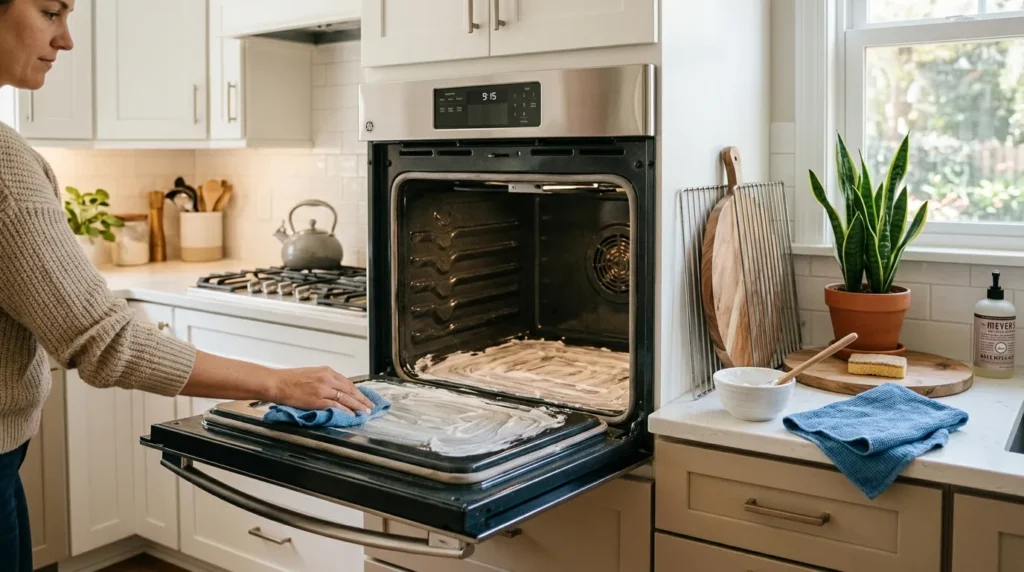
1. Baking Soda Paste
Quick Benefits
- Uses a simple household ingredient
- Helps soften baked-on food
- Works well on greasy interior surfaces
- Reduces heavy scrubbing
- Easy to prepare at home
Why It Works
Baking soda is one of the most useful ingredients for a basic oven deep clean because its mildly alkaline nature can help loosen greasy food residue. Mixed with water, it forms a spreadable paste that stays on dirty surfaces instead of immediately running away.
The important part is contact time. A baking soda paste has more opportunity to soften stubborn residue when it remains on the surface for several hours. This is especially helpful for old splatters around the oven walls and floor.
The paste does not magically dissolve every baked-on mark. Extremely hardened carbonized food can still require careful scraping or repeated treatment. That is normal. The goal is to loosen the mess first so less force is required later.
Avoid applying abrasive powders aggressively to delicate finishes. Also keep the paste away from heating elements, vents, and areas where the manufacturer advises against moisture or cleaning products.
How To Use It
Start with a completely cool oven. Remove the racks and loose crumbs. Mix baking soda with enough water to create a thick paste similar to frosting.
Spread a thin layer over greasy interior surfaces, concentrating on areas with visible buildup. Keep the paste away from heating elements, gas openings, and vents.
Leave it in place for several hours or overnight if the manufacturer’s instructions permit this type of cleaning. For a particularly dirty oven, cover the worst areas more generously.
Use a damp microfiber cloth or non-abrasive sponge to wipe away the softened paste. A plastic scraper can help lift stubborn residue without using a sharp metal tool.
Finish with several clean damp cloths to remove remaining baking soda. Dry the interior with a clean towel and leave the door open for a short period so the remaining moisture can evaporate.
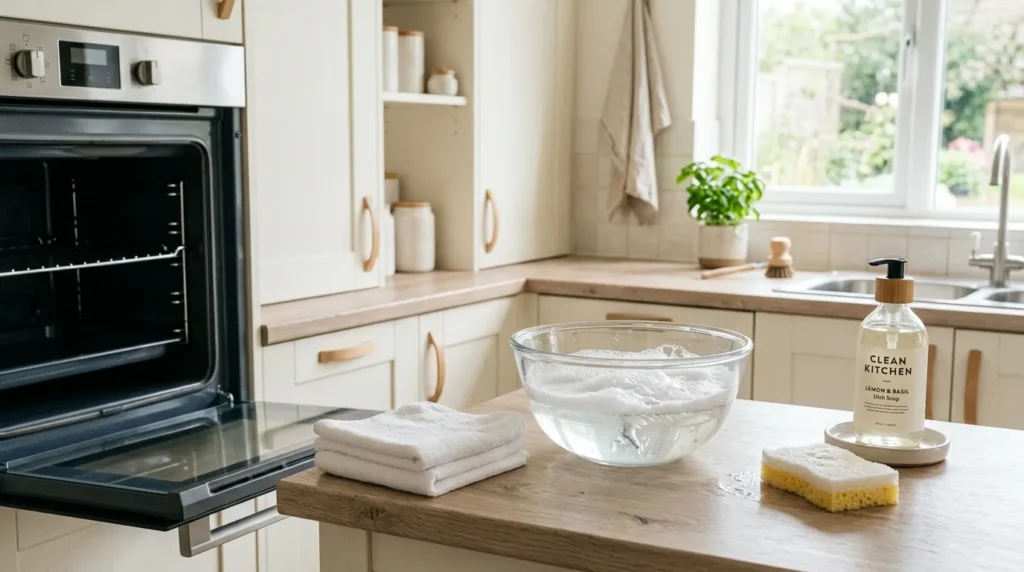
2. Dish Soap Soak
Quick Benefits
- Excellent for greasy residue
- Easy to prepare
- Useful for fresh spills
- Requires minimal supplies
- Works well as a first cleaning step
Why It Works
Dish soap is designed to cut through everyday cooking grease, making it a practical choice for oven messes that are oily rather than heavily carbonized. Warm water helps soften the residue, while the soap helps lift grease from the surface so it can be wiped away.
This method is particularly useful when the oven has not reached the point of heavy baked-on buildup. It can also work as a preparation step before using baking soda on tougher spots.
One common mistake is using too much water inside an oven. The interior does not need to be saturated. A damp cloth or controlled application provides enough moisture without creating unnecessary liquid around electrical components or openings.
For routine cleaning, dish soap can be surprisingly effective. It also makes sense when you want to avoid covering the entire oven with a paste.
How To Use It
Add a small amount of grease-cutting dish soap to a bowl of warm water. Dip a microfiber cloth into the mixture and wring it thoroughly.
Wipe the oven walls, ceiling, and floor, working from the top downward. Pay attention to the areas around the door because grease often collects there.
For heavier spots, place the warm soapy cloth over the residue for several minutes. The warmth and moisture can soften the buildup.
Use a non-abrasive sponge on surfaces that allow gentle scrubbing. Avoid steel wool or harsh scouring pads unless your oven manufacturer specifically permits them.
Wipe the entire interior with a clean damp cloth afterward. Repeat with fresh water until the soap residue disappears.
This approach works especially well as part of a monthly maintenance routine, before grease has enough time to become thick and hardened.
3. Steam Cleaning
Quick Benefits
- Softens food residue
- Reduces scrubbing
- Uses water as the main ingredient
- Helpful for regular maintenance
- Works particularly well on fresh buildup
Why It Works
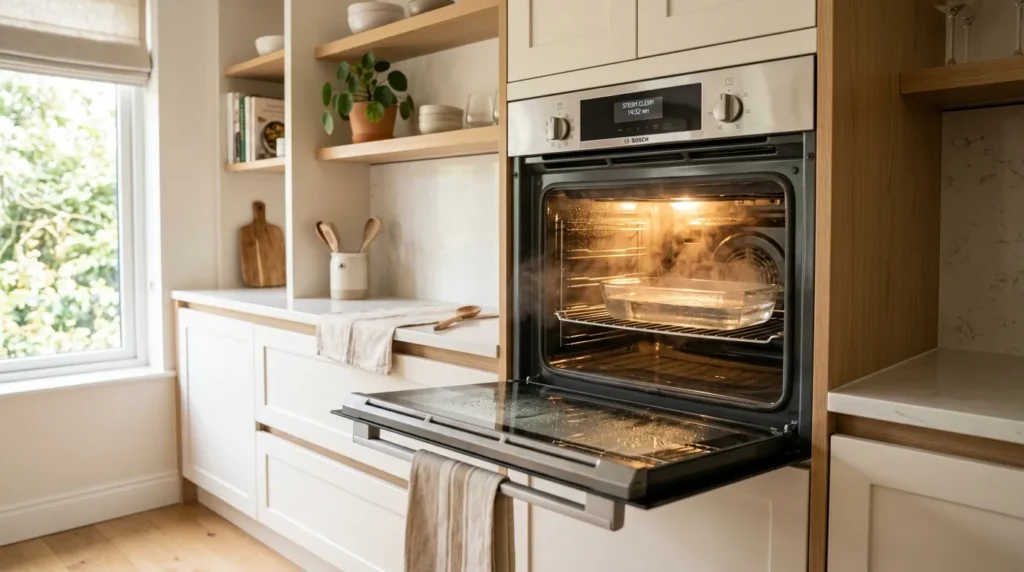
Heat and moisture can make stubborn food residue much easier to remove. Steam reaches small areas of dried-on food and softens the surface, reducing the effort required to wipe it away.
Some ovens include a manufacturer’s steam-cleaning function. If yours has one, follow the instructions in the owner’s manual rather than improvising the amount of water or cleaning procedure.
For ovens without a dedicated steam-cleaning cycle, a simple controlled steam approach can help with moderate grime. The oven must be suitable for the method, and water must never be poured directly onto hot surfaces or heating elements.
Steam is most useful for softening residue, not for replacing every other cleaning step. Old, carbonized grease may still need a baking soda treatment or careful manual removal.
A little patience also matters. Wiping immediately after steam exposure can be much easier than attacking the same residue when it is completely dry.
How To Use It
Check your oven manual first to confirm that a steam-cleaning method is appropriate.
For a compatible oven, place a heat-safe oven dish containing water inside the cool oven. Heat it according to your manufacturer’s instructions. The objective is to create moisture that loosens residue rather than flooding the oven.
Turn the oven off and allow it to cool enough for safe handling. Open the door carefully because escaping steam can cause burns.
Using oven mitts and a damp microfiber cloth, wipe softened residue from the interior. Work in sections, rinsing the cloth frequently.
For stubborn areas, allow the moisture to sit on the residue for several additional minutes before wiping.
Steam cleaning works particularly well when used regularly. It prevents small spills from becoming thick layers of baked-on grime.
4. Vinegar Wipe
Quick Benefits
- Helps remove leftover residue
- Useful after baking soda cleaning
- Simple to dilute
- Helps freshen surfaces
- Convenient for final wiping
Why It Works
White vinegar is acidic, so it can help with certain mineral deposits and leftover alkaline residue. It is especially useful as a finishing wipe after removing baking soda paste.
However, vinegar and baking soda are often presented as a powerful cleaning combination when the chemistry is more nuanced. When mixed together, they react and fizz, but much of that reaction neutralizes the two ingredients. The bubbling can help physically disturb residue, but using them separately often gives each ingredient a more useful role.
Vinegar also is not the right cleaner for every oven surface. Some manufacturers advise against acidic cleaners on particular finishes or components. Always check the care instructions for your specific appliance.
For a standard compatible surface, a diluted vinegar wipe can be a convenient final step after the main grime has already been removed.
How To Use It
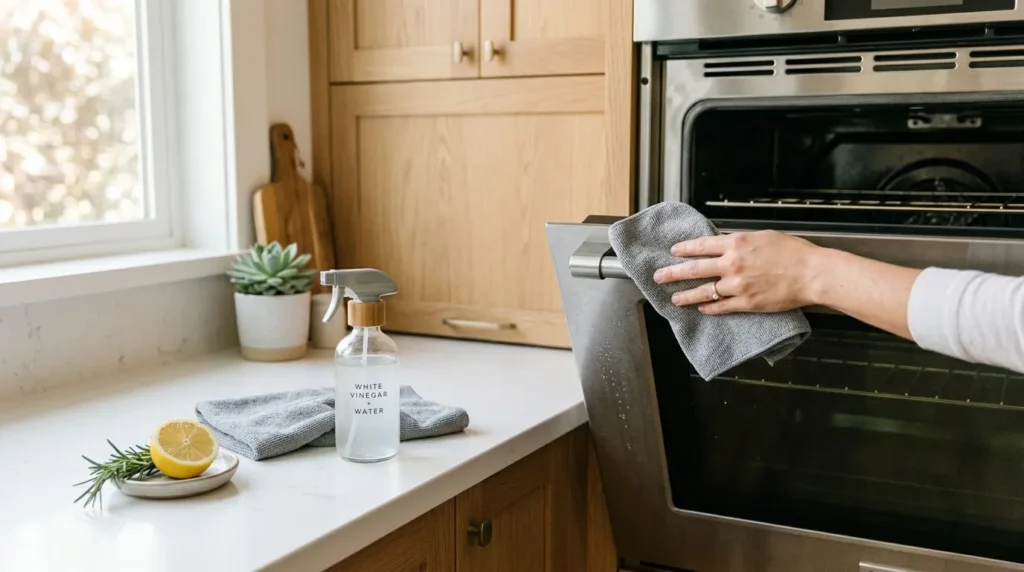
Mix equal parts white vinegar and water in a spray bottle if your oven manufacturer’s instructions permit diluted vinegar on the surface.
Do not spray heavily into vents, heating elements, electrical areas, or other openings.
Instead, lightly apply the solution to a cloth and wipe the previously cleaned surfaces. This gives you more control over where the moisture goes.
Pay special attention to areas where a white baking soda film remains. Wipe gently until the residue disappears.
Follow with a clean damp cloth if needed, then dry the interior.
For safety, never mix vinegar with bleach or other incompatible cleaning chemicals. Natural ingredients are not automatically safe when combined with other household cleaners.
5. Lemon Steam
Quick Benefits
- Creates a fresh kitchen scent
- Helps loosen light residue
- Uses water and lemon
- Easy for routine maintenance
- Works well after everyday cooking
Why It Works
Lemon is useful in oven cleaning mainly as a freshening and light-cleaning ingredient. Heating water with lemon creates moist air that can soften surface residue, while the citrus scent can make the kitchen smell fresher afterward.
This is not a substitute for a deep clean when thick grease has been baked onto the oven walls. Instead, think of lemon steam as a maintenance technique for an oven that receives regular cleaning.
The moisture is the main reason the method helps with residue. The lemon adds a pleasant scent and can contribute mild acidic cleaning action.
If your oven has heavy carbonized deposits, start with a more targeted method such as baking soda paste or gentle manual removal. Lemon steam works best when the mess is relatively fresh.
How To Use It
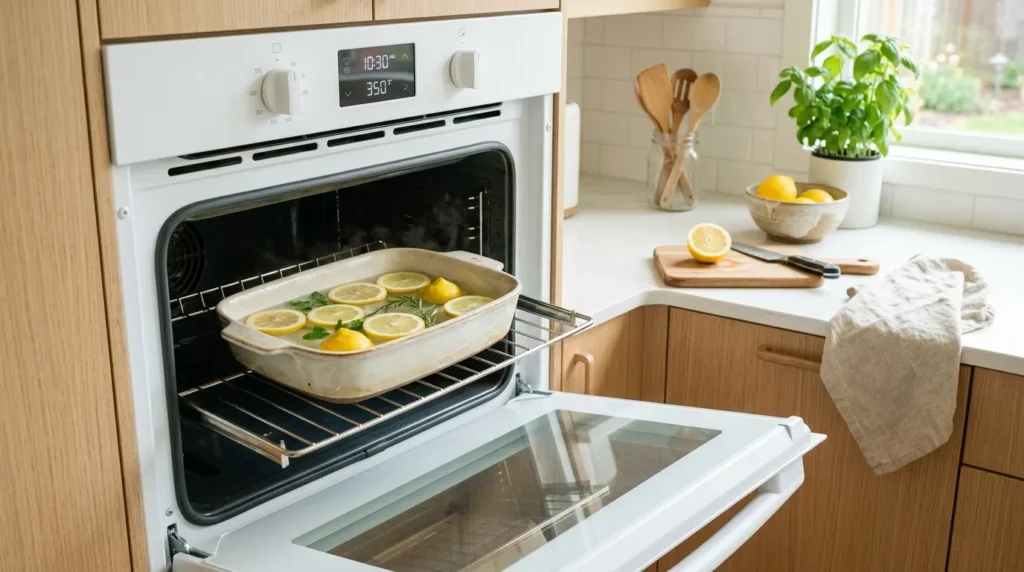
Place water and several lemon slices in a heat-safe oven dish. Check your oven manufacturer’s recommendations before using this technique.
Heat the oven according to a method suitable for your appliance, then turn it off and allow the interior to cool to a safe temperature.
Open the door carefully and wipe the softened residue with a microfiber cloth.
Use the lemon-infused water cautiously around the oven door and interior. Avoid directing liquid toward heating elements, vents, or electrical components.
For everyday maintenance, this method can fit nicely into a kitchen reset. After cooking particularly messy foods, allowing moisture to soften the residue before wiping can prevent it from becoming a harder cleaning project later.
6. Rack Cleaning
Quick Benefits
- Removes grease from metal racks
- Makes scrubbing easier
- Allows long soaking time
- Helps restore a cleaner appearance
- Keeps the oven interior easier to maintain
Why It Works
Oven racks collect a surprising amount of grease because they sit directly above cooking food. Small splatters can dry onto the metal, and repeated exposure to heat gradually creates a stubborn layer.
Soaking is often more useful than immediately scrubbing. Warm water helps soften food residue, while dish soap helps loosen grease. Giving the racks time to sit reduces the amount of physical effort required.
Before cleaning, check your oven manual because some racks have special finishes or instructions. Certain racks can lose their smooth movement if cleaned improperly.
Avoid using aggressive abrasives on coated racks unless the manufacturer permits them. Scratches can affect the finish and may make future cleaning less pleasant.
How To Use It
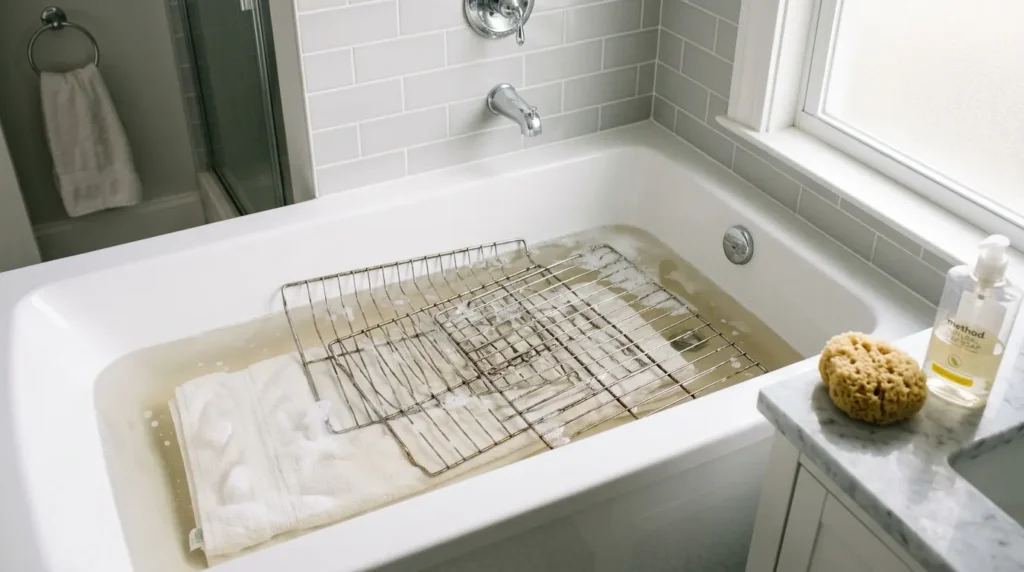
Remove the cool oven racks and place them in a bathtub, large utility sink, or another suitable washing area. Protect delicate surfaces from scratching by placing an old towel underneath them.
Cover the racks with warm water and add a small amount of dish soap. Allow them to soak for several hours.
Use a soft sponge or non-abrasive brush to work across the rails. Concentrate on areas where grease has accumulated around the corners.
For stubborn patches, apply a baking soda paste to the affected areas after the initial soak. Let it sit before gently scrubbing.
Rinse thoroughly and dry the racks completely before returning them to the oven.
If your racks feel rough or difficult to slide afterward, consult the manufacturer’s care instructions before applying any lubricant or additional treatment.
7. Glass Door Care
Quick Benefits
- Improves oven visibility
- Removes cloudy grease
- Targets baked-on splashes
- Uses gentle cleaning techniques
- Makes the oven look noticeably fresher
Why It Works
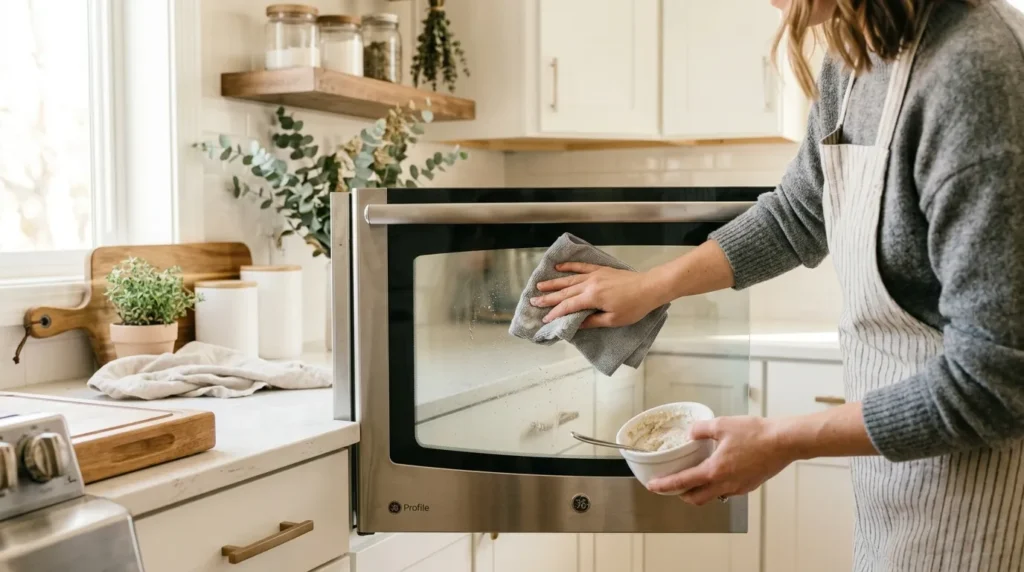
The glass oven door often collects a thin layer of grease that becomes more noticeable over time. Because the surface is transparent, even a relatively small amount of residue can make the entire appliance look dirty.
The safest approach is controlled, gentle cleaning. A baking soda paste can help loosen grease on compatible glass surfaces, while a soft cloth removes residue without unnecessary scratching.
The door also requires patience because food can sometimes collect along edges or between glass panels. Never disassemble the oven door or remove glass panels unless the manufacturer’s instructions specifically explain how to do so.
Avoid pouring liquid directly onto the door or allowing moisture to enter gaps, vents, or between glass panels.
How To Use It
Make a thick paste from baking soda and a small amount of water. Apply it to the cool exterior-facing glass or other compatible glass areas.
Let it sit for a while so the paste can soften grease. Use a damp microfiber cloth to wipe it away.
For stubborn spots, gently work the area with a soft sponge. A plastic scraper can help with certain stuck-on residues, but use only tools approved for your particular glass surface.
Finish with a clean damp cloth and dry the glass with a lint-free towel.
For the exterior side of the door, a simple diluted dish-soap solution can handle everyday fingerprints and grease. Keeping the glass clean regularly makes future deep cleaning much easier.
8. Stubborn Grease
Quick Benefits
- Targets heavily soiled areas
- Reduces repeated scrubbing
- Works on small problem spots
- Helps soften old residue
- Uses common household ingredients
Why It Works
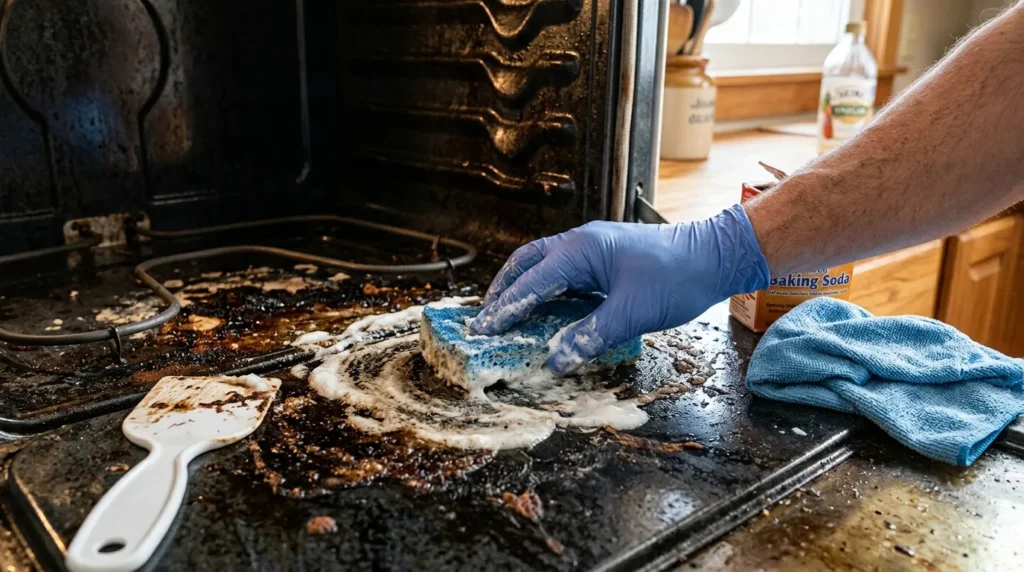
Thick grease needs more time and targeted attention than a quick wipe can provide. A mistake many homeowners make is trying to remove a large buildup all at once with force.
A better approach is to soften the grease, remove what loosens easily, and repeat the process where necessary.
Dish soap is useful for oily residue, while baking soda can provide additional cleaning action on compatible surfaces. Warm moisture can also soften the outer layer before you begin.
For very old blackened deposits, several rounds of treatment may be safer and more effective than aggressive scraping. Never use a sharp knife to dig into oven surfaces. Scratches can damage the finish and create harder-to-clean areas.
Also avoid cleaning while the oven is hot unless the manufacturer specifically provides a procedure for it.
How To Use It
Start with a cool oven and remove loose crumbs with a dry cloth.
Apply a small amount of dish soap to a damp cloth and work it over greasy areas. Let the moisture sit for several minutes.
For compatible surfaces, apply a baking soda paste to the remaining stubborn spots. Leave it for several hours if appropriate.
Return with a damp non-abrasive sponge and gently work across the residue.
For hardened pieces of food, use a plastic scraper at a shallow angle. Avoid metal blades unless the manufacturer specifically permits them for the surface.
Wipe the area several times with clean water to remove residue.
If the grease remains, repeat the process rather than increasing the pressure. Deep cleaning often becomes easier through patience rather than force.
9. Oven Floor
Quick Benefits
- Removes baked-on spills
- Prevents lingering food residue
- Makes routine cleaning easier
- Targets one of the dirtiest areas
- Reduces unpleasant cooking odors from old spills
Why It Works
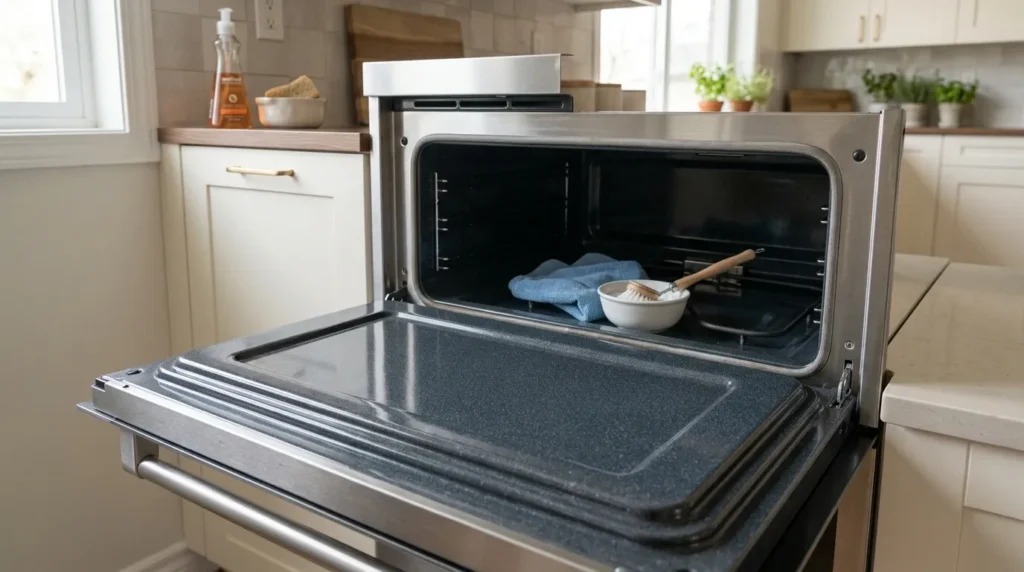
The oven floor receives direct punishment from spills, drips, and crumbs. When food lands there and repeatedly heats during cooking, it can become dark and hard.
This area deserves special care because different ovens use different interior materials and heating configurations. Some have exposed heating elements, gas openings, special coatings, or surfaces that manufacturers specifically advise against scrubbing.
The safest strategy is to check the appliance manual first, remove loose debris, and use the least aggressive method that works.
A small baking soda paste can help with compatible surfaces. A damp cloth and dish soap can handle lighter spills. For larger pieces of food, gentle lifting with a suitable plastic scraper can reduce the need for scrubbing.
How To Use It
Make sure the oven is completely cool. Remove the racks and any loose crumbs.
Use a dry microfiber cloth or soft brush to collect loose debris from the bottom.
For greasy spots on compatible surfaces, use a small amount of warm soapy water on a cloth. Avoid pouring water directly onto the oven floor.
For more stubborn residue, apply a thin baking soda paste. Keep it away from heating elements, vents, gas openings, and any components the manufacturer identifies as unsuitable for cleaning.
Allow the paste to soften the residue, then wipe it away with a damp cloth.
Use several passes with clean water to remove the remaining baking soda. Dry the floor thoroughly before using the oven again.
The oven floor does not need to look perfectly new to be clean. Focus on removing loose food, grease, and residue without damaging the appliance’s finish.
10. Fresh Oven Routine

Quick Benefits
- Prevents heavy buildup
- Makes deep cleaning easier
- Takes only a few minutes
- Helps maintain a cleaner kitchen
- Reduces the need for aggressive scrubbing
Why It Works
The easiest oven to clean is the one that never develops months of heavy buildup. A simple maintenance routine keeps small spills from becoming thick layers of baked-on grease.
You do not need to deep clean the oven after every meal. Instead, pay attention to obvious spills and splatters while they are still relatively fresh.
A quick wipe after the oven has cooled can remove residue before repeated heating hardens it. Periodic rack cleaning also keeps grease from transferring back onto the interior.
I find that connecting oven care to another kitchen task makes the routine easier to maintain. For example, wiping the oven door during a weekly kitchen reset takes little time compared with dealing with a heavily clouded glass door later.
How To Use It
After messy cooking, allow the oven to cool completely. Remove loose crumbs and wipe visible splatters with a damp cloth.
Once a week, inspect the oven floor, door, and lower walls. Treat small greasy areas with warm water and dish soap.
Every few weeks, check the racks for buildup. A short soak can prevent a larger cleaning project.
For a deeper seasonal clean, remove the racks and clean the interior according to the manufacturer’s instructions. Baking soda paste can be used on compatible surfaces when extra help is required.
Keep a microfiber cloth and a small bottle of an approved diluted cleaning solution with your regular kitchen supplies. Having the tools nearby makes quick maintenance more convenient.
The goal is not a spotless oven after every use. The goal is preventing small messes from becoming difficult ones.
How Often Should You Clean an Oven?
For many households, a light wipe every few weeks and a deeper cleaning every few months is a practical starting point. The ideal frequency depends on how often you cook and the types of foods you prepare.
Foods that splatter heavily, such as roasted meats, cheesy casseroles, and oily dishes, can create more residue than simple baking.
A useful rule is to clean visible spills sooner rather than allowing them to repeatedly heat. Fresh residue is generally easier to remove than heavily carbonized buildup.
If you notice smoke, unusual odors, or visible layers of grease, it is a good time to inspect the oven and follow the manufacturer’s cleaning recommendations.
What To Avoid When Cleaning an Oven
Natural ingredients still require careful use. “Natural” does not automatically mean safe for every surface.
Avoid these common mistakes:
- Never pour large amounts of water inside the oven.
- Do not spray cleaning solutions directly onto heating elements.
- Avoid blocking vents or openings with paste.
- Do not use metal tools aggressively on enamel or glass.
- Do not clean a hot oven unless the manufacturer’s instructions specifically allow it.
- Never mix vinegar with bleach or other incompatible chemicals.
- Do not assume every oven has the same interior finish.
- Check the manual before cleaning self-cleaning or steam-cleaning ovens.
- Do not use abrasive pads on delicate surfaces without checking the care instructions.
- Never disassemble oven doors or glass panels without following the manufacturer’s instructions.
The manufacturer’s manual remains the best source for information about the specific appliance.
Is Baking Soda and Vinegar a Good Combination?
Baking soda and vinegar are both useful household cleaning ingredients, but they are often more effective when used separately for oven cleaning.
When the two ingredients are mixed, they react and produce fizzing. That visual reaction can look powerful, but the acid and alkaline ingredients also neutralize each other.
For oven cleaning, baking soda can be used as a paste to soften grease and baked-on residue. After the paste has been removed, a diluted vinegar wipe can help remove remaining alkaline residue on compatible surfaces.
This gives each ingredient a clearer role instead of relying on the bubbling reaction as the main cleaning method.
How To Make Oven Cleaning Easier
The biggest improvement often comes from changing the timing rather than finding a stronger cleaner.
Clean spills while they are relatively fresh. Remove crumbs before applying moisture. Soak racks instead of scrubbing them dry. Give baking soda paste enough contact time to soften residue.
It also helps to work from the top downward. Start with the upper interior and door, then move toward the walls and oven floor. This prevents dirty water and loosened residue from falling onto areas you already cleaned.
Use separate cloths for heavy grease and final wiping. Rinse microfiber cloths frequently so you are lifting grime instead of spreading it.
Most importantly, avoid rushing. A few extra minutes of soaking can save a surprising amount of scrubbing.
Natural Oven Cleaning Supplies
You can create a useful basic cleaning kit without filling a cabinet with specialized products.
Consider keeping:
- Baking soda
- White vinegar
- Mild dish soap
- Microfiber cloths
- Non-abrasive sponges
- A soft cleaning brush
- A plastic scraper suitable for the surface
- A heat-safe dish for compatible steam-cleaning methods
- Rubber cleaning gloves
- Clean kitchen towels
You do not need every item for every cleaning session. The right combination depends on the type of residue and your oven manufacturer’s instructions.
For everyday grease, warm water and dish soap may be enough. For baked-on residue, baking soda can provide additional help. For light maintenance, controlled steam can soften fresh buildup.
Frequently Asked Questions
1. What is the easiest natural way to clean an oven?
A baking soda paste is one of the simplest approaches for a standard compatible oven. Apply a thick paste of baking soda and water to suitable cool surfaces, allow it time to soften residue, then wipe with a damp cloth. For lighter grease, warm water and dish soap may be enough. Always check the oven manufacturer’s care instructions before applying any cleaning mixture.
2. Can I clean my oven with baking soda and vinegar?
Yes, but using them separately can be more useful. Baking soda can form a paste that helps loosen baked-on grease. After removing the paste, diluted vinegar can help wipe away remaining baking soda residue on compatible surfaces. Mixing the two creates a fizzing reaction but also neutralizes much of their individual cleaning action.
3. How do I remove baked-on grease naturally?
Start by softening the grease rather than scrubbing it dry. Warm soapy water can loosen oily residue, while baking soda paste can help with tougher buildup on compatible oven surfaces. Allow adequate contact time, then wipe with a non-abrasive sponge or cloth. Repeat the treatment when necessary instead of using excessive force.
4. How do I clean oven glass without scratching it?
Use a gentle cleaning solution and a soft microfiber cloth or non-abrasive sponge. A baking soda paste can help loosen grease on compatible glass. Avoid aggressive scraping and abrasive pads unless the manufacturer specifically permits them. Never pour liquid into the door’s gaps or attempt to remove glass panels without following the appliance instructions.
5. How can I clean oven racks naturally?
Remove cool racks and soak them in warm water with a small amount of dish soap. Let them sit for several hours so grease and food residue soften. Use a soft sponge or brush afterward. Baking soda paste can be applied to stubborn areas on compatible racks. Rinse and dry the racks thoroughly before returning them to the oven.
6. Does lemon clean a dirty oven?
Lemon can help freshen the oven and, when used with heated water in a compatible method, the moisture can soften light residue. It is not a substitute for deep cleaning thick, carbonized grease. For heavy buildup, a targeted baking soda or dish-soap treatment is generally more practical. Always follow the appliance manufacturer’s cleaning instructions.
7. How often should I clean my oven?
Cleaning frequency depends on how often you cook and how much grease or food your meals create. A light wipe every few weeks can help prevent buildup, while a deeper cleaning every few months works for many households. Clean visible spills sooner when possible because repeated heating can make them much harder to remove.
Related Articles
- How to Clean Kitchen Cabinets Naturally
- How to Declutter Your Kitchen in Simple Steps
- 10 Kitchen Organization Ideas for Small Spaces
- How to Make Your Kitchen Feel Clean and Fresh
- 10 Easy Kitchen Cleaning Hacks for Busy Homes
Conclusion
Cleaning an oven does not always require a complicated collection of specialty products. Simple ingredients such as baking soda, dish soap, vinegar, lemon, and water can handle many everyday cleaning jobs when they are used appropriately.
The key is choosing the method based on the type of mess. Baking soda paste is useful for stubborn baked-on residue, dish soap works well against grease, steam can soften fresh buildup, and soaking makes dirty oven racks easier to handle. Gentle techniques are particularly important for glass, coated surfaces, heating elements, vents, and other appliance components.
A little maintenance also makes a major difference. Wiping fresh spills before they repeatedly bake onto the surface can save considerable effort later. Instead of waiting until the oven becomes heavily coated with grease, small cleaning sessions can keep the appliance much more manageable.
Before using any homemade cleaning method, check your oven’s owner’s manual and follow its instructions for the specific interior finish and components.
Start with one simple method that matches the mess in front of you. Once the heavy buildup is gone, a few minutes of regular maintenance can make future cleaning much easier and keep your kitchen feeling fresher.