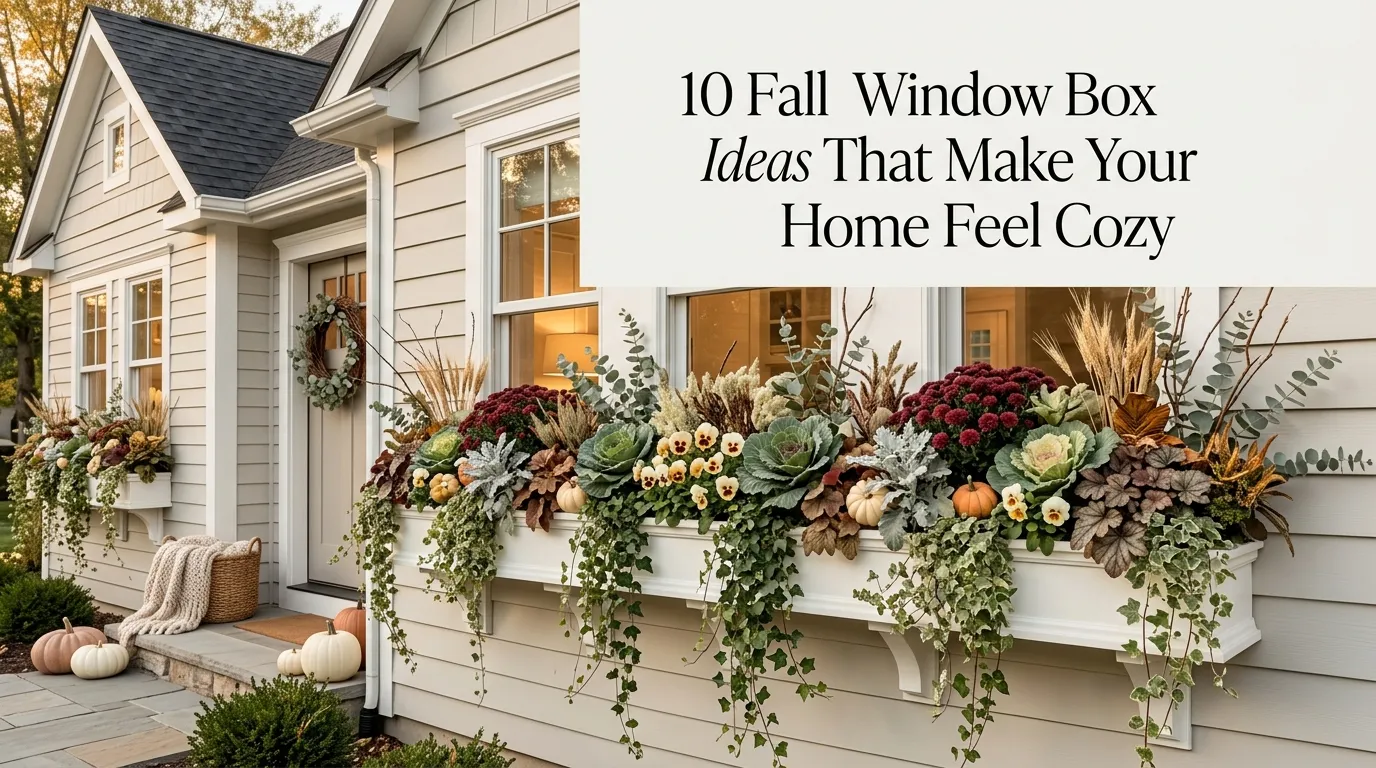
10 Fall Window Box Ideas That Make Your Home Feel Cozy
Fall is one of the easiest seasons to bring outside your front door, and window boxes offer a simple way to add seasonal color without changing the entire exterior of your home. A thoughtfully arranged box can make windows feel warmer, highlight architectural details, and create that inviting autumn look that works beautifully in photos.
The best fall window boxes are not necessarily the fullest ones. A combination of seasonal flowers, ornamental grasses, pumpkins, branches, and trailing greenery can create plenty of texture without making the arrangement feel crowded.
If you’re decorating for fall, start by looking at the colors already around your home. A brick exterior may pair beautifully with rust and golden tones, while a white or gray house can support deeper burgundy, bronze, and muted green accents. Natural materials such as pinecones, twigs, and dried leaves also bring texture without requiring a large collection of plants.
Another advantage of window boxes is flexibility. You can create a traditional autumn arrangement with mums and pumpkins, a refined neutral display with cream flowers and eucalyptus-inspired greenery, or a rustic farmhouse look using grasses, branches, and weathered accessories.
Before planting or arranging anything, check the amount of sunlight the window receives and choose plants appropriate for those conditions. For temporary seasonal displays, faux stems and decorative elements can also be useful, especially in areas with difficult weather.
These 10 fall window box ideas cover a range of styles, from classic and colorful to simple and sophisticated. Use one idea as inspiration or combine several details to create a seasonal display that suits your home.
Table of Contents
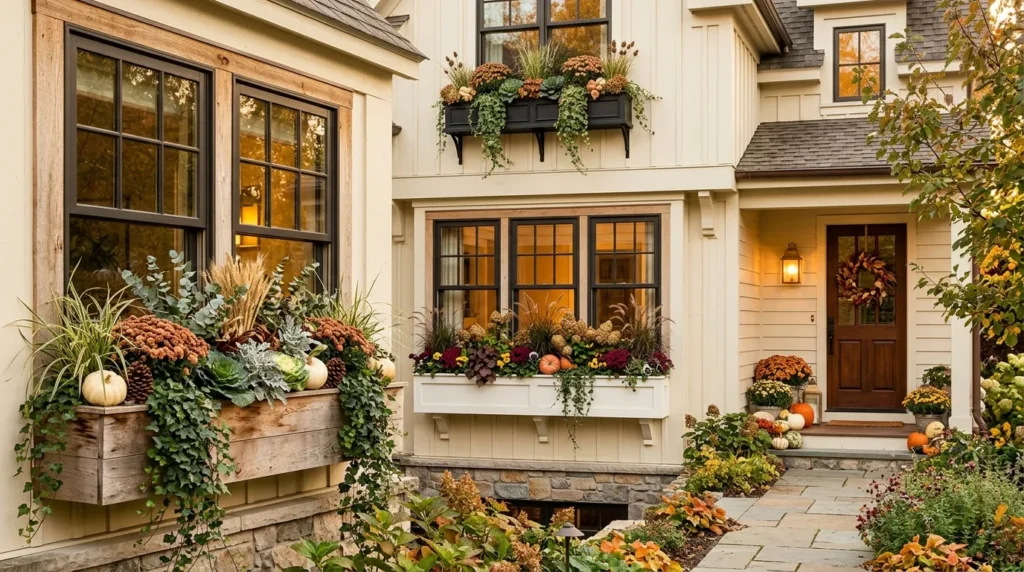
1. Classic Mum Mix
Combine colorful chrysanthemums with seasonal foliage for a traditional autumn display.
2. Pumpkin Accent Box
Add miniature pumpkins to flowers and greenery for a cheerful harvest-inspired arrangement.
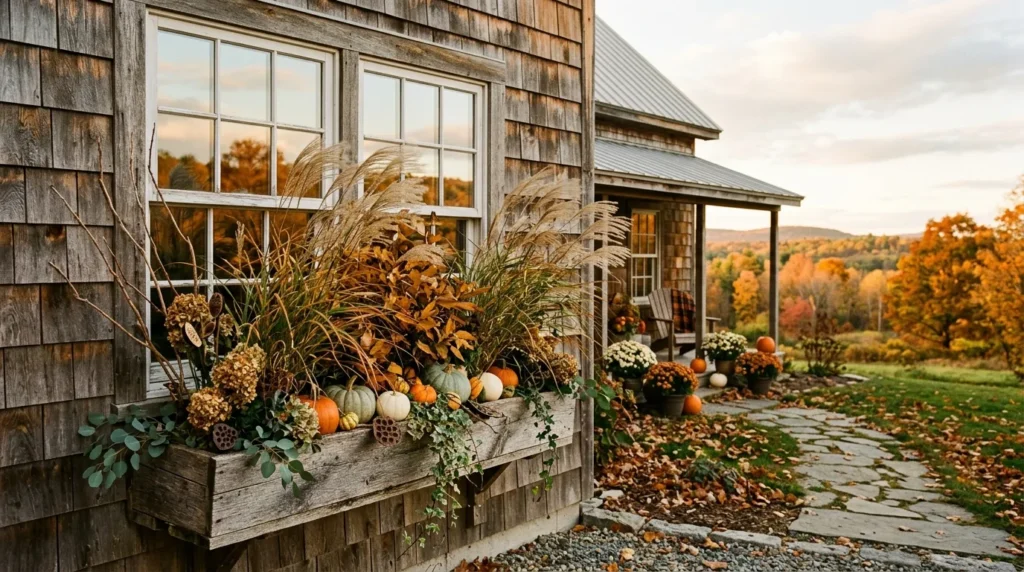
3. Rustic Grass Display
Use ornamental grasses and natural branches to create an organic farmhouse look.
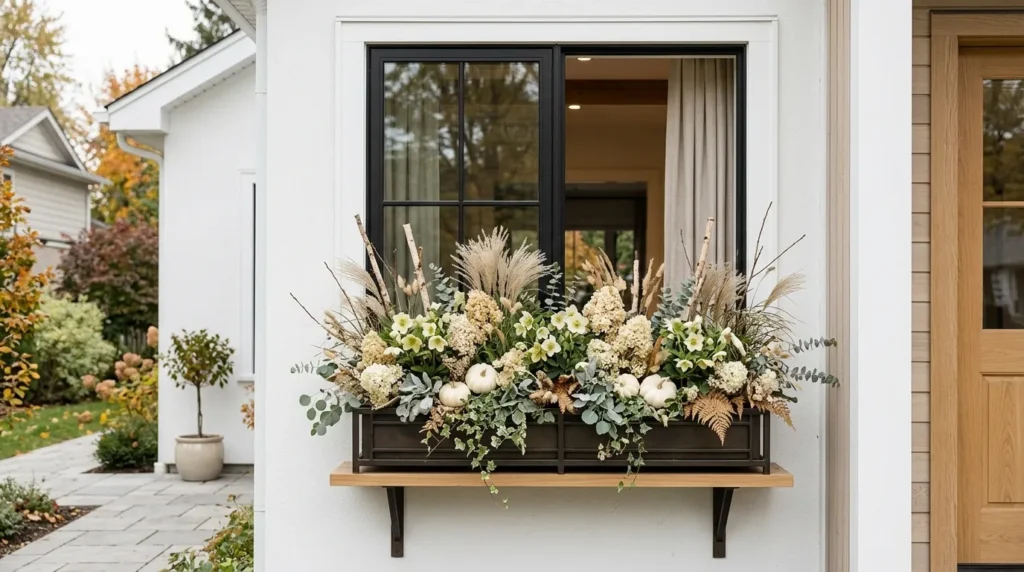
4. Neutral Fall Box
Cream, beige, and muted green create a sophisticated alternative to traditional orange.
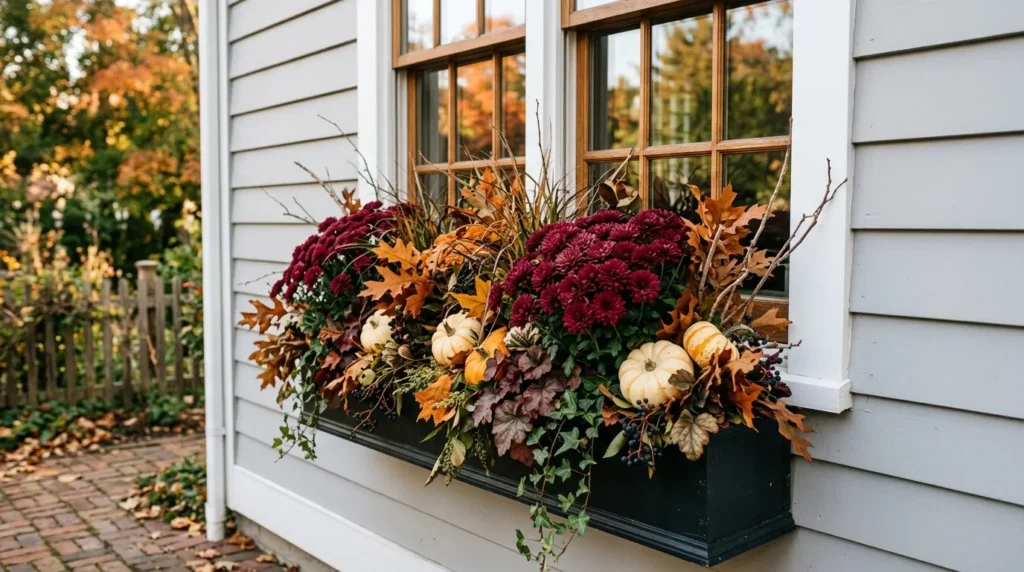
5. Burgundy Flower Box
Deep burgundy flowers bring rich seasonal color and dramatic contrast to windows.
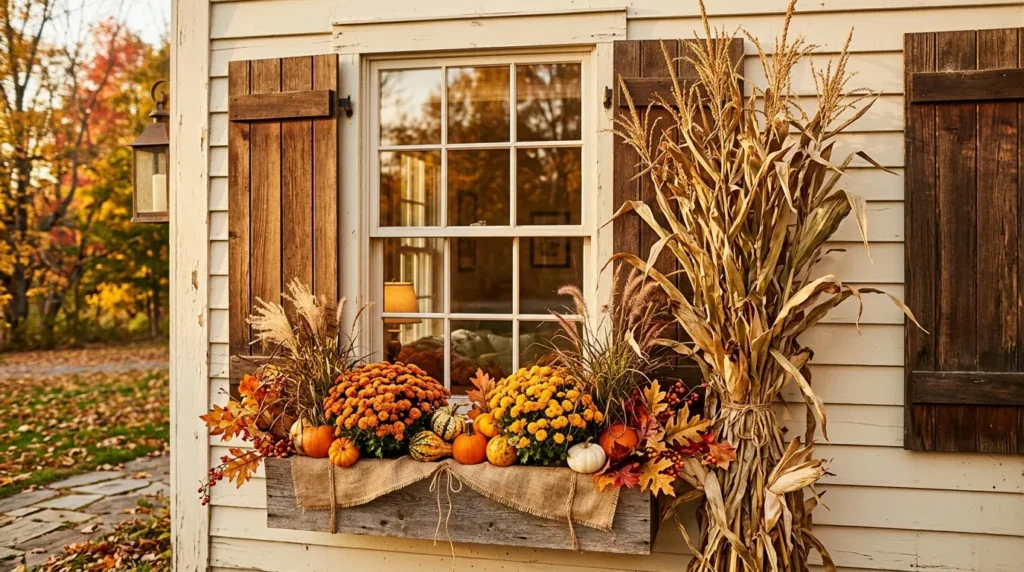
6. Cornstalk Arrangement
Tall corn stalks create vertical interest and a classic harvest appearance.
7. Evergreen Fall Mix
Combine fall foliage with evergreen elements for a display that transitions into late autumn.
8. White Pumpkin Box
White pumpkins and soft greenery create a clean, elegant seasonal arrangement.
9. Berry And Branches
Decorative berries and branches add texture, height, and natural fall character.
10. Farmhouse Harvest Box
Layer pumpkins, mums, grasses, and rustic accents for a welcoming farmhouse display.
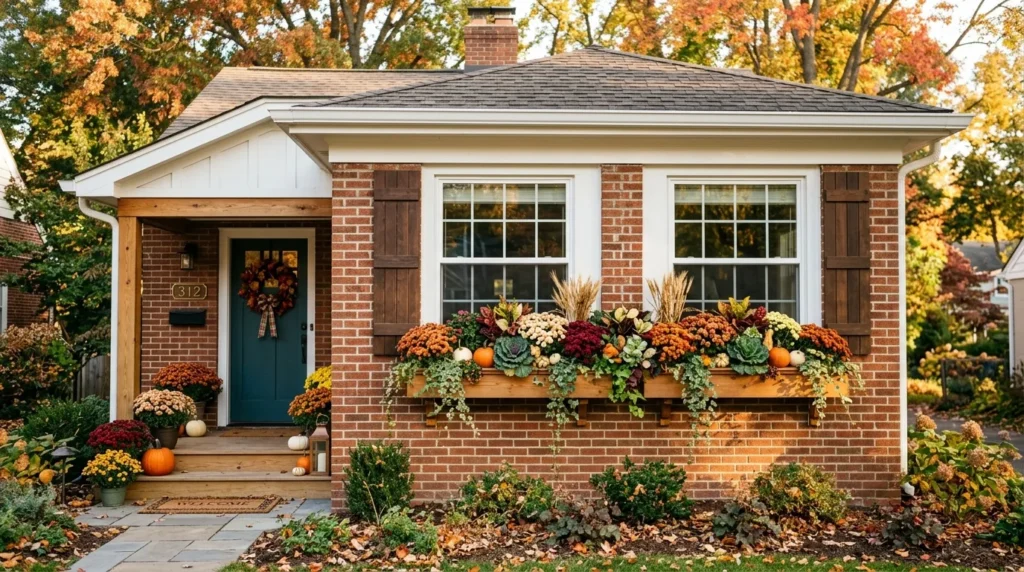
1. Classic Mum Mix
Quick Benefits
- Traditional fall appearance
- Easy to coordinate
- Adds rich seasonal color
- Works with many exterior styles
- Creates a full window display
Why It Works
Chrysanthemums are a classic choice for autumn because their rounded blooms create a naturally abundant appearance. Their warm seasonal colors also make it easy to build a cohesive window box without adding too many different plant varieties.
Orange, yellow, burgundy, bronze, and cream mums can create a traditional palette, while a single flower color can give the arrangement a cleaner appearance.
The key is creating variation in height. Flowers at different levels prevent the box from looking like a flat row of identical plants.
In my experience, combining mums with foliage creates a more finished look than relying on flowers alone. Leaves and trailing greenery help connect the individual plants and soften the edges.
How To Style It
Start with three or four complementary mum colors or choose one dominant shade.
Place taller plants toward the back and shorter varieties toward the front.
Add trailing greenery along the edges if desired.
For extra autumn character, tuck a few small faux pumpkins between the plants.
Use a window box with good drainage and choose plants according to the available sunlight.
Keep the colors coordinated with your home’s exterior so the flowers enhance rather than compete with the architecture.
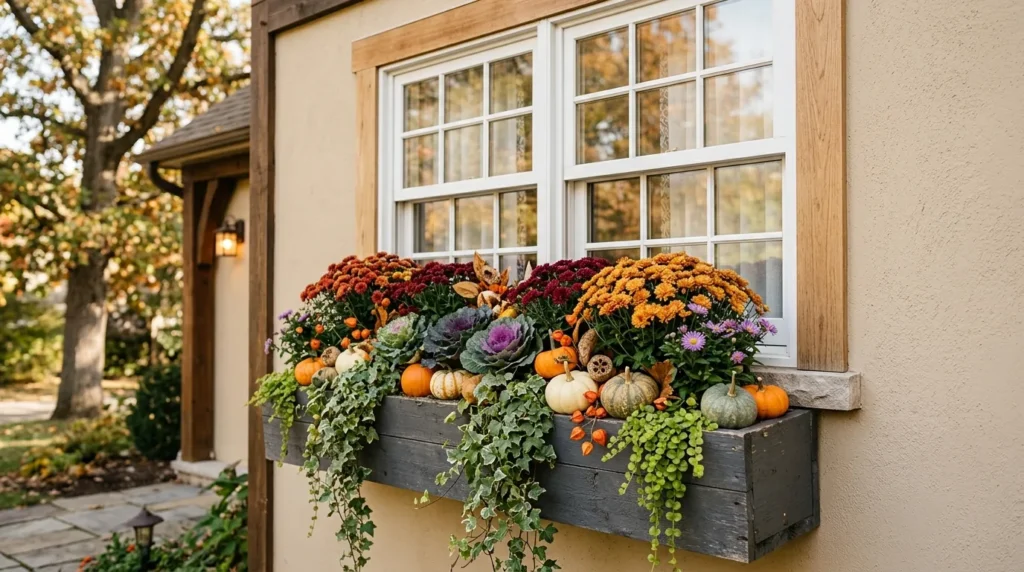
2. Pumpkin Accent Box
Quick Benefits
- Strong fall theme
- Easy to customize
- Works with flowers or greenery
- Adds seasonal texture
- Great for front-facing windows
Why It Works
Small pumpkins immediately communicate the feeling of fall. Adding them to a window box creates seasonal character without requiring the entire arrangement to consist of flowers.
Mini pumpkins work particularly well because their smaller scale fits naturally between plants and foliage. White, orange, cream, and muted green pumpkins can all be used depending on the home’s color palette.
The most attractive arrangements usually combine pumpkins with softer elements. Flowers, grasses, and trailing greenery prevent the box from looking like a collection of decorations simply placed in a row.
How To Style It
Begin with a base of seasonal greenery or hardy fall flowers.
Place miniature pumpkins between the plants rather than lining them up evenly.
Use different pumpkin sizes for variation.
Add ornamental grasses or trailing vines to soften the edges.
For a traditional look, use orange pumpkins with yellow mums.
For a modern arrangement, combine cream pumpkins with muted greenery and white flowers.
Keep decorative pumpkins secure, particularly if the window box is exposed to wind.
3. Rustic Grass Display
Quick Benefits
- Natural texture
- Low-key seasonal appearance
- Works with farmhouse homes
- Adds height and movement
- Uses earthy colors
Why It Works
Ornamental grasses bring movement to a fall window box. Their fine blades and seed heads contrast beautifully with rounded pumpkins and flowers.
This approach is particularly effective for rustic or farmhouse-style homes because it uses natural textures instead of relying heavily on bright seasonal colors.
Brown, tan, bronze, and muted green create a quiet autumn palette that can remain attractive throughout the season.
Grasses also add height, making them useful for windows where a little vertical interest is needed.
How To Style It
Place taller ornamental grasses toward the back of the window box.
Add smaller foliage plants toward the center and front.
Use a few miniature pumpkins or pinecones as accents.
Allow some grass stems to extend above the window frame for a more organic silhouette.
Avoid making every plant the same height. A combination of tall, medium, and trailing elements creates depth.
For a more polished appearance, repeat one accent color from the exterior of the house in the arrangement.
4. Neutral Fall Box
Quick Benefits
- Elegant appearance
- Works with modern homes
- Easy to coordinate
- Soft seasonal palette
- Transitions well into late fall
Why It Works
Fall decorating does not have to mean bright orange. Neutral window boxes can feel just as seasonal when they use cream, beige, taupe, muted green, and warm brown.
This palette works especially well with white, gray, beige, black, and natural wood exteriors.
The secret is relying on texture rather than strong color contrast. Cream flowers, pale pumpkins, grasses, eucalyptus-inspired foliage, and natural branches can create a layered display.
The result feels seasonal while remaining understated.
How To Style It
Choose cream or white flowers as the main focal point.
Add muted greenery and tan grasses.
Place a few small cream pumpkins between the foliage.
Use natural branches to introduce height.
Keep the color palette limited to three or four tones.
A weathered wood or natural-finish window box can reinforce the organic look.
This style also works well when the rest of the home uses neutral interior and exterior decor.
5. Burgundy Flower Box
Quick Benefits
- Rich seasonal color
- Dramatic contrast
- Elegant appearance
- Works with neutral exteriors
- Creates strong visual depth
Why It Works
Deep burgundy is one of the most dramatic colors for fall decorating. It feels seasonal without being as expected as bright orange.
Burgundy flowers look especially striking against white, cream, gray, and light brick exteriors. They also pair beautifully with bronze foliage and warm brown accents.
For a more sophisticated window box, use burgundy as the dominant color and introduce only small amounts of complementary shades.
How To Style It
Use burgundy mums or other seasonally appropriate flowering plants as the main feature.
Add bronze, dark green, or muted foliage around them.
Place cream or tan pumpkins near the front edge.
Use trailing greenery to soften the sides.
For maximum impact, repeat the burgundy color elsewhere on the porch through a small accessory such as a cushion, wreath ribbon, or planter.
Avoid adding too many competing colors.
6. Cornstalk Arrangement
Quick Benefits
- Adds vertical height
- Strong harvest character
- Works with farmhouse decor
- Creates architectural interest
- Pairs well with pumpkins
Why It Works
Corn stalks create a tall, dramatic silhouette around windows. Their natural tan color also works beautifully with pumpkins, mums, grasses, and other fall materials.
This style is particularly useful for large windows or homes with farmhouse-inspired architecture.
Because cornstalks are tall, they create a strong vertical element that can balance a wide window box.
How To Style It
Secure several cornstalks behind the window box or within a sturdy container.
Keep the stalks slightly varied in height rather than cutting them into identical lengths.
Add mums or foliage at the base.
Place pumpkins toward the front to create a layered arrangement.
Tie the stalks with natural jute, burlap ribbon, or another weather-appropriate material.
Make sure the arrangement is securely anchored in windy areas.
For a smaller window, use only a few stalks so they do not overwhelm the architecture.
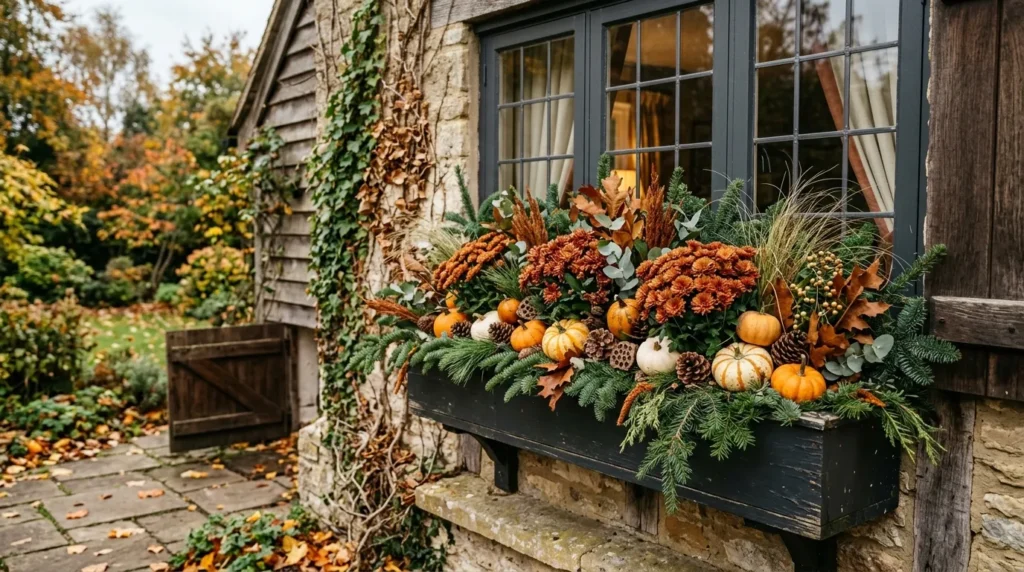
7. Evergreen Fall Mix
Quick Benefits
- Longer-lasting display
- Combines fall and winter elements
- Adds greenery
- Works with neutral palettes
- Provides texture
Why It Works
Evergreen foliage gives a fall window box staying power. When combined with autumn colors, it creates a transitional arrangement that can remain attractive as temperatures change.
Deep green also provides a strong background for pumpkins, berries, dried grasses, and warm-colored flowers.
This is especially useful when you want to decorate once and gradually transition the display toward late fall.
How To Style It
Start with evergreen branches toward the back.
Add mums, fall foliage, or ornamental grasses in front.
Place small pumpkins or decorative berries among the greenery.
Use pinecones to reinforce the natural theme.
As the season progresses, remove flowers that no longer look fresh while leaving the evergreen foundation.
Later, you can add winter accents such as additional branches or seasonal accessories if the materials and local conditions allow.
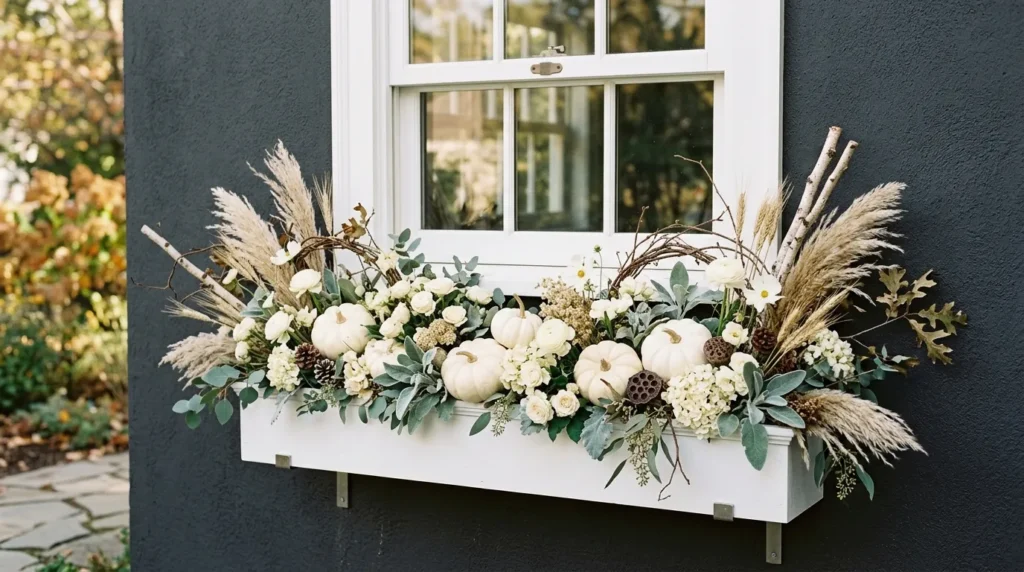
8. White Pumpkin Box
Quick Benefits
- Sophisticated look
- Neutral color palette
- Easy to coordinate
- Works with farmhouse and modern styles
- Creates visual contrast
Why It Works
White pumpkins are a simple way to create a refined fall display. Their pale color allows greenery and natural textures to become more noticeable.
A white pumpkin arrangement works particularly well against darker window frames or doors because the light pumpkins create contrast.
For a softer look, combine white pumpkins with cream flowers, sage greenery, and beige grasses.
For more contrast, add dark green foliage or burgundy flowers.
How To Style It
Use several small white or cream pumpkins.
Add greenery around and between them.
Include a few cream flowers or muted grasses.
Place the largest pumpkins toward the center or back, with smaller pieces toward the front.
Avoid using too many different decorative materials. The beauty of this arrangement comes from its simplicity.
Choose a natural wood or black window box depending on the home’s exterior.
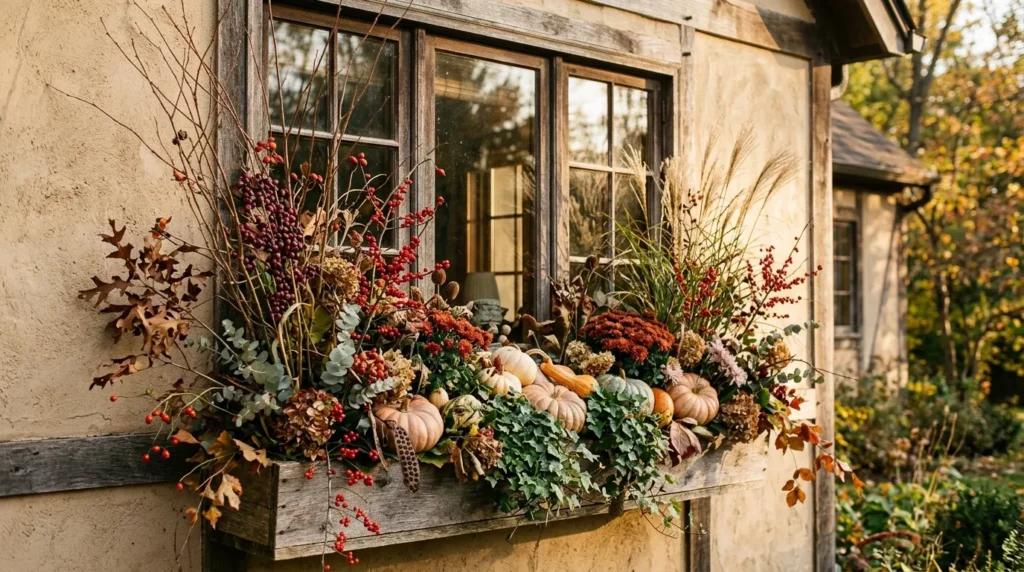
9. Berry And Branches
Quick Benefits
- Adds natural texture
- Creates height
- Works with minimal flowers
- Provides strong fall color
- Easy to layer
Why It Works
Branches and decorative berries give a window box an organic appearance. They introduce height and texture while requiring less reliance on traditional flowers.
Red, burgundy, orange, and brown berries can bring color into the arrangement, while bare branches create structure.
This style can look particularly attractive when the home already has natural landscaping because the materials echo the surrounding environment.
How To Style It
Place tall branches toward the back.
Add berry stems at different heights.
Use lower greenery or flowers to fill the front.
Tuck small pumpkins into the arrangement if desired.
Keep the branches irregular rather than perfectly symmetrical.
For a minimalist look, use only branches, berries, and a few pumpkins.
For a fuller farmhouse look, combine the branches with mums and grasses.
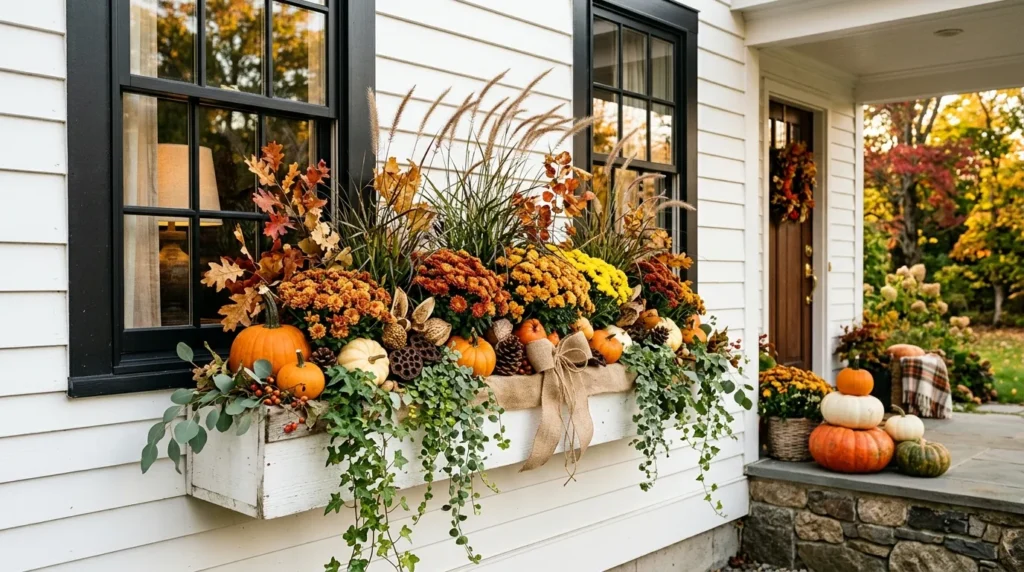
10. Farmhouse Harvest Box
Quick Benefits
- Warm and welcoming
- Layered seasonal texture
- Works with rustic homes
- Classic fall colors
- Strong curb appeal
Why It Works
A farmhouse harvest window box combines many of the classic elements associated with autumn: pumpkins, mums, grasses, branches, and natural textures.
The key is layering the materials instead of placing everything at the same level.
Warm orange pumpkins can become focal points, while mums add color and grasses create height. Branches and leaves fill the spaces between them.
This arrangement feels abundant without needing an excessive number of decorative pieces.
How To Style It
Begin with ornamental grasses and branches toward the back.
Add mums in warm shades such as rust, yellow, bronze, or burgundy.
Place pumpkins near the front and center.
Use trailing greenery around the edges.
Add a few pinecones or berry stems for additional texture.
Finish with natural materials such as jute or burlap if the window box needs another decorative detail.
How to Arrange a Fall Window Box
A beautiful window box usually benefits from three basic layers:
Thriller: Tall elements such as grasses, branches, or cornstalks create height.
Filler: Flowers and medium-sized foliage provide fullness in the center.
Spiller: Trailing greenery softens the front edge and sides.
This simple formula helps prevent the arrangement from looking flat.
You can also use the rule of three when choosing colors. Select one dominant color, one supporting color, and one neutral or natural shade.
For example:
- Orange + burgundy + green
- Cream + sage + tan
- Yellow + bronze + brown
- White + deep green + natural wood
The goal is visual balance rather than perfect symmetry.
Best Flowers for Fall Window Boxes
The right plants depend on your local climate, sunlight, and the length of your fall season.
Common seasonal choices include:
- Chrysanthemums
- Ornamental kale
- Ornamental cabbage
- Pansies
- Violas
- Ornamental grasses
- Heuchera
- Sedum
Always check the growing requirements of a specific plant before placing it in a window box.
A sunny window and a shaded window can require very different plant selections.
If you want the display mainly for decoration rather than long-term planting, faux foliage, pumpkins, branches, and dried-looking materials can provide more flexibility.
How to Make a Small Window Box Look Full
A small window box does not require dozens of plants.
Instead, create height in the back, fullness in the middle, and softness along the front edge.
Use a few larger focal elements rather than many tiny decorations.
For example, three miniature pumpkins surrounded by greenery can look more intentional than ten small pumpkins placed randomly.
You can also use trailing plants to make the box appear wider.
Avoid filling every open space. A little breathing room helps each element remain visible.
Fall Window Box Color Ideas
Traditional Autumn
Orange, rust, yellow, burgundy, brown, and green.
Neutral Fall
Cream, beige, taupe, sage, white, and tan.
Elegant Fall
Burgundy, deep green, cream, bronze, and brown.
Farmhouse Fall
Orange, white, natural wood, burlap, tan, and muted green.
Modern Fall
White, charcoal, sage, muted orange, and warm beige.
Choose the palette based on the exterior colors of your home.
Frequently Asked Questions
1. What can I put in a fall window box?
Popular choices include mums, ornamental grasses, pumpkins, fall foliage, ornamental kale, branches, berries, pinecones, and trailing greenery. You can combine live plants with decorative elements or create a temporary arrangement using faux stems and seasonal accessories.
2. How do I make a window box look good in the fall?
Use a combination of height, fullness, and trailing elements. Place tall grasses or branches toward the back, flowers and pumpkins in the middle, and trailing greenery near the front. A limited color palette also helps create a cohesive arrangement.
3. What flowers are best for fall window boxes?
Chrysanthemums, pansies, violas, ornamental kale, ornamental cabbage, heuchera, and some ornamental grasses are common fall choices. The best option depends on sunlight, temperature, and your local growing conditions.
4. Can I use pumpkins in a window box?
Yes. Miniature pumpkins can be tucked between flowers, greenery, and grasses to create a seasonal harvest appearance. Secure lightweight pumpkins if the box is exposed to wind, and avoid overcrowding the container.
5. How can I decorate a window box without flowers?
Use ornamental grasses, evergreen branches, dried-looking foliage, pumpkins, pinecones, berries, cornstalks, and natural branches. A combination of textures and different heights can create a beautiful fall display without relying on flowers.
6. How often do fall window boxes need watering?
Watering requirements vary by plant, container size, weather, and sunlight. Check the soil regularly and follow the care requirements of the plants you select. Containers can dry more quickly than garden beds, particularly during warm or windy weather.
7. How do I make a fall window box last longer?
Choose plants suited to your local fall conditions and provide the appropriate sunlight and moisture. Remove fading flowers and damaged foliage regularly. Evergreen branches and durable decorative elements can extend the visual life of the arrangement as seasonal flowers decline.
Related Articles
- 10 Fall Front Porch Decor Ideas
- 10 Cozy Fall Decorating Ideas for Your Home
- 10 DIY Fall Wreath Ideas
- 10 Pumpkin Decorating Ideas for Fall
- 10 Farmhouse Fall Decor Ideas
Conclusion
Fall window boxes are a simple way to make your home’s exterior feel warm and seasonal. You do not need a large porch or an elaborate collection of decorations to create an inviting display.
Start with the architecture and colors already surrounding the window. Then choose a seasonal palette that complements those features. Mums provide classic color, pumpkins add harvest character, grasses bring movement, and greenery creates a natural foundation.
For a traditional look, combine orange flowers with miniature pumpkins. For something more refined, use white pumpkins, cream flowers, and muted greenery. If farmhouse style is more your preference, add grasses, branches, burlap, and rustic harvest accents.
Remember to consider sunlight, drainage, weather exposure, and the care requirements of live plants before creating the arrangement.
A thoughtful window box does not need to be complicated. A few well-chosen elements, arranged at different heights and repeated in a cohesive color palette, can create a beautiful seasonal display that welcomes fall from the moment you arrive home.