How to Paint Baseboards on Top of Carpeting Without Getting Paint on Fibers
Successfully managing the process of painting baseboards on top of carpeting without getting paint on fibers requires a combination of preparation, the right tools, and a steady hand. Many homeowners find themselves intimidated by the proximity of delicate carpet pile to the trim, fearing permanent damage. By utilizing specific shielding techniques and choosing the correct applicators, you can achieve a professional finish without ruining your flooring.
This approach focuses on physical barriers and controlled application to protect your home’s interior finishes. Following these steps ensures your trim work looks crisp while your carpets remain completely untouched by stray paint drips or accidental brush strokes.
The Primary Method for Carpet Protection
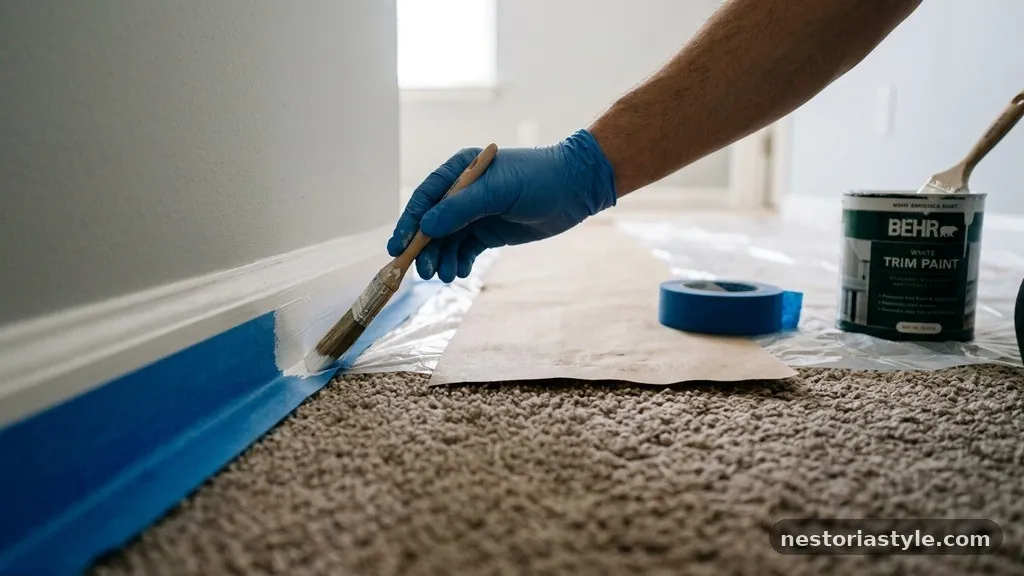
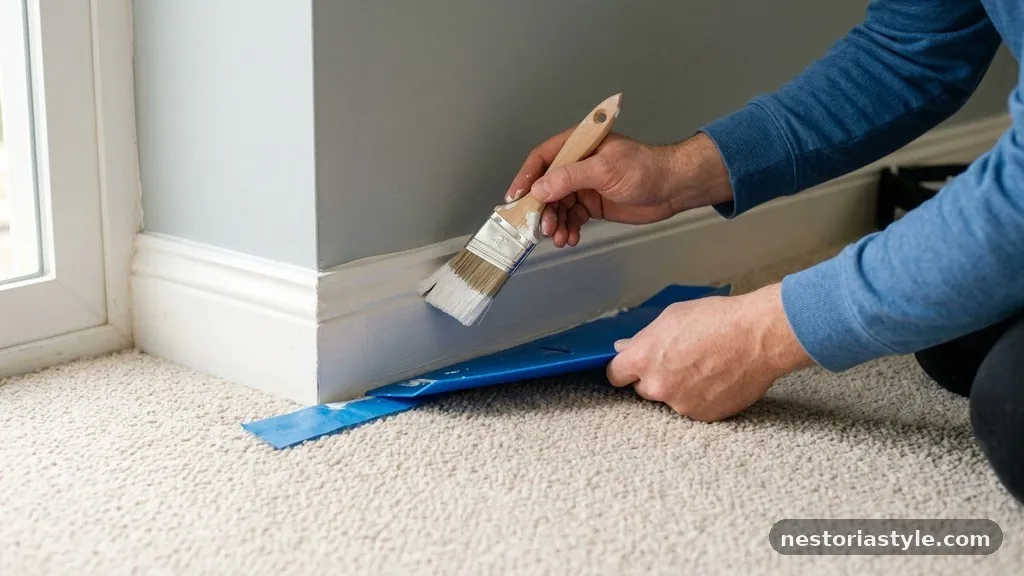
The most effective way to ensure you are painting baseboards on top of carpeting without getting paint on fibers is to create a physical barrier using a rigid tool. A thin, flexible putty knife or a dedicated carpet shield is essential for this task. You slide the blade of the tool between the bottom of the baseboard molding and the carpet pile.
By pressing the tool firmly against the trim, you push the carpet fibers down and away from the wood surface. This creates a small gap where you can safely apply your brush or roller without making contact with the textile floor covering.
When using a putty knife, you must move it along the wall as you paint, keeping it just ahead of your brush. This requires a bit of coordination, as you are essentially performing a two-handed operation. If the gap between the carpet and the baseboard is particularly tight, a metal putty knife is often superior to a plastic one because it is thinner and easier to wedge into place.
Always wipe the paint off the blade of your tool frequently to prevent it from transferring onto the carpet when you reposition the shield. This technique is highly effective for long, straight sections of wall where you have enough room to maneuver comfortably.
Choosing the Right Painter’s Tape
While a shield is excellent for manual control, painter’s tape serves as the industry standard for securing edges. However, not all tapes are created equal when you are attempting to protect fibers. You should select a low-tack blue or green tape specifically designed for delicate surfaces to avoid pulling up carpet fibers or leaving behind stubborn adhesive residue.
Applying the tape to the carpet is often ineffective because it struggles to stick to the irregular texture of the pile. Instead, you should use the tape to create a “bridge” or a protective flap that covers the edge of the carpet while remaining anchored to the baseboard itself.
If you choose to use tape, ensure it is pressed firmly against the bottom edge of the wood trim. You can use a plastic masking tool or a credit card to burnish the edge of the tape to ensure a tight seal. This prevents paint from bleeding underneath the tape during the application process.
For those who struggle with manual application, a painter’s tape dispenser can provide a more consistent result by keeping the tape taut and aligned. Remember to remove the tape while the paint is still slightly tacky to ensure a clean line and prevent the film from tearing.
Selecting the Best Painting Tools
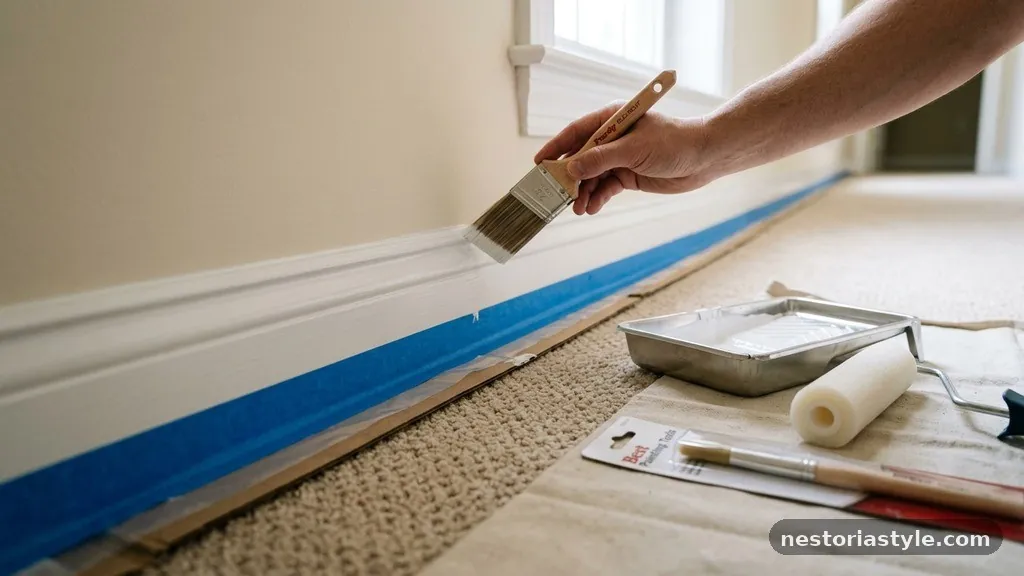
The brush you choose significantly impacts your ability to stay off the carpet. An angled sash brush is the best choice for trim work because the tapered bristles allow you to cut in along the bottom edge with high precision. You should avoid using large wall brushes that hold too much paint and are prone to dripping.
Instead, use a smaller 1.5-inch or 2-inch brush that provides enough control to paint the lower edge of the molding without overloading the bristles. If you are painting a very long stretch, keeping a damp rag nearby is a non-negotiable safety measure.
For the flat surfaces of the baseboard, a high-density foam roller can provide a smooth, professional finish. However, you should never use a roller for the bottom inch of the baseboard. Use the roller only for the center of the board, stopping well before you reach the carpet line.
You can then use your sash brush to carefully fill in the bottom edge. This hybrid approach minimizes the chance of “fat edges” or drips that often occur when rollers are used too close to a floor surface. Always maintain a light touch to ensure the paint stays on the wood and off the floor.
Surface Preparation and Cleaning
Painting is only as good as the surface preparation that precedes it. Before you even open a can of paint, you must ensure the baseboard is free of dust and grime. Use a vacuum with a hose attachment to pull debris out of the baseboard gap where the wood meets the carpet.
If you skip this step, you risk dragging dust into your wet paint, which ruins the texture of your finish. Follow the vacuuming with a quick wipe down using a tack cloth to pick up any remaining fine particles that could interfere with paint adhesion.
If there are gaps between the baseboard and the floor or wall, you may need to apply a small bead of latex caulk. This creates a clean, uniform line that is much easier to paint than an uneven, gapped edge. Allow the caulk to cure completely according to the manufacturer’s instructions before applying any primer or paint.
A clean, primed surface ensures that your trim paint goes on smoothly, reducing the number of coats required and the amount of time you need to spend working near the carpet. Never paint over loose dirt or old, flaking paint, as it will inevitably peel.
Managing Paint Volume to Prevent Drips
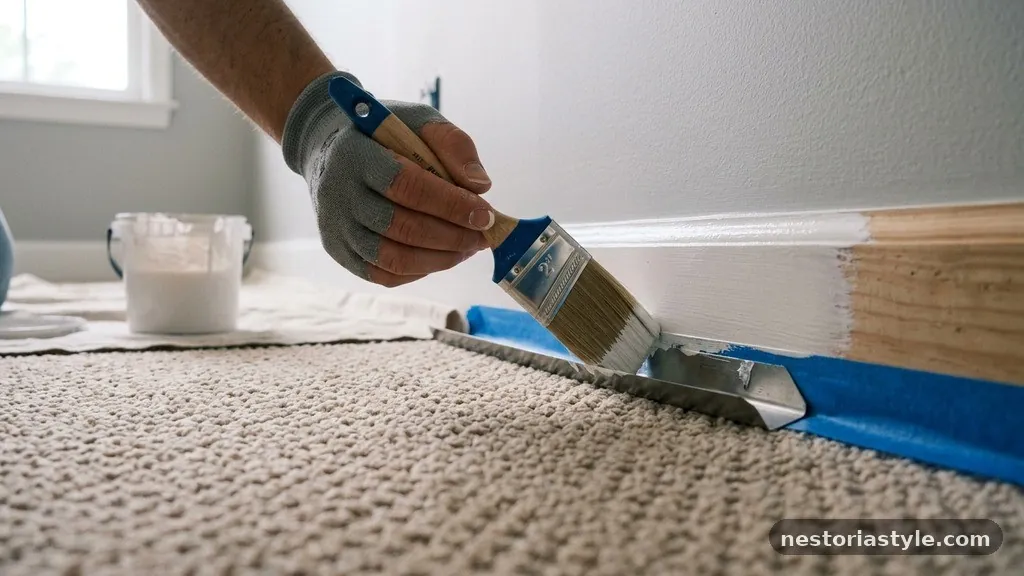
The most common cause of accidental paint transfer is having too much paint on your applicator. When you are painting baseboards on top of carpeting without getting paint on fibers, gravity is your constant enemy. You should only dip the very tips of your brush into the paint, rather than dunking the entire bristle length.
Tap the brush gently against the inside of the can to remove excess paint, or use a paint grid to ensure an even distribution. If you have a glob of paint on your brush, you are significantly more likely to drop it onto your carpet.
Work in small, manageable sections, usually two to three feet at a time. This allows you to maintain focus and ensure that you are not rushing the critical bottom edge. If you notice a drip forming on the baseboard, address it immediately before it migrates downward.
Using a small, dry brush to “pick up” a drip is much easier than trying to clean a wet paint spot out of a carpet pile. Keep your paint container on a drop cloth or a piece of cardboard to ensure that even if you spill, the mess is contained away from your flooring.
Utilizing a Masking Tool for Efficiency
A professional masking tool or an automatic applicator can be a significant time-saver for those who have a lot of trim to cover. These tools allow you to apply tape and paper simultaneously, providing a wide buffer zone of protection around your workspace. You can slide the edge of the paper or plastic film underneath the baseboard, while the tape secures the upper edge to the wood.
This creates a wide “apron” that prevents any accidental splatters from landing on the carpet. It is particularly useful if you are using a sprayer or a high-volume roller.
When using masking film, ensure that the material is heavy-duty enough to prevent paint from soaking through. Thin plastic bags or flimsy paper can sometimes tear or allow paint to bleed through to the carpet underneath. If you are working on a long wall, you can use a painter’s tape dispenser to lay down a continuous line of protection.
This method is far superior to trying to tape the carpet directly, as it does not rely on the carpet’s ability to hold adhesive. Once the painting is complete, simply pull up the film and tape in one motion.
Dealing with Different Carpet Types
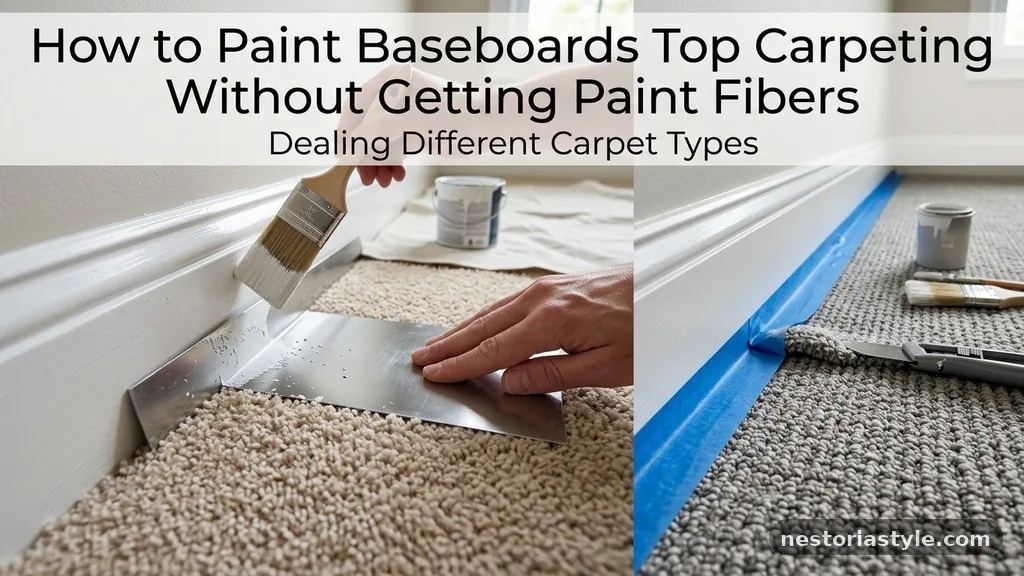
The texture of your carpet will dictate how you approach the painting process. High-pile or shag carpets are much more difficult to manage because the fibers can easily flop over the edge of the baseboard. For these types of flooring, you must use a rigid shield that is pushed firmly against the wood.
You may also need to use a wider piece of painter’s tape to ensure the carpet is held down effectively. Short-pile or commercial-grade carpet is much more forgiving, as it stays flatter and provides a cleaner line at the baseboard.
If you have a high-pile carpet, consider using a piece of stiff cardboard or a thin plastic trim guard as a temporary spacer. You can tuck this into the carpet pile to create a “floor-level” barrier that stays in place while you work. If you are working on stairs, this becomes even more critical because of the awkward angles.
Take your time to assess the junction of the floor and the trim before you start. Understanding how the specific carpet fibers respond to pressure will help you choose the best shielding method for your particular floor.
Comparison of Protection Techniques
Choosing the right method depends on your skill level and the amount of time you have available. The table below outlines the effectiveness and effort required for common protection strategies.
| Method | Effectiveness | Difficulty | Ideal Use Case |
|---|---|---|---|
| Putty Knife/Shield | High | Moderate | Straight, long baseboards |
| Painter’s Tape | Medium | Low | Beginners, short sections |
| Masking Film/Paper | Very High | Moderate | Large rooms, heavy painting |
| Cardboard/Scrap Wood | Medium | Low | Budget-friendly, quick fixes |
Each of these methods has clear advantages depending on the scope of your project. For a single room, a simple putty knife often suffices. However, if you are tackling an entire house, investing in a professional-grade masking tool will pay off in saved time and reduced stress.
Common Mistakes to Avoid
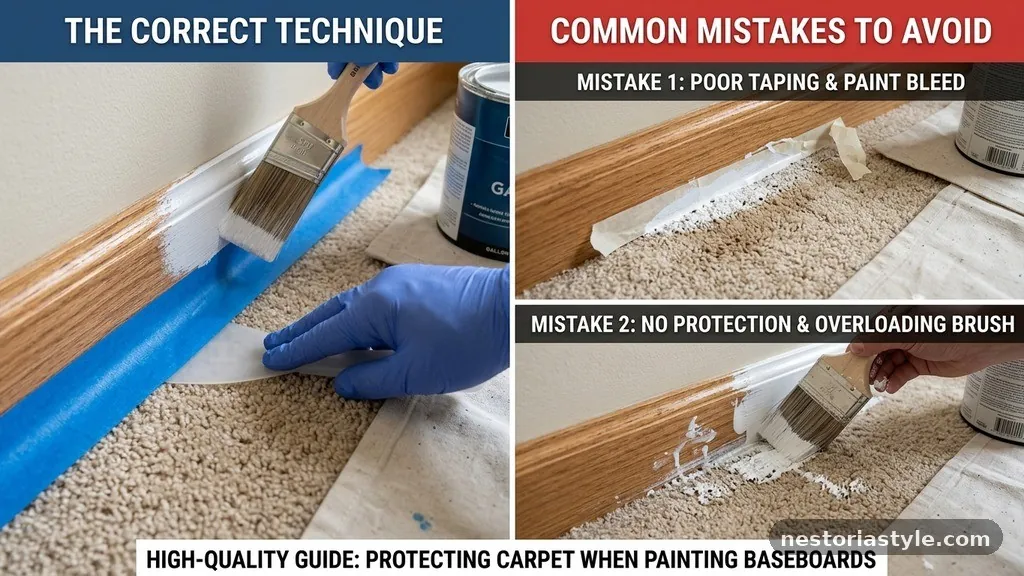
Many DIYers fail because they try to work too quickly or use the wrong materials. One of the biggest mistakes is using standard masking tape that is designed for paper rather than wood or delicate surfaces. This can leave behind sticky residue that attracts dirt and ruins the look of your carpet after the job is finished.
Another common error is failing to wait for the caulk or primer to dry before applying the final coat of trim paint. If the base coat is still soft, it can peel off when you remove your tape or shift your shield.
Never attempt to clean a fresh paint drip on the carpet by rubbing it. Rubbing will only push the paint deeper into the fibers and spread the stain over a larger area. Instead, use a blotting motion with a damp cloth or a specialized paint remover if the paint is oil-based.
If you are using latex paint, a little warm water and a gentle soap are usually sufficient. Prevention is always better than cleanup, so keep your workspace organized and your paint containers secured.
Frequently Asked Questions
Should I remove the carpet before painting the baseboards?
Removing the carpet is generally unnecessary and significantly increases the labor required for a painting project. You can achieve a professional result by using a simple shield or painter’s tape to protect the fibers, provided you take the time to prepare the area properly.
What is the best way to clean up a paint drip on carpet?
If you drop paint on the carpet, do not rub it. Use a clean, damp cloth to gently blot the area, lifting the paint from the fibers. If the paint has already dried, you may need a specialized solvent or a professional carpet cleaning service to remove it without damaging the pile.
Can I use a paint sprayer for baseboards near carpet?
Using a sprayer for baseboards is risky if the carpet is already installed. The overspray is difficult to contain, and you would need to mask the entire floor area with plastic to ensure no paint settles on the fibers. It is much more efficient and safer to use a high-quality brush for this application.
How long should I wait before removing tape from the baseboard?
You should remove the painter’s tape while the paint is still slightly tacky, usually within an hour of your final coat. If you wait for the paint to dry completely, the tape may pull away some of the dried paint, resulting in a jagged, uneven edge that requires touch-ups.
What if my baseboard has a large gap at the floor?
A large gap is best addressed with a flexible latex caulk before you begin painting. Apply a thin bead of caulk along the junction, smooth it with a damp finger, and allow it to dry thoroughly. This creates a finished, professional look that eliminates the gap and makes the painting process much cleaner.
Best Practices for a Professional Finish
Achieving a clean look when painting baseboards on top of carpeting without getting paint on fibers requires patience and the right equipment. Always start with a clean surface, use a high-quality sash brush, and never rush the bottom edge. By utilizing a physical shield like a putty knife or a masking film, you create a buffer that keeps your carpet pristine.
Remember to work in small sections and address any drips immediately to ensure the best possible outcome. With these techniques, you can confidently update your home’s trim without the fear of damaging your flooring.
If you find that your baseboards are particularly worn or damaged, consider sanding them with a fine-grit sanding block before painting. This creates a better surface for the new paint to adhere to and helps you achieve a smoother finish. Proper preparation, combined with the right tools, will make the process of painting baseboards on top of carpeting without getting paint on fibers a manageable task for any homeowner.
Feel free to reach out if you have questions about specific tools or techniques for your next home improvement project. Good luck with your painting, and enjoy the refreshed look of your home.