
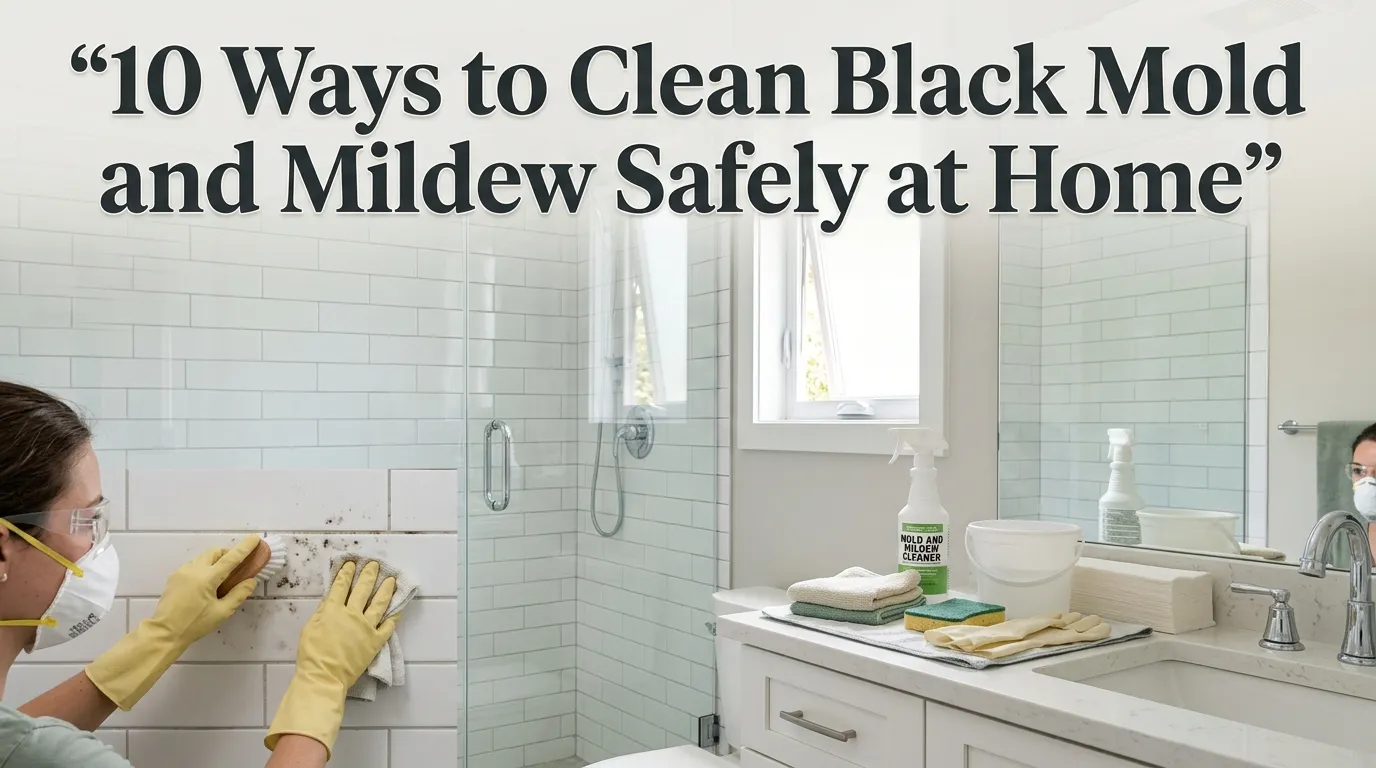
10 Ways to Clean Black Mold and Mildew Safely at Home
Black mold and mildew can make an otherwise clean home feel damp, neglected, and uncomfortable. You may notice dark spots around bathroom grout, window frames, shower corners, basement surfaces, or other areas where moisture tends to collect.
The first thing to understand is that cleaning visible growth is only part of the solution. Mold and mildew are strongly associated with excess moisture, so simply wiping away a stain without correcting the underlying dampness can allow it to return.
For small areas on appropriate hard, non-porous surfaces, careful cleaning can sometimes be handled as a household maintenance task. But larger areas, recurring growth, hidden moisture, contaminated porous materials, or suspected HVAC contamination can require professional assessment.
A mistake many homeowners make is treating every dark stain as the same problem. Some stains are dirt, soap buildup, mineral deposits, or material discoloration rather than mold. And some mold situations are more complicated than they initially appear.
The safest approach is to identify the moisture source, choose a cleaning method appropriate for the surface, ventilate the area, and avoid spreading contaminated material around the home.
If you’re dealing with a small bathroom spot, mildew around a window, or another limited area, the following ideas can help you understand practical cleaning and prevention steps while also showing when it’s time to stop DIY work and call a professional.
Important: This article is general home-maintenance information, not a mold-remediation diagnosis. If the affected area is extensive, keeps returning, involves significant water damage, or includes materials that cannot be safely cleaned, professional assessment is the safer choice.
Table of Contents
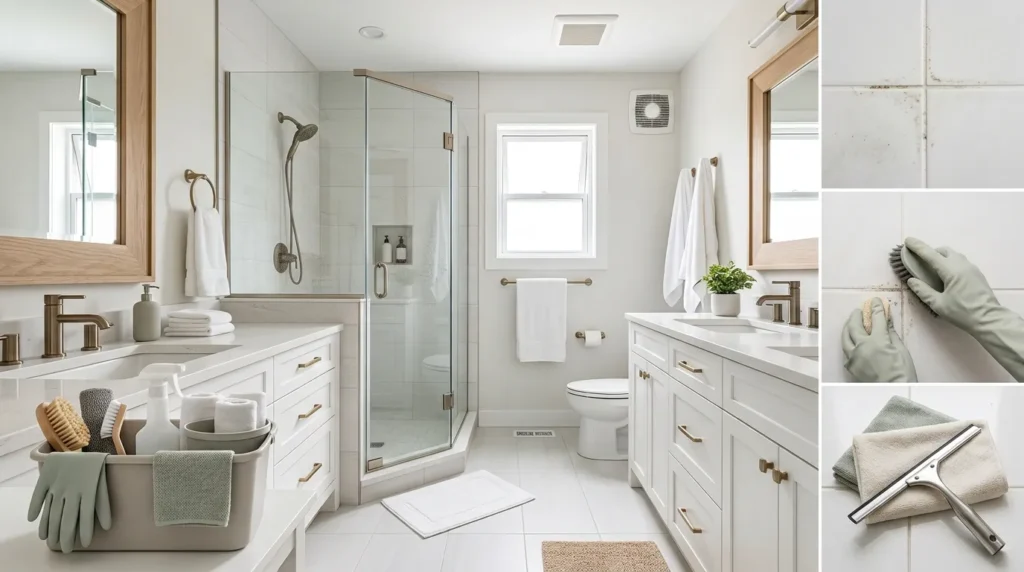
1. Clean Bathroom Grout
Learn how to approach small areas of surface growth on suitable bathroom grout.
2. Wash Shower Surfaces
Use appropriate cleaning practices for small mildew spots on non-porous shower surfaces.
3. Treat Window Frames
Address moisture-related growth around window frames while correcting condensation.
4. Clean Bathroom Caulk
Understand when surface cleaning is appropriate and when deteriorated caulk should be replaced.
5. Refresh Tile Surfaces
Clean suitable hard tile surfaces while preventing moisture from returning.
6. Address Basement Spots
Handle small surface areas carefully while investigating basement moisture.
7. Clean Small Hard Areas
Use practical precautions for limited growth on appropriate non-porous surfaces.
8. Dry Damp Spaces
Reduce the moisture conditions that allow mildew to keep returning.
9. Wash Reusable Items
Clean suitable washable household items without spreading contamination.
10. Prevent Future Growth
Build simple moisture-control habits that help keep mold and mildew from returning.
1. Clean Bathroom Grout
Quick Benefits
- Improves the appearance of grout
- Addresses small surface growth
- Helps maintain bathroom surfaces
- Encourages regular cleaning
- Highlights moisture problems early
Why It Works
Bathroom grout can stay damp for long periods, especially in poorly ventilated showers. That makes it a common location for mildew and other surface growth.
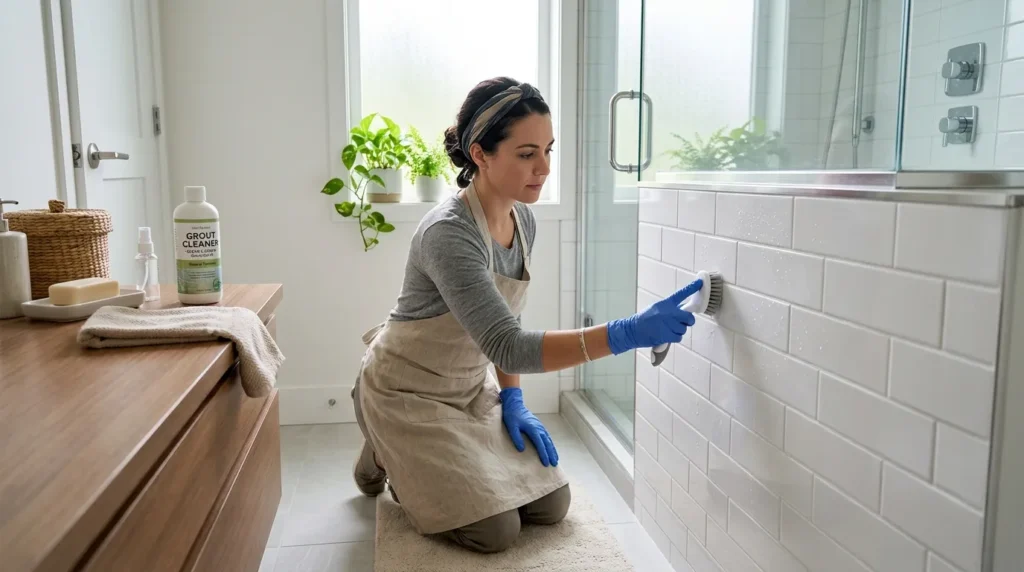
For a small area on intact, suitable grout, begin with a normal household cleaning approach appropriate for the surface. Wear gloves and eye protection, ventilate the room, and avoid creating unnecessary splashes.
The goal isn’t simply to make the dark marks disappear. Pay attention to why the area remains wet.
If the grout repeatedly develops dark growth despite regular cleaning and drying, there may be a ventilation, plumbing, caulking, or moisture problem that needs attention.
How To Style It
Remove toiletries from the immediate area.
Open a window or use the bathroom exhaust fan.
Wear appropriate gloves and eye protection.
Use a cleaner labeled for the surface and follow its directions.
Use a dedicated scrub brush for grout.
Rinse when the product directions call for it and allow the area to dry completely.
Never mix cleaning products, particularly bleach with ammonia, acids, or other cleaners.
2. Wash Shower Surfaces
Quick Benefits
- Helps remove surface buildup
- Keeps showers looking fresh
- Supports regular bathroom maintenance
- Reduces lingering moisture
- Makes problem areas easier to notice
Why It Works
Shower walls can accumulate soap residue, body oils, mineral deposits, and moisture-related growth.
Hard, non-porous surfaces are generally easier to clean than porous materials because contamination is less likely to penetrate deeply.
The most important part of the process is identifying the surface before choosing a product. Natural stone, painted surfaces, acrylic, fiberglass, ceramic tile, and glass can have different cleaning requirements.
Cleaning should also be paired with better drying.
How To Style It
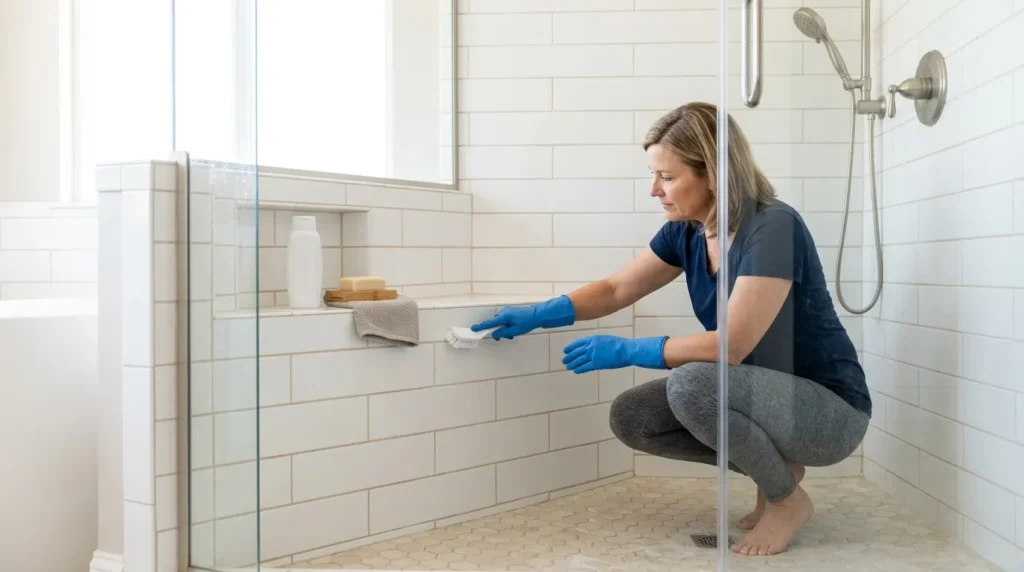
Clear the shower area.
Turn on ventilation.
Identify the material you’re cleaning.
Use a surface-compatible cleaner according to the label.
Clean with a non-abrasive sponge or appropriate brush.
Rinse if required.
Dry the surface thoroughly.
After future showers, use an exhaust fan and consider using a squeegee on appropriate smooth surfaces to reduce standing moisture.
3. Treat Window Frames

Quick Benefits
- Addresses common condensation areas
- Helps keep frames cleaner
- Makes moisture problems visible
- Supports better indoor maintenance
- Can prevent recurring surface buildup
Why It Works
Window frames can develop condensation when warm indoor air meets cold glass and surrounding surfaces.
If moisture repeatedly collects around the frame, dark spotting may eventually appear.
Cleaning the visible area is only one step. If condensation remains excessive, the underlying humidity problem needs attention.
This can be particularly important during cold weather when indoor humidity and cold window surfaces interact.
How To Style It
Wipe away visible moisture regularly.
Clean suitable hard surfaces using a compatible household cleaner.
Dry the frame completely.
Check surrounding caulk for deterioration.
Make sure curtains or blinds aren’t trapping moisture against the window.
Improve room ventilation when practical.
If moisture repeatedly accumulates between window panes or inside inaccessible assemblies, professional evaluation may be appropriate.
4. Clean Bathroom Caulk
Quick Benefits
- Improves bathroom appearance
- Helps identify damaged seals
- Supports routine maintenance
- Can reveal moisture problems
- Keeps shower areas looking cleaner
Why It Works
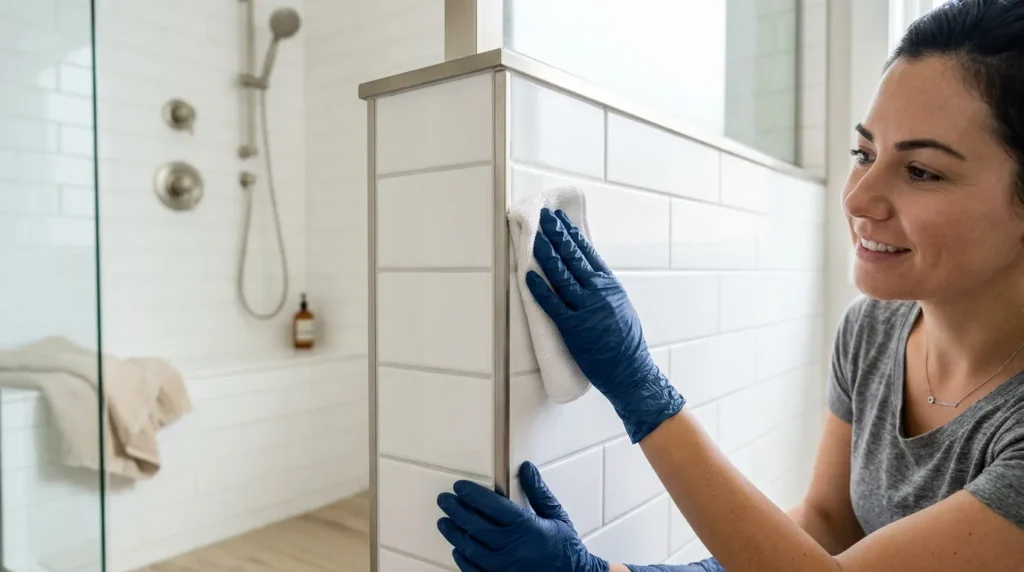
Bathroom caulk is exposed to constant moisture and can eventually discolor or deteriorate.
If dark growth is only on the surface of intact caulk, cleaning may improve its appearance. However, when discoloration has penetrated deteriorated or porous caulk, cleaning may not completely solve the problem.
In that situation, replacing the affected caulk with a suitable bathroom product may be more effective than repeatedly scrubbing it.
How To Style It
Inspect the caulk carefully.
If it is intact and the discoloration appears superficial, use a surface-compatible cleaner.
For damaged, cracked, separated, or persistently discolored caulk, remove the old material appropriately.
Allow the area to dry completely.
Apply new bathroom-rated caulk according to the manufacturer’s directions.
Keep the area dry for the recommended curing period.
5. Refresh Tile Surfaces
Quick Benefits
- Makes tile look cleaner
- Addresses surface buildup
- Works well for routine maintenance
- Helps identify damaged grout
- Supports a cleaner bathroom
Why It Works
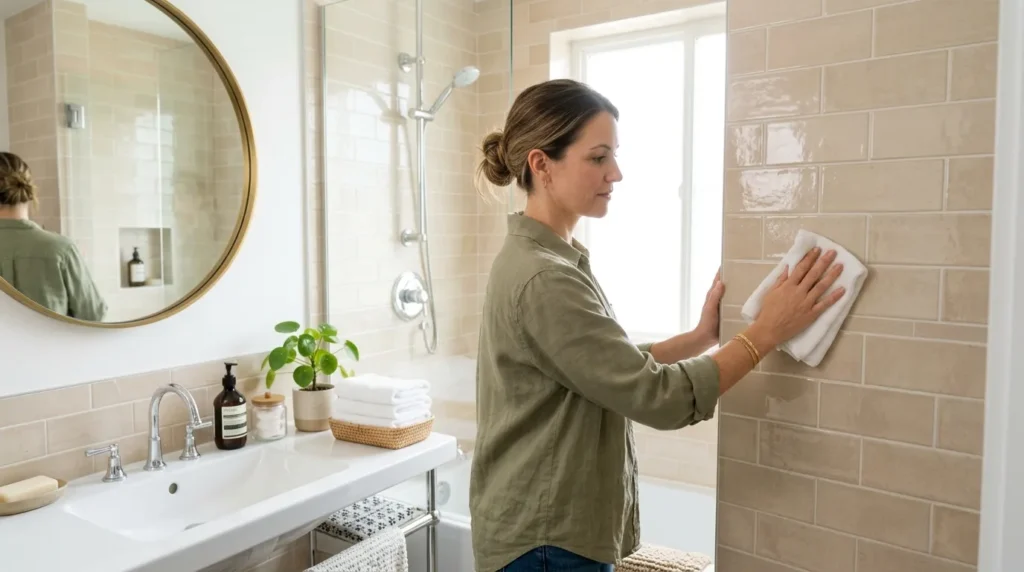
Ceramic and porcelain tiles are generally easier to maintain than many porous materials, but the grout surrounding them can hold moisture and discoloration.
When cleaning tile, distinguish between the tile itself and the grout lines.
A cleaner that is appropriate for one surface may damage another.
For that reason, always check the manufacturer’s cleaning recommendations, particularly if you’re working with natural stone.
How To Style It
Start by removing loose dirt and debris.
Use a suitable tile cleaner.
Work in small sections.
Use a soft sponge or appropriate brush.
Avoid abrasive tools that can scratch finished surfaces.
Rinse and dry as directed.
Inspect grout and caulk afterward for cracks or areas that may allow water to reach the underlying assembly.
6. Address Basement Spots
Quick Benefits
- Helps identify moisture problems
- Keeps suitable surfaces cleaner
- Encourages early maintenance
- Can reveal leaks
- Supports healthier home maintenance
Why It Works
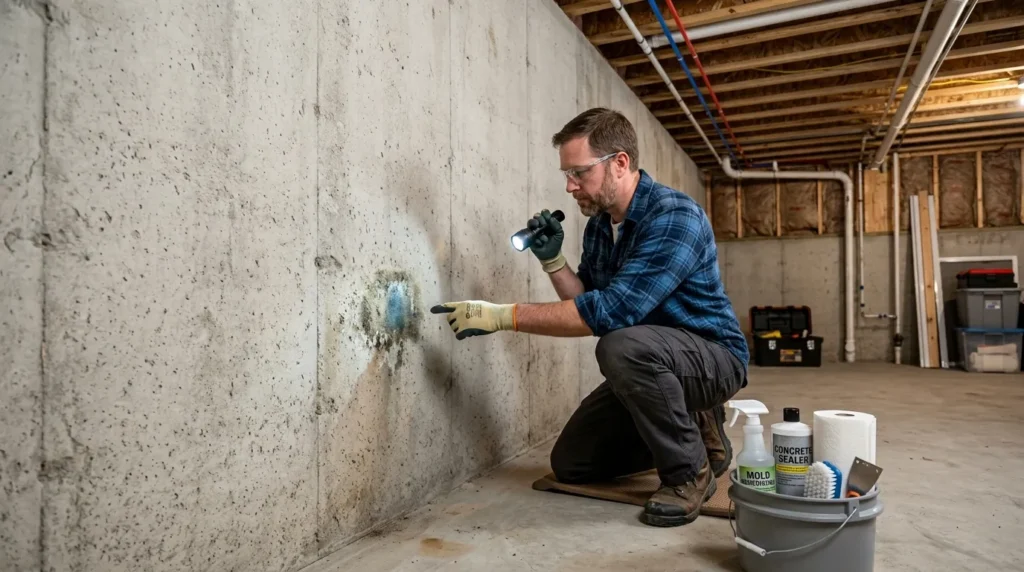
Basements can experience moisture from condensation, plumbing leaks, foundation seepage, flooding, or high humidity.
If you find a small amount of visible growth on an appropriate hard surface, cleaning may be possible. But the bigger question is why moisture is present.
Repeated growth is a warning that the underlying conditions haven’t been corrected.
Basement moisture can also affect drywall, insulation, carpeting, wood, and other porous materials that may require more specialized handling.
How To Style It
Inspect the surrounding area.
Look for plumbing leaks, condensation, water stains, or seepage.
Don’t disturb potentially contaminated porous materials unnecessarily.
For small amounts on suitable hard surfaces, follow the product directions for cleaning.
Dry the area completely.
Use appropriate humidity control if needed.
If water damage is extensive or growth covers a substantial area, consult a qualified remediation professional.
7. Clean Small Hard Areas
Quick Benefits
- Useful for limited maintenance tasks
- Reduces unnecessary chemical use
- Helps contain the work area
- Makes cleaning more organized
- Encourages safer practices
Why It Works
Not every small dark spot requires an aggressive chemical treatment.
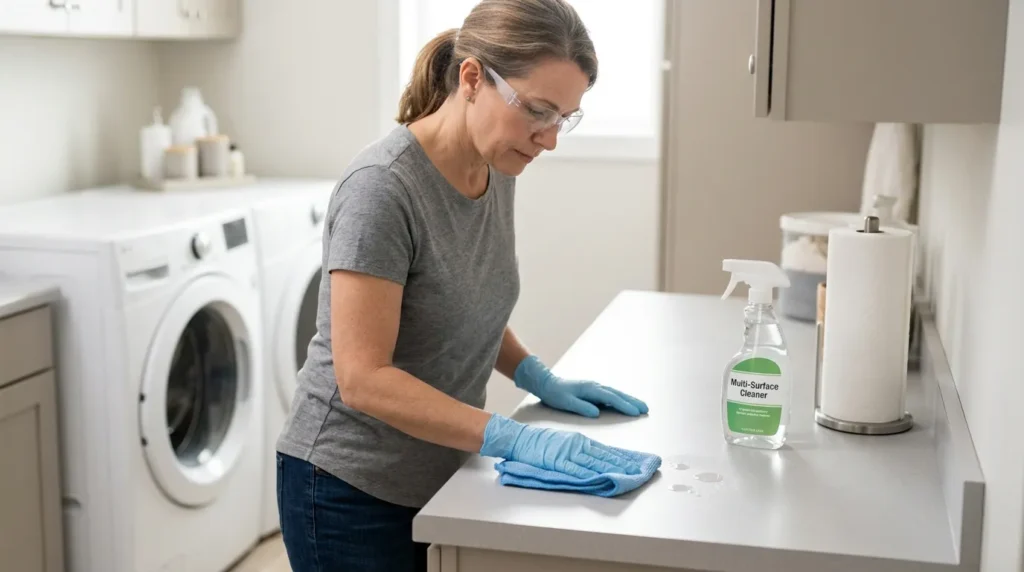
For limited surface growth on suitable non-porous materials, basic cleaning with an appropriate household product may be sufficient.
The important part is containment.
You don’t want to dry-brush or aggressively disturb contaminated material and spread particles around the room.
This is especially important when you’re uncertain whether the affected material can be safely cleaned.
How To Style It
Wear gloves and appropriate eye protection.
Ventilate the room.
Avoid dry brushing or sanding the affected area.
Use a suitable cleaner according to its label.
Clean gently rather than aggressively disturbing the surface.
Dispose of cleaning materials appropriately.
Wash hands after completing the task.
If the area is large, hidden, recurring, or associated with significant water damage, stop and seek professional guidance.
8. Dry Damp Spaces

Quick Benefits
- Helps prevent recurring mildew
- Improves bathroom comfort
- Reduces condensation
- Protects surfaces
- Supports better indoor maintenance
Why It Works
Moisture control is one of the most important parts of preventing recurring mold and mildew.
If a room remains damp, cleaning alone won’t solve the underlying problem.
Bathrooms, basements, laundry rooms, kitchens, and poorly ventilated closets can all benefit from better moisture management.
The goal is to prevent water from remaining on surfaces or accumulating inside materials.
How To Style It
Use bathroom exhaust fans during showers and for an appropriate period afterward.
Open doors when practical to allow damp areas to dry.
Repair plumbing leaks promptly.
Dry wet surfaces.
Use a dehumidifier when appropriate for the space.
Avoid allowing wet towels and bath mats to remain damp for extended periods.
Inspect areas where condensation repeatedly forms.
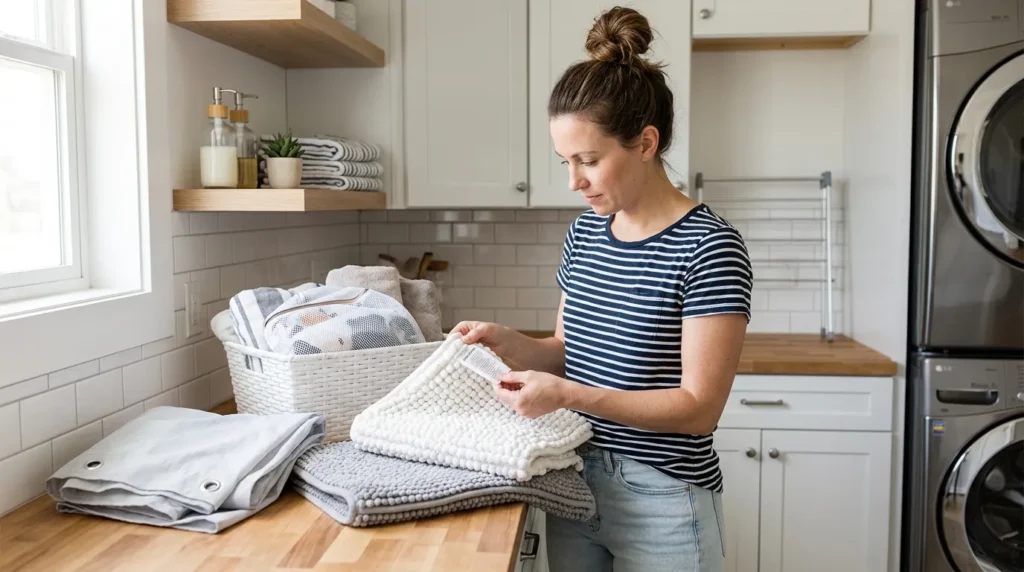
9. Wash Reusable Items
Quick Benefits
- Helps keep washable items cleaner
- Reduces lingering damp odors
- Supports regular maintenance
- Can extend useful life
- Encourages better drying habits
Why It Works
Mildew can appear on washable household materials such as certain shower curtains, bath mats, washable fabric accessories, and other items that remain damp.
Whether an item can be cleaned depends on the material and manufacturer’s instructions.
Don’t assume every fabric or household item should be treated with bleach or strong chemicals.
Proper drying is just as important as washing.
How To Style It
Check the care label first.
Wash the item using the recommended cycle and temperature.
Use an appropriate detergent.
Do not mix bleach with other cleaners.
Dry the item completely before returning it to the room.
Replace items that remain visibly damaged, deteriorated, or persistently contaminated despite appropriate cleaning.
10. Prevent Future Growth

Quick Benefits
- Addresses the underlying issue
- Reduces recurring moisture
- Protects household surfaces
- Makes cleaning easier
- Supports long-term maintenance
Why It Works
The best mold and mildew strategy isn’t simply cleaning faster.
It’s making the environment less favorable to recurring moisture problems.
That means paying attention to leaks, condensation, ventilation, humidity, wet materials, and areas where water repeatedly accumulates.
Once the moisture source is controlled, routine cleaning becomes much more effective.
How To Style It
Inspect bathrooms regularly.
Clean and dry shower surfaces.
Use exhaust fans.
Repair plumbing leaks quickly.
Monitor damp basements and crawlspaces.
Keep gutters and exterior drainage systems functioning properly.
Don’t ignore recurring condensation.
If growth returns in the same location repeatedly, investigate the moisture source instead of repeatedly treating the visible stain.
How to Tell When DIY Cleaning Isn’t Appropriate
Not every mold problem belongs on a weekend cleaning checklist.
Consider professional assessment when:
- The affected area is extensive.
- Growth keeps returning after cleaning.
- There has been significant flooding or water damage.
- Porous materials such as drywall or insulation are extensively affected.
- You suspect hidden growth inside walls or ceilings.
- The HVAC system may be contaminated.
- There is a persistent musty odor without an obvious source.
- The moisture source cannot be identified.
- You encounter suspected asbestos-containing materials.
- You are unsure whether the affected material can be safely cleaned.
A professional can help determine the source of the moisture and the appropriate remediation strategy.
What Not to Do
Some common cleaning habits can make a situation worse.
Don’t Mix Cleaners
Never mix bleach with ammonia, acids, vinegar, or other cleaning products.
Chemical reactions can create dangerous fumes.
Don’t Dry-Sand Moldy Materials
Sanding or aggressively disturbing contaminated materials can spread particles.
Don’t Paint Over Mold
Paint may temporarily hide discoloration but doesn’t address the moisture or contamination underneath.
Don’t Ignore Leaks
A cleaned surface can become contaminated again if the plumbing, roof, foundation, or condensation problem remains.
Don’t Assume Bleach Solves Everything
A stronger chemical isn’t automatically a better solution. The material, contamination, moisture source, and appropriate cleaning method all matter.
FAQ
What is the safest way to clean a small amount of mold?
For a small area on a suitable hard surface, wear gloves and eye protection, ventilate the room, avoid disturbing the material unnecessarily, and use a cleaner appropriate for the surface according to its label. The underlying moisture source should also be corrected so the growth doesn’t return.
Can I use bleach to clean black mold?
Bleach is not a universal mold-remediation solution. Whether it is appropriate depends on the surface and situation, and it can damage some materials. Never mix bleach with ammonia, acids, vinegar, or other cleaners. Always follow the product label and use appropriate ventilation and protective equipment.
Why does mold keep coming back after I clean it?
Recurring growth usually means the moisture condition hasn’t been corrected. Common contributors include leaks, condensation, high humidity, poor bathroom ventilation, wet building materials, or water intrusion. Cleaning the visible area without addressing the moisture source often results in recurring problems.
Should I remove moldy drywall?
Extensively contaminated or water-damaged porous materials may not be suitable for simple surface cleaning. Whether drywall should be removed depends on the extent and type of contamination, the moisture history, and the condition of the material. For significant or recurring contamination, professional assessment is advisable.
How can I prevent mildew in my bathroom?
Use the exhaust fan during and after showers, keep surfaces as dry as practical, repair leaks, clean regularly, and improve ventilation. If the bathroom remains unusually humid or condensation is persistent, investigate whether additional ventilation or moisture control is needed.
Is black mold always dangerous?
The appearance or color of a growth does not by itself determine its species or health significance. Different molds can look dark, and visual identification isn’t a reliable way to determine what you’re dealing with. The practical priority is to control moisture and address significant contamination appropriately.
When should I call a mold professional?
Consider professional help for extensive growth, recurring contamination, significant flooding, hidden moisture, contaminated HVAC systems, heavily affected porous materials, or situations involving potentially hazardous building materials. A professional can also help identify the moisture source when it isn’t obvious.
Conclusion
Cleaning a small amount of mold or mildew can sometimes be part of normal home maintenance, but the most important step is understanding why the growth appeared in the first place.
If a bathroom corner stays damp, a window continually collects condensation, or a basement has ongoing moisture, cleaning the visible spot is only a temporary step.
Focus on moisture control, ventilation, prompt leak repairs, and proper drying. For limited growth on suitable hard surfaces, use an appropriate cleaning product and follow its instructions carefully. Protect yourself with suitable gloves and eye protection, and avoid mixing cleaning chemicals.
Most importantly, know when to stop.
Large areas, recurring growth, extensive water damage, contaminated porous materials, hidden moisture, and potentially hazardous building materials deserve professional attention.
A cleaner home isn’t just about removing what you can see. It’s about creating an environment where moisture problems are identified early and addressed before they become bigger maintenance issues.
Related Articles
- 10 Bathroom Cleaning Tips for a Fresher Home
- 10 Ways to Prevent Mold in Your Bathroom
- 10 Home Maintenance Tips Every Homeowner Should Know
- 10 Ways to Reduce Humidity in Your Home
- 10 Deep Cleaning Ideas for a Healthier-Looking Home