10 Ideas on How to Decorate a Living Room Like a Designer
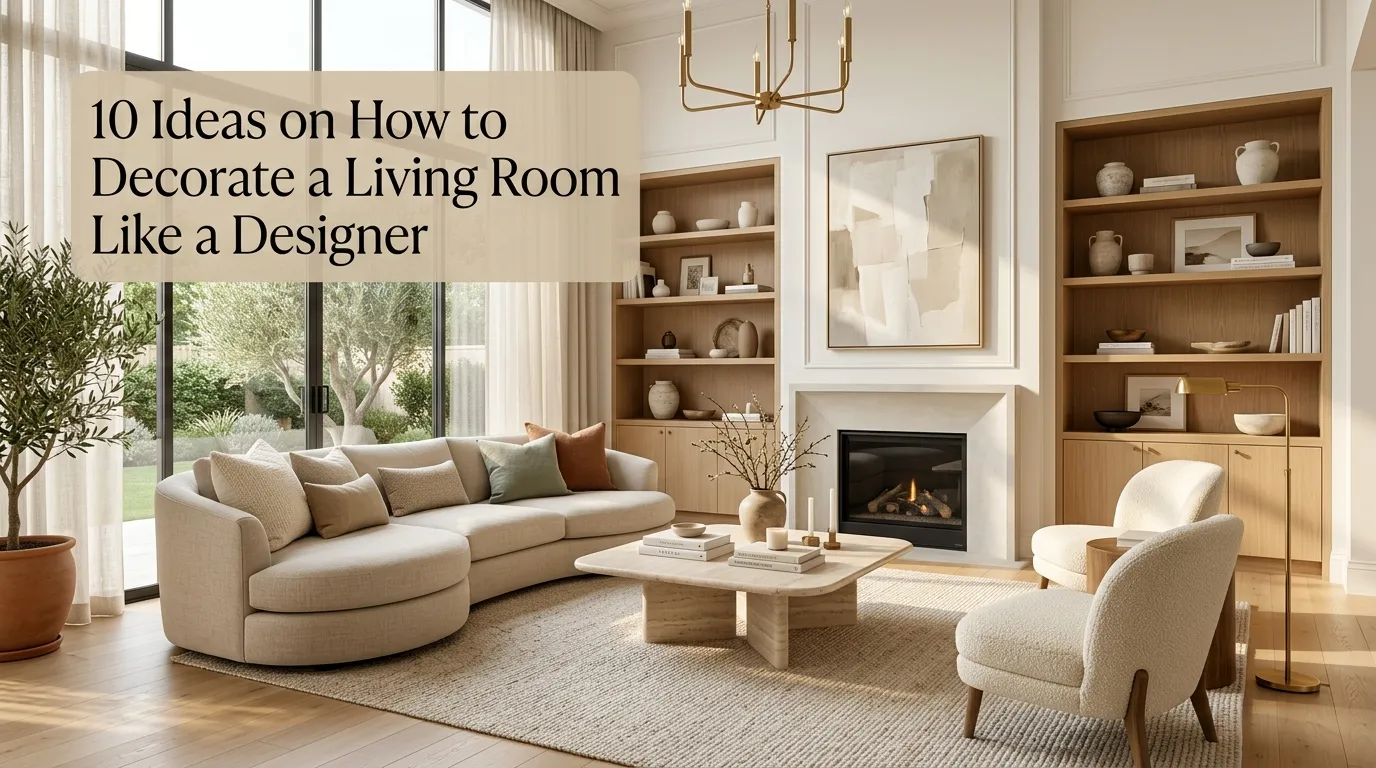
A professionally designed living room isn’t about spending a fortune on expensive furniture—it’s about creating a balanced, comfortable, and visually cohesive space. Interior designers carefully combine color, texture, lighting, furniture placement, and decorative accents to make a room feel inviting while reflecting the homeowner’s personality. The good news is that many of these techniques are easy to recreate, regardless of your budget or room size.
In my experience, the biggest difference between an average living room and a designer-inspired one is thoughtful layering. Instead of filling the room with random décor, designers build the space around a clear focal point, a cohesive color palette, and carefully selected furniture. Every piece has a purpose, creating a room that feels elegant without appearing overdecorated.
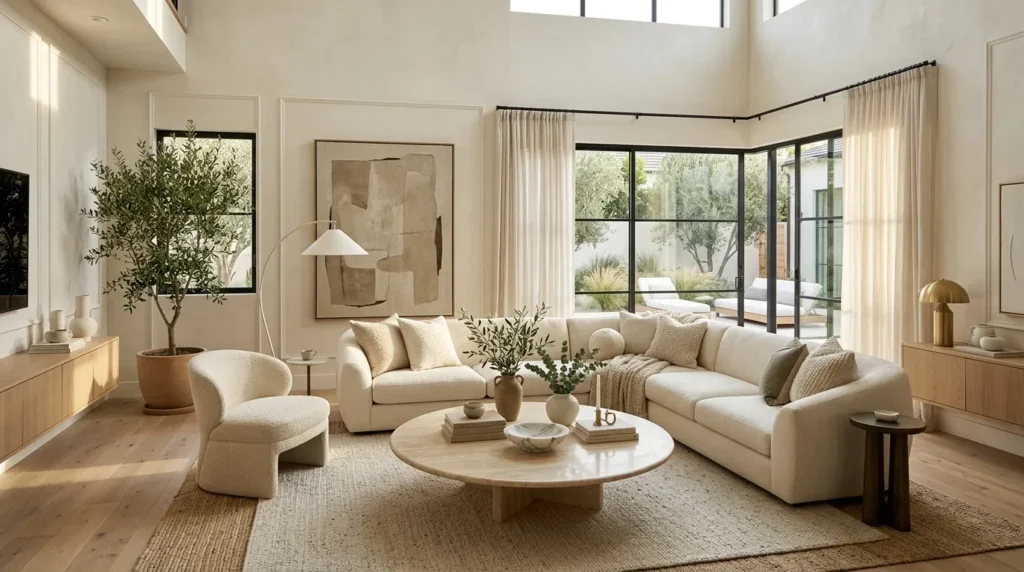
I’ve noticed Pinterest users consistently save living rooms featuring layered neutral palettes, oversized artwork, statement lighting, textured rugs, natural wood furniture, decorative pillows, coffee table styling, indoor plants, floor-to-ceiling curtains, and curated shelving. These timeless design ideas continue to trend because they work across modern, farmhouse, Scandinavian, transitional, and contemporary interiors.
Whether you’re refreshing your existing space or decorating a brand-new home, these designer-inspired living room ideas will help you create a beautiful room that feels polished, welcoming, and timeless.
Table of Contents
- Start with a Neutral Color Palette
- Create a Strong Focal Point
- Layer Different Textures
- Choose the Right Area Rug
- Add Statement Lighting
- Style Your Coffee Table
- Decorate with Oversized Artwork
- Bring in Natural Greenery
- Hang Floor-to-Ceiling Curtains
- Finish with Thoughtful Accessories
1. Start with a Neutral Color Palette
Quick Benefits
- Timeless appearance
- Easy to update
- Bright atmosphere
- Versatile styling
- Designer look
Why It Works
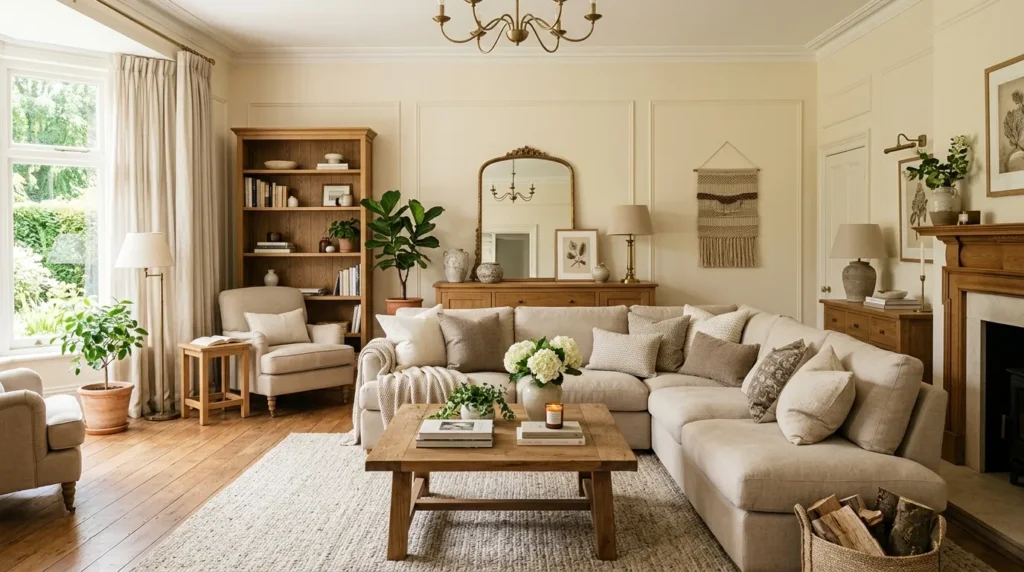
Neutral colors create a calm foundation that allows furniture, textures, and decorative accents to stand out without overwhelming the room.
How To Style It
Combine shades of white, cream, beige, taupe, warm gray, and soft greige, then introduce subtle color through artwork and accessories.
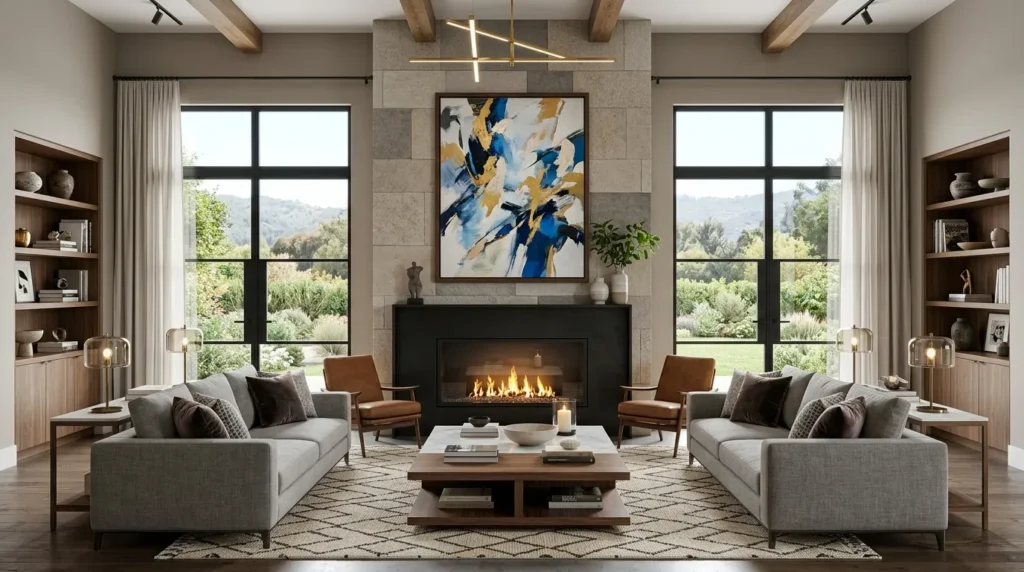
2. Create a Strong Focal Point
Quick Benefits
- Balanced layout
- Professional appearance
- Better furniture placement
- Visual interest
- Organized design
Why It Works
Every designer begins by identifying the room’s focal point, such as a fireplace, large window, or statement wall.
How To Style It
Arrange seating to face the focal point and reinforce it with artwork, lighting, or a stylish media console.
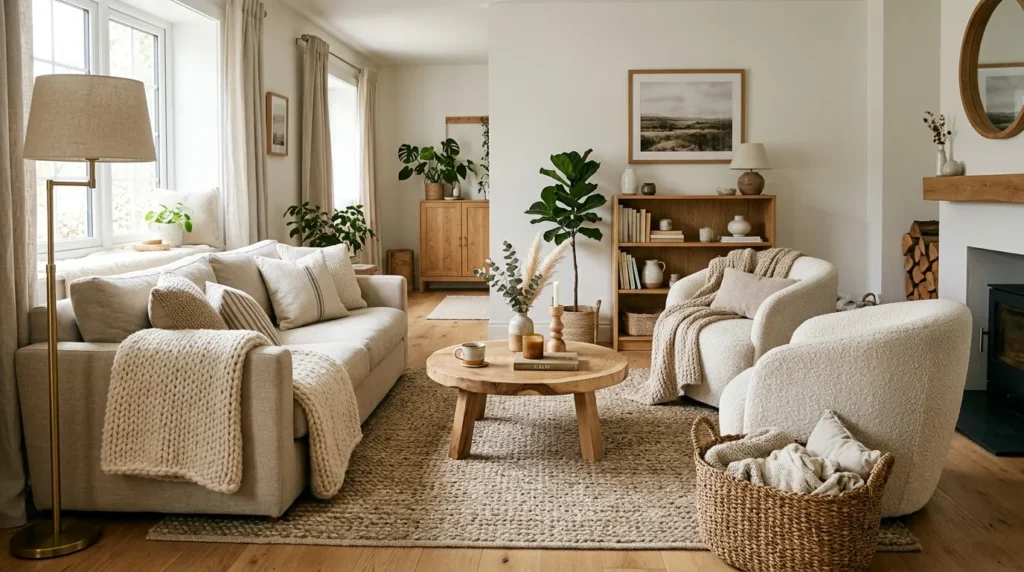
3. Layer Different Textures
Quick Benefits
- Adds depth
- Cozy atmosphere
- Luxury feel
- Visual balance
- Timeless style
Why It Works
Mixing materials prevents the room from feeling flat while creating warmth and dimension.
How To Style It
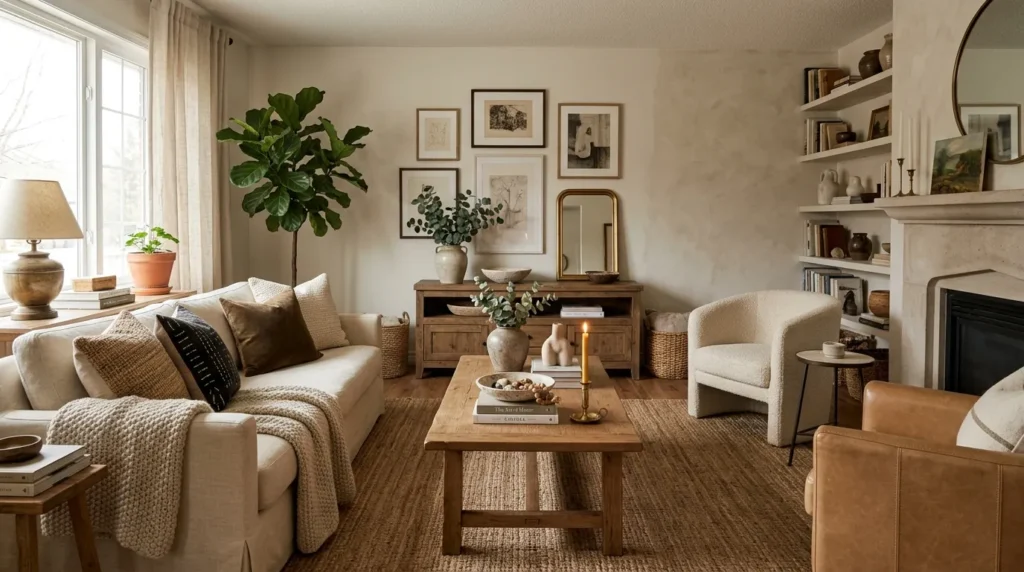
Blend linen upholstery, boucle chairs, woven baskets, wood furniture, leather accents, and soft knit throws.
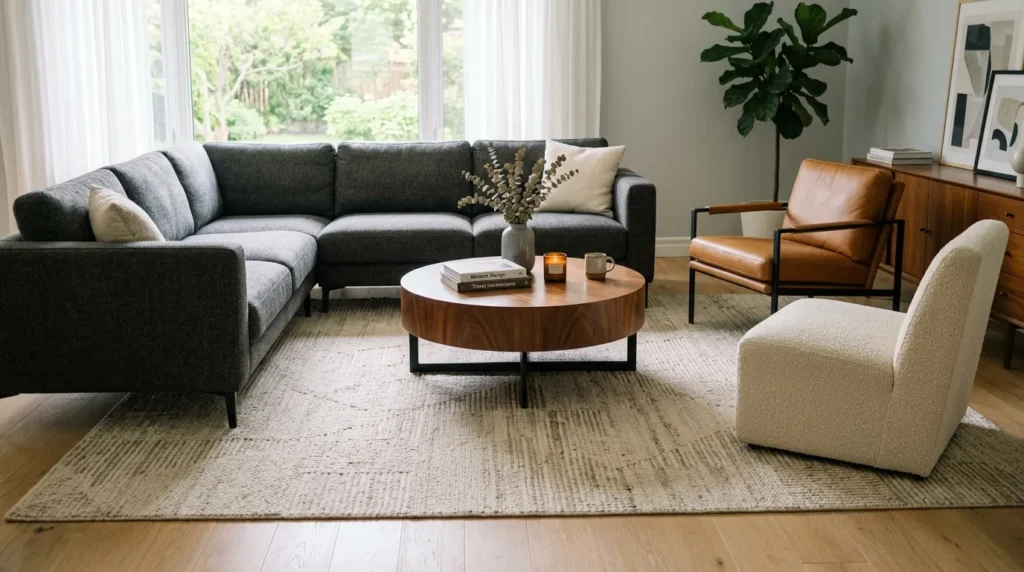
4. Choose the Right Area Rug
Quick Benefits
- Defines the space
- Softens the room
- Adds warmth
- Creates cohesion
- Comfortable underfoot
Why It Works
A properly sized rug anchors the seating area and visually connects all the furniture.
How To Style It
Choose a rug large enough for the front legs of every seating piece to rest comfortably on it.
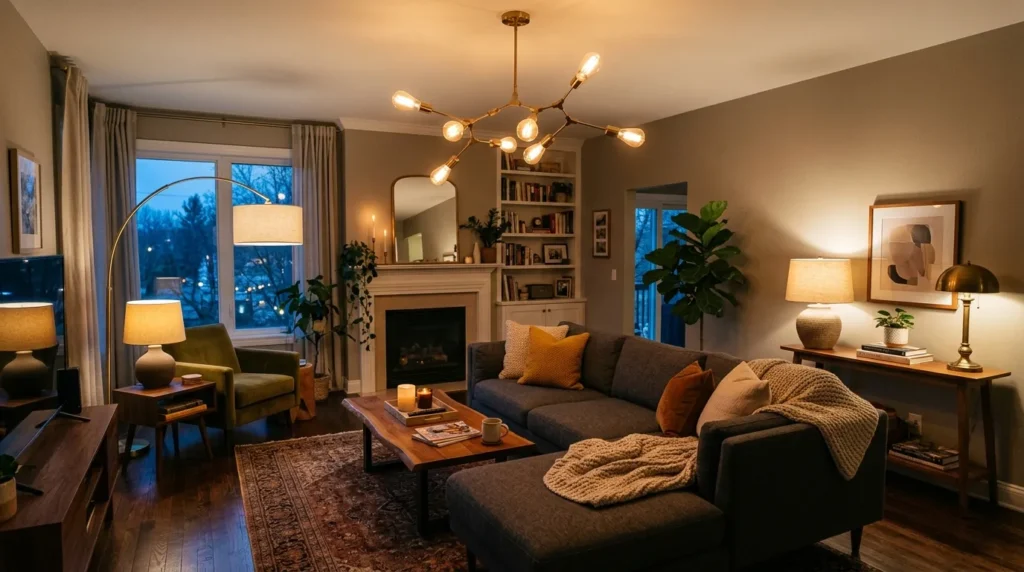
5. Add Statement Lighting
Quick Benefits
- Creates ambiance
- Stylish focal point
- Improves functionality
- Designer finish
- Layered illumination
Why It Works
Lighting affects both the appearance and mood of the room while adding architectural interest.
How To Style It
Combine a ceiling fixture with table lamps, floor lamps, and wall sconces using warm white bulbs.
6. Style Your Coffee Table
Quick Benefits
- Finished appearance
- Easy refresh
- Functional display
- Adds personality
- Everyday elegance
Why It Works
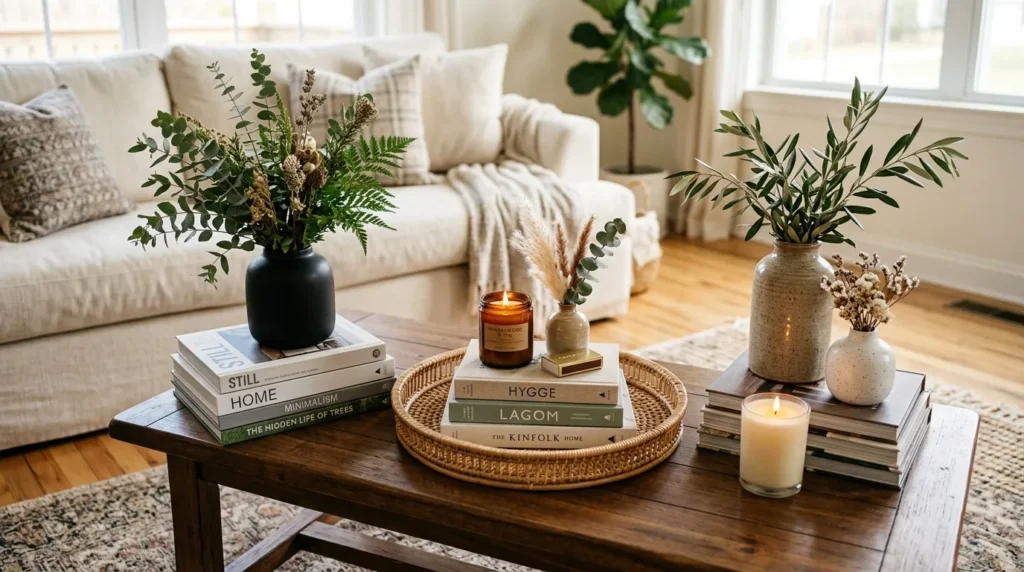
A thoughtfully styled coffee table brings balance while making the living room feel intentionally designed.
How To Style It
Arrange coffee table books, candles, ceramic vases, greenery, and a decorative tray in grouped layers.
7. Decorate with Oversized Artwork
Quick Benefits
- Bold focal point
- Elegant statement
- Fills empty walls
- Timeless appeal
- Personalized style
Why It Works
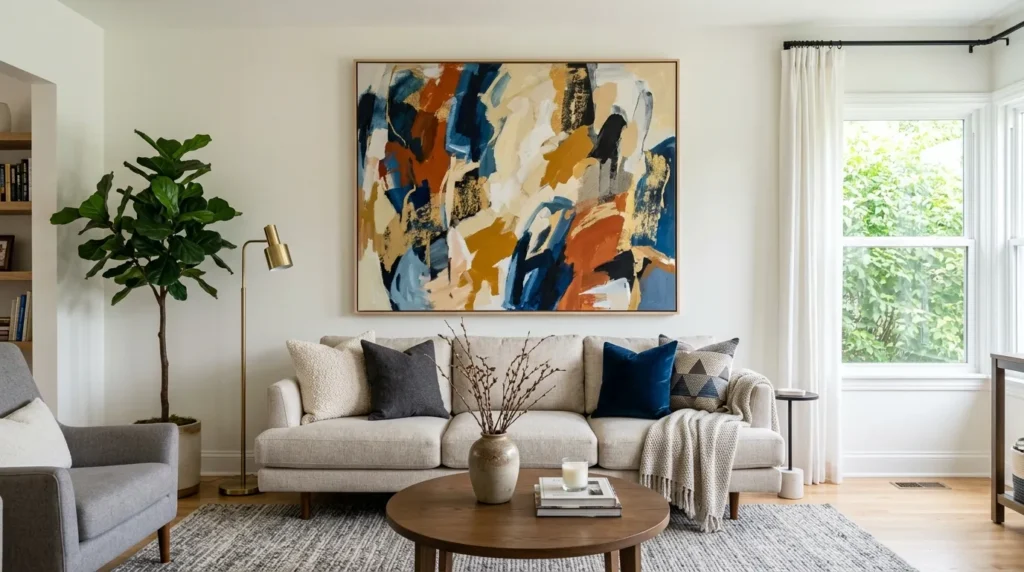
Large artwork creates impact while reducing visual clutter caused by many small decorations.
How To Style It
Choose abstract, botanical, or landscape art that complements the room’s overall color palette.
8. Bring in Natural Greenery
Quick Benefits
- Fresh atmosphere
- Natural texture
- Softens furniture
- Easy styling
- Relaxing environment
Why It Works
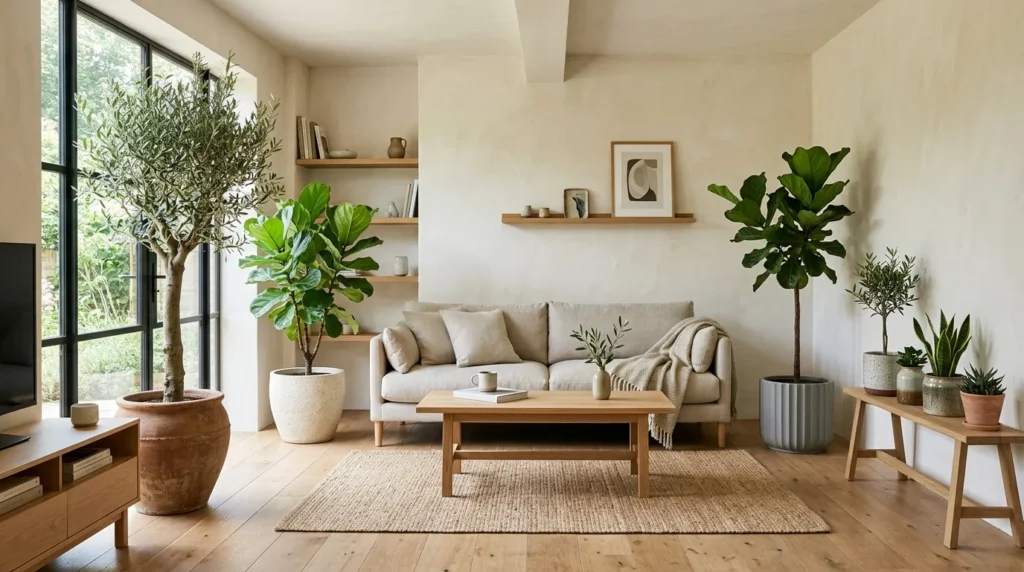
Indoor plants add life while balancing the structured lines of furniture and décor.
How To Style It
Decorate with olive trees, fiddle leaf figs, snake plants, or pothos in woven baskets or ceramic planters.
9. Hang Floor-to-Ceiling Curtains
Quick Benefits
- Makes ceilings appear taller
- Softens the room
- Elegant appearance
- Better light control
- Designer finish
Why It Works
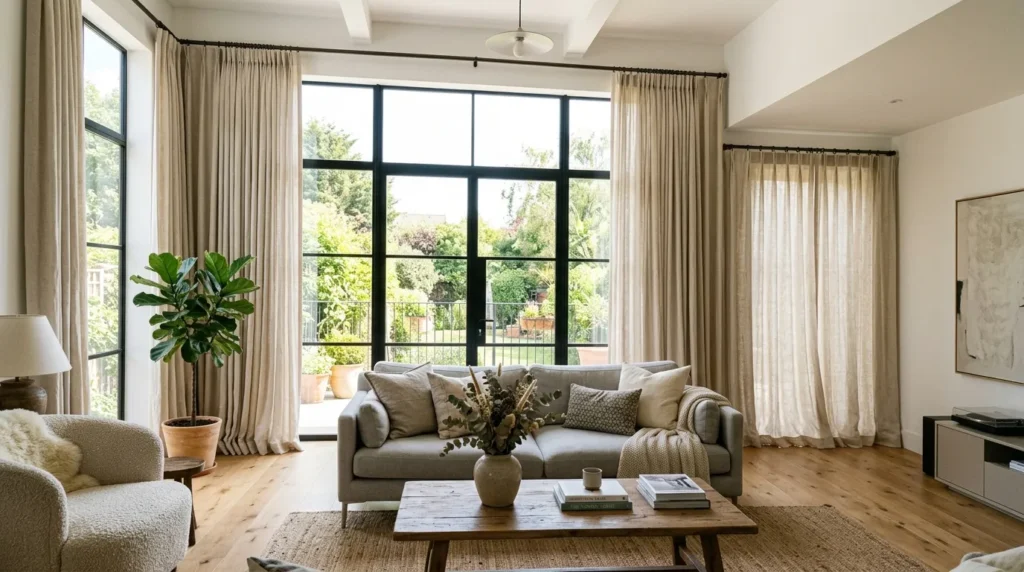
Full-length curtains create visual height while framing windows beautifully.
How To Style It
Install curtain rods close to the ceiling and choose linen panels that lightly touch the floor.
10. Finish with Thoughtful Accessories
Quick Benefits
- Personalized décor
- Balanced styling
- Cozy atmosphere
- Easy seasonal updates
- Completed look
Why It Works
Accessories complete the room by adding warmth, personality, and visual interest without overwhelming the design.
How To Style It
Layer books, candles, bowls, trays, sculptures, framed photos, and decorative objects while leaving enough open space for a clean appearance.
FAQ
What makes a living room look professionally designed?
A cohesive color palette, balanced furniture arrangement, layered textures, proper lighting, and thoughtfully selected accessories create a designer-inspired look.
Which colors do designers use most often?
White, cream, beige, greige, taupe, warm gray, sage green, charcoal, and natural wood tones are timeless choices.
How do I decorate my living room on a budget?
Focus on paint, lighting, pillows, rugs, greenery, thrifted décor, and furniture rearrangement before replacing large items.
Should every living room have a focal point?
Yes. A fireplace, entertainment center, large window, or oversized artwork helps organize the room visually.
How can I make my living room feel more luxurious?
Use layered lighting, textured fabrics, oversized artwork, quality curtains, natural materials, and carefully edited décor.
Conclusion
Decorating a living room like a designer is all about creating balance, comfort, and timeless style. By focusing on a neutral color palette, layered textures, thoughtful lighting, and carefully chosen accessories, you can transform any living room into a polished and welcoming space. Start with one or two updates, build around a clear design vision, and enjoy a home that feels both beautiful and functional every day.