

10 Simmering Pot Recipes to Make Your Home Smell Amazing
There’s a reason simmering pots have exploded in popularity over the last few years — nothing transforms the feel of a home faster than walking in to a rich, warm scent drifting from the kitchen. In my experience, candles and plug-in air fresheners can smell good, but there’s something about a pot of real ingredients gently simmering on the stove that feels more genuine, more layered, and honestly just better than anything from a bottle.
If you’re anything like me, you probably first came across the idea on Pinterest — a simple photo of a pot filled with orange slices, cinnamon sticks, and cranberries, captioned with some version of “your house will smell like the holidays.” What that photo doesn’t always explain is how the ratios actually work, how long a batch lasts, or how to adjust a recipe for the seasons beyond just Christmas.
A mistake many homeowners make is dumping in too many strong ingredients at once, which can actually overwhelm a room rather than filling it with a pleasant scent. That’s why many home experts recommend building a simmering pot the way you’d build a perfume — a base note, a middle note, and one or two bright top notes, rather than an even mix of everything in the pantry.
I’ve noticed that the simmering pot recipes people save most often on Pinterest tend to follow a similar structure: a citrus element for brightness, a warm spice for depth, and one distinctive ingredient — a sprig of rosemary, a handful of cranberries, a few cloves — that makes the blend feel specific rather than generic.
In this guide, I’m sharing ten simmering pot recipes that cover the full year, from bright citrus blends for spring cleaning days to rich, spiced blends for the holidays. Each recipe includes real ratios and practical tips, so you can start simmering with ingredients you likely already have in your kitchen.
Table of Contents

- Classic Holiday Spice Simmer A warm, nostalgic blend for the Christmas season.
- Cozy Apple Cinnamon Simmer A sweet, comforting scent for fall afternoons.
- Fresh Citrus and Rosemary Simmer A bright, herbal blend for everyday freshness.
- Autumn Harvest Spice Simmer A rich, earthy blend for pumpkin season.
- Winter Pine and Berry Simmer An evergreen-inspired scent for a festive home.
- Spring Floral and Citrus Simmer A light, fresh blend for warmer months.
- Coffee Shop Vanilla Simmer A cozy, bakery-inspired scent for lazy mornings.
- Tropical Coconut and Lime Simmer A bright, summery blend for warm-weather days.
- Thanksgiving Kitchen Simmer A savory-sweet blend that mimics a home-cooked meal.
- New Year Fresh Start Simmer A crisp, clean blend for post-holiday reset days.
1. Classic Holiday Spice Simmer
Quick Benefits
- Instantly recognizable “Christmas” scent
- Uses common pantry spices
- Lasts several hours per batch
- Works beautifully for holiday guests
- Simple to reheat and reuse for days
Why It Works
A classic holiday spice simmer is the recipe most people picture when they think of stovetop potpourri, and it earns that reputation because the ingredients hit every note of a traditional Christmas scent at once — warm spice, citrus brightness, and a touch of sweetness. In my experience, this is the single best simmering pot recipe to have ready before guests arrive, since the smell alone does more to make a home feel welcoming than almost any other single detail. That’s why many home experts recommend keeping this particular blend on hand throughout the entire holiday season rather than saving it for one occasion.
How To Style It
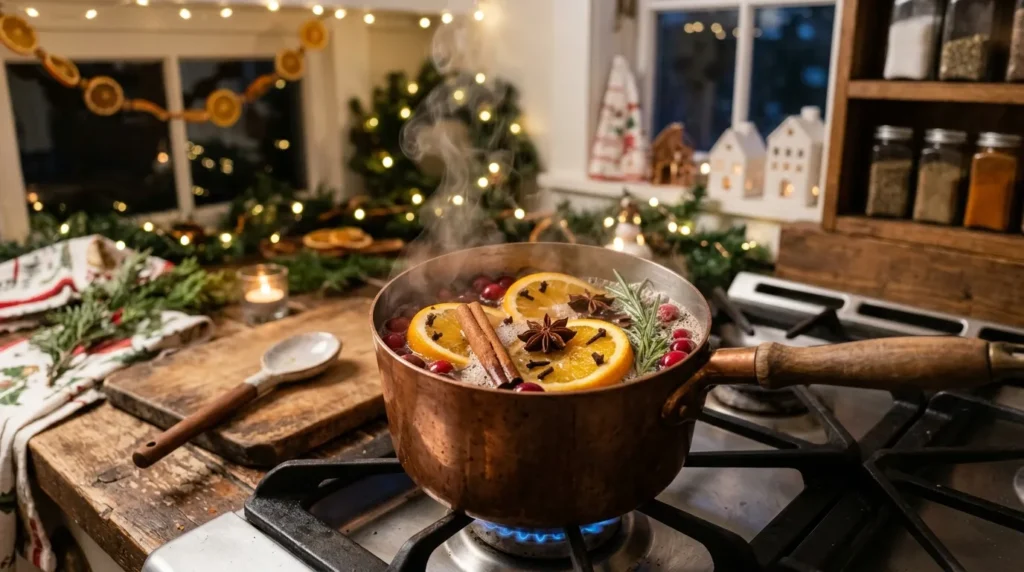
Combine one sliced orange, two cinnamon sticks, one tablespoon of whole cloves, and two star anise pods in a small saucepan filled with about three cups of water. Bring to a gentle simmer, then reduce to the lowest heat setting to maintain a slow, steady release of steam without boiling the water away too quickly. One simple trick I always suggest is adding a splash of vanilla extract in the final twenty minutes, which rounds out the sharper spice notes with a softer, warmer background scent. Check the water level every hour or so and top off as needed; this batch typically holds its scent for a full day of simmering.
2. Cozy Apple Cinnamon Simmer
Quick Benefits
- Sweet, comforting bakery-like scent
- Uses fresh or leftover apple scraps
- Pairs well with fall home decor
- Budget-friendly with minimal ingredients
- Great for entertaining during cooler months
Why It Works
An apple cinnamon simmer captures that specific “just baked something” smell without requiring anyone to actually turn on the oven, which is part of why it’s become such a popular fall staple. I’ve noticed this is often the first simmering pot recipe people try, since apples and cinnamon are pantry staples in most homes already. The natural sugars in the apple slices also help round out the sharper edge of straight cinnamon, creating a scent that reads as genuinely sweet and comforting rather than one-note spicy.
How To Style It
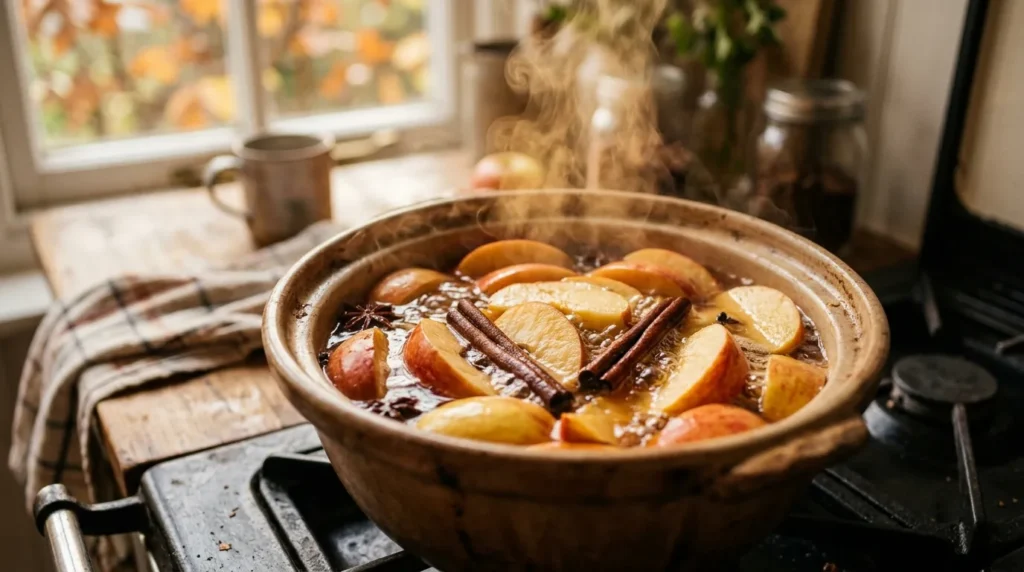
Slice one apple (core and all — the seeds and core add extra depth) and combine it with two cinnamon sticks, one tablespoon of whole cloves, and a small splash of apple cider if you have it on hand. Fill the pot with three cups of water and simmer gently, stirring occasionally to release more of the apple’s natural aroma. This recipe works particularly well made with apple scraps left over from baking, so consider saving peels and cores specifically for a simmering pot rather than composting them right away. The blend tends to smell sweetest during the first two to three hours of simmering.
3. Fresh Citrus and Rosemary Simmer
Quick Benefits
- Bright, clean, non-holiday-specific scent
- Works well year-round
- Uses fresh herbs for an elevated feel
- Pairs beautifully with a tidy, decluttered home
- Simple two-to-three ingredient recipe
Why It Works
A citrus and rosemary simmer is one of the most versatile recipes on this list because it doesn’t read as seasonal the way cinnamon or pine does — it works just as well on a random Tuesday afternoon as it does before company arrives. That’s why many home experts recommend this blend specifically for cleaning days, since the bright citrus scent pairs naturally with the feeling of a freshly tidied home. One thing that works especially well is using rosemary sprigs still on the stem rather than dried rosemary, which releases a more fragrant, herbal oil as it simmers.
How To Style It
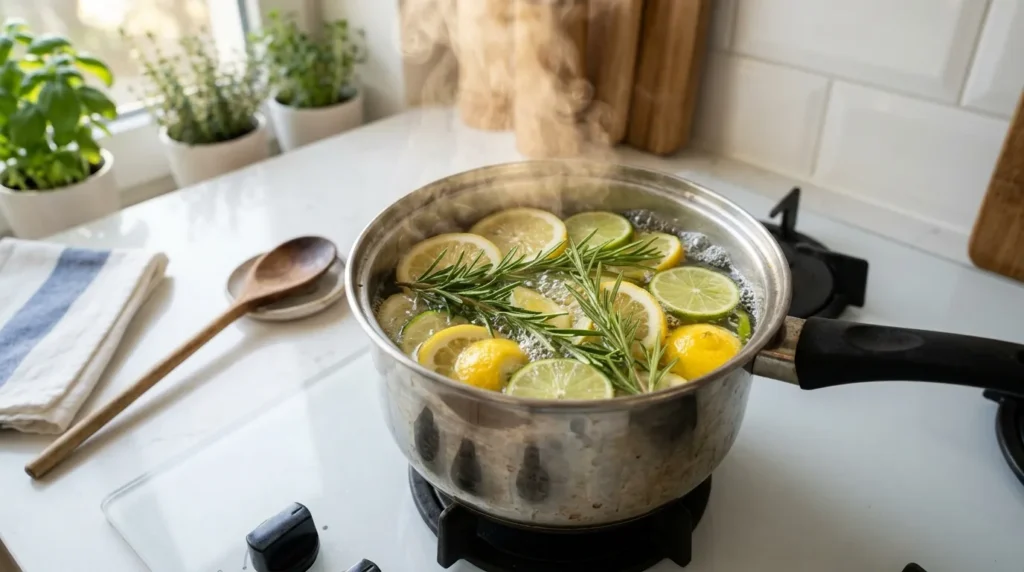
Slice one lemon and one lime, and add two to three fresh rosemary sprigs to a pot with three cups of water. Simmer gently, pressing the rosemary sprigs occasionally with a spoon to help release more of their natural oils into the steam. This blend tends to smell brightest in the first hour, so it’s an especially good choice for a quick refresh before guests arrive rather than an all-day simmer. A mistake many homeowners make is using bottled citrus juice instead of fresh slices — the peel itself, not just the juice, is where most of the fragrant oil actually lives.
4. Autumn Harvest Spice Simmer
Quick Benefits
- Rich, earthy scent for pumpkin season
- Pairs beautifully with fall home decor
- Uses common baking spices
- Long-lasting simmer time
- Cozy without being overly sweet
Why It Works
An autumn harvest simmer leans into the deeper, earthier side of fall spices — nutmeg, allspice, and clove — rather than the brighter, sweeter notes of an apple or citrus blend. I’ve seen this recipe transform a home during pumpkin season specifically, since the scent pairs so naturally with the visual decor most people already have out this time of year. In my experience, this blend also tends to linger a little longer in a room than lighter citrus-based recipes, making it a good choice for an all-day simmer during a full day of fall entertaining.
How To Style It
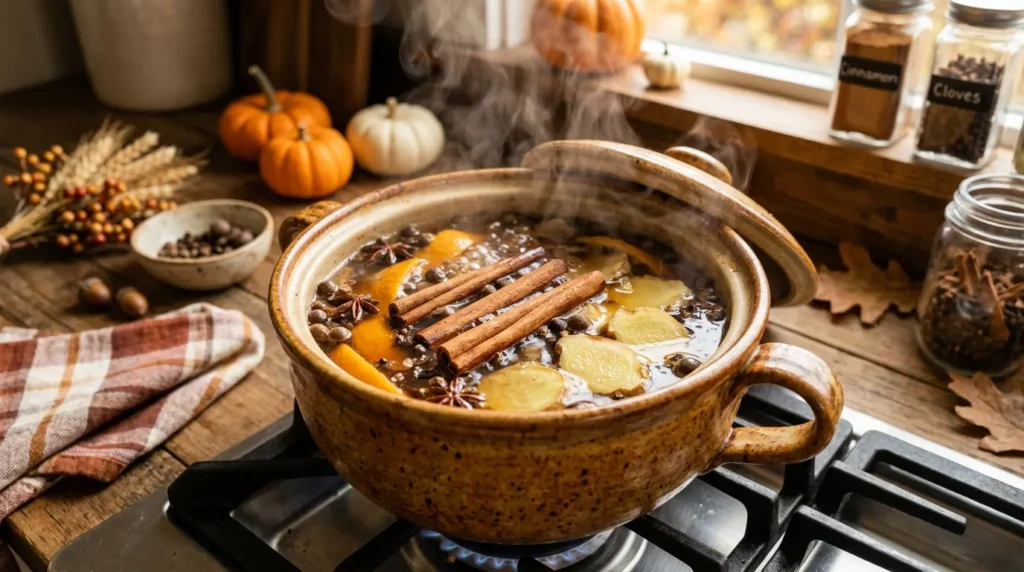
Combine one tablespoon each of whole cloves and allspice berries, two cinnamon sticks, and a few thin slices of fresh ginger in a pot with three cups of water. A small scoop of canned pumpkin puree can be added for extra depth, though it’s optional and mostly affects color rather than scent strength. Simmer on low, stirring occasionally, and add a splash of maple syrup near the end for a touch of warmth. This blend pairs especially well with a home already decorated for fall, tying the visual and scent experience together for guests.
5. Winter Pine and Berry Simmer

Quick Benefits
- Evergreen, outdoorsy holiday scent
- Distinct from traditional spice-based blends
- Uses fresh rosemary as a pine substitute
- Pairs well with a decorated Christmas tree
- Refreshing alternative to sweet holiday scents
Why It Works
For homeowners who want their home to smell like a fresh-cut Christmas tree rather than a spiced dessert, a pine and berry simmer offers a completely different holiday scent profile. One simple trick I always suggest is using fresh rosemary as an accessible substitute for real pine needles, since the two share a similar sharp, resinous quality that reads as “evergreen” even without using actual tree clippings. That’s why many home experts recommend this blend for homeowners who already have a live Christmas tree, since the simmering pot reinforces and extends that same fresh, outdoorsy scent throughout the house.
How To Style It
Combine two to three sprigs of fresh rosemary, a handful of fresh or frozen cranberries, and one sliced orange in a pot with three cups of water. If you have access to actual pine or fir clippings from a tree lot, a small sprig can be added directly to the pot for an even more authentic scent. Simmer gently, mashing a few of the cranberries lightly with a spoon partway through to release more of their tart aroma. This blend pairs particularly well with a home already decorated in a natural, greenery-heavy holiday style.
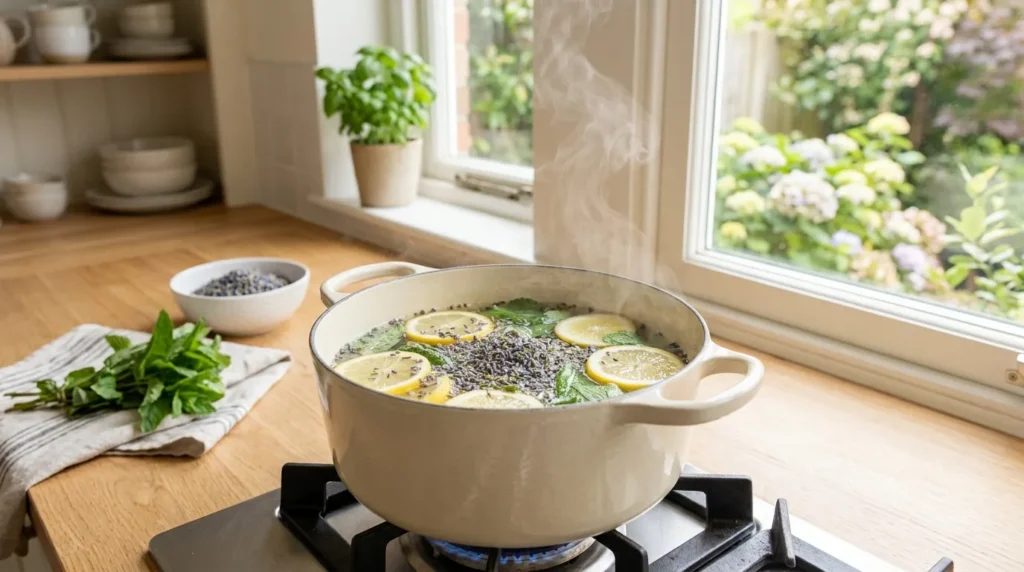
6. Spring Floral and Citrus Simmer
Quick Benefits
- Light, fresh scent for warmer months
- Uses dried florals for lasting fragrance
- Pairs well with spring cleaning routines
- Non-overpowering, subtle blend
- Great for open-window weather
Why It Works
A spring floral and citrus simmer shifts away from the heavier spice blends of fall and winter toward something lighter and airier, matching the seasonal shift most people also make in their home decor. I’ve noticed this blend works particularly well during the weeks when windows start opening again after winter, since the light citrus and floral notes complement fresh air rather than competing with heavier indoor scents. This is one of the gentler recipes on this list, making it a good option for smaller spaces or homes with sensitive noses.
How To Style It
Combine one sliced lemon, a small handful of dried lavender or dried chamomile flowers, and a few mint leaves in a pot with three cups of water. Simmer on low, keeping the heat gentle enough that the delicate floral notes aren’t overwhelmed by aggressive boiling. This blend is best simmered in shorter sessions of one to two hours rather than left on all day, since the lighter ingredients lose their fragrance more quickly than heartier spices or citrus peels. It pairs especially well with a freshly cleaned home during spring cleaning season.
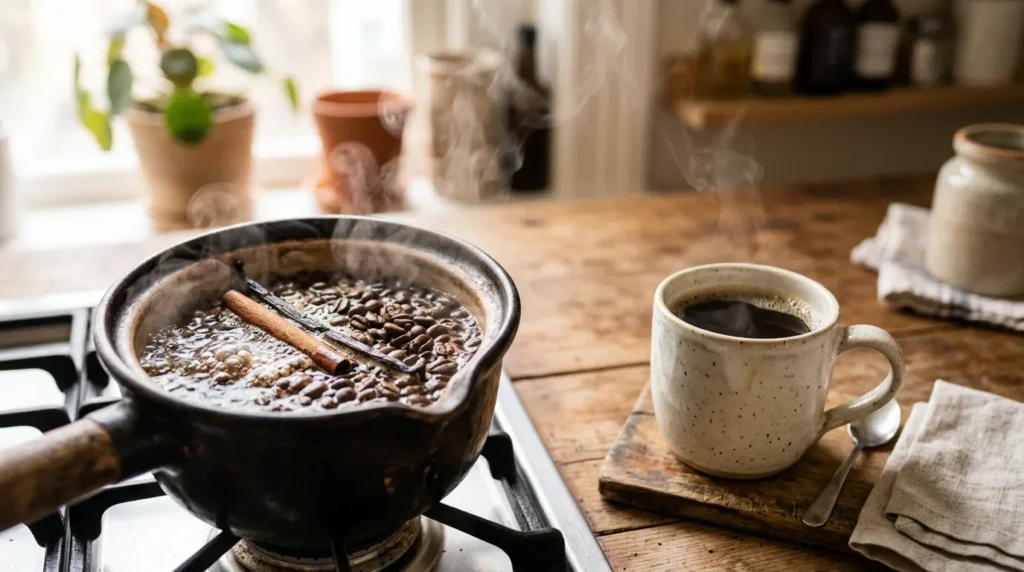
7. Coffee Shop Vanilla Simmer
Quick Benefits
- Cozy, bakery-inspired scent
- Uses pantry staples most people already own
- Works well for morning or weekend simmering
- Warm without being holiday-specific
- Simple two-ingredient base
Why It Works
A vanilla and coffee-inspired simmer captures that specific, cozy bakery or coffee shop smell that so many people associate with comfort, and it’s one of the simplest recipes on this list to put together. That’s why many home experts recommend this blend specifically for lazy weekend mornings, since the scent pairs so naturally with the feeling of a slow, unhurried start to the day. In my experience, this recipe also works well year-round, unlike more seasonal spice or citrus blends, since vanilla doesn’t read as tied to any particular time of year.
How To Style It
Add a splash of vanilla extract, one cinnamon stick, and a tablespoon of whole coffee beans to a pot with three cups of water. Simmer gently, and top off with a small amount of extra vanilla extract partway through if the scent starts to fade, since vanilla tends to dissipate faster than woodier spices like cinnamon. This blend pairs particularly well with a cozy, neutral-toned living space and works nicely alongside a warm beverage for a full sensory morning routine.
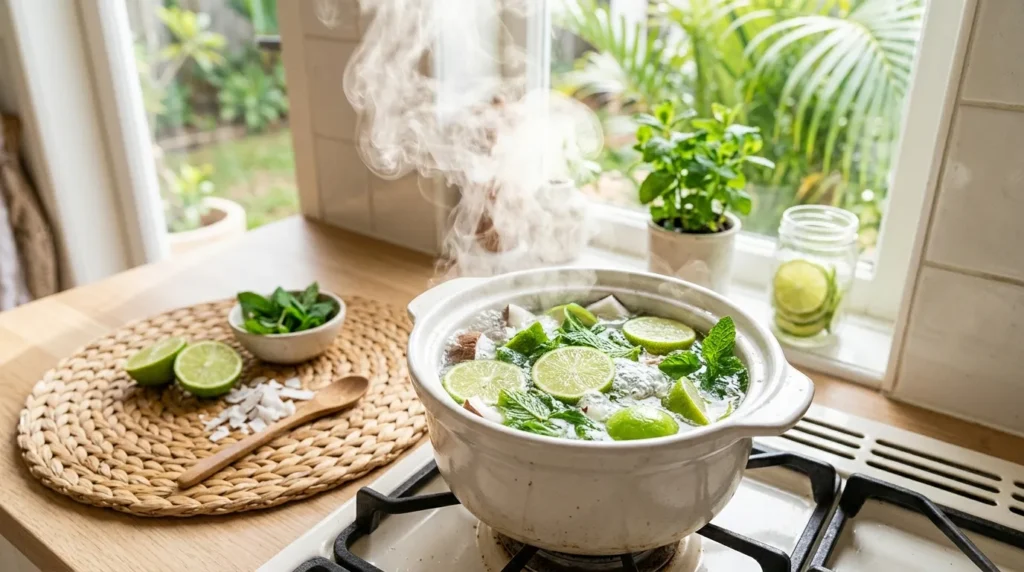
8. Tropical Coconut and Lime Simmer
Quick Benefits
- Bright, vacation-inspired scent
- Great for summer entertaining
- Uses fresh citrus for a clean fragrance
- Pairs well with warm-weather decor
- Refreshing alternative to sweet or spiced blends
Why It Works
A coconut and lime simmer brings a bright, vacation-like quality to a home during the warmer months, standing in clear contrast to the heavier, spiced blends more commonly associated with fall and winter. One thing that works especially well is combining coconut extract with fresh citrus rather than using coconut alone, since the lime brightens what could otherwise become an overly sweet, one-note scent. I’ve seen this recipe used often for summer gatherings and pool parties, where a lighter, brighter fragrance suits the mood better than a heavier spice blend would.
How To Style It
Add a splash of coconut extract, two sliced limes, and a few mint leaves to a pot with three cups of water. Simmer gently, keeping the heat low enough that the citrus doesn’t become bitter from overcooking the peel. This blend is best used for shorter simmering sessions during active entertaining, since the bright top notes fade a bit faster than heavier spice-based recipes. It pairs particularly well with a home styled for warm-weather entertaining, especially near an outdoor or poolside gathering area.
9. Thanksgiving Kitchen Simmer

Quick Benefits
- Mimics the scent of a home-cooked meal
- Warm, savory-sweet combination
- Great for holiday hosting days
- Uses common kitchen staples
- Long-lasting throughout a full day of cooking
Why It Works
A Thanksgiving-inspired simmer recreates that specific, nostalgic smell of a home already deep into a full day of holiday cooking, which makes it a particularly good choice for hosting days when the actual cooking hasn’t produced quite as much aroma yet. That’s why many home experts recommend starting this blend early in the day, well before guests arrive, so the scent has time to build and fill the house gradually rather than appearing all at once. In my experience, this is one of the more comforting, nostalgic blends on this list, since it leans into savory warmth rather than pure sweetness.
How To Style It
Combine a few sprigs of fresh sage, one cinnamon stick, a handful of whole cloves, and a few slices of orange in a pot with three cups of water. The sage in particular brings a distinctly savory, herbal quality that sets this blend apart from sweeter holiday recipes. Simmer gently throughout the day, topping off water as needed, and consider starting the pot a few hours before guests are expected so the scent has fully filled the home by the time they arrive. This blend pairs beautifully with the classic holiday spice simmer for an even fuller, layered scent throughout a large gathering.
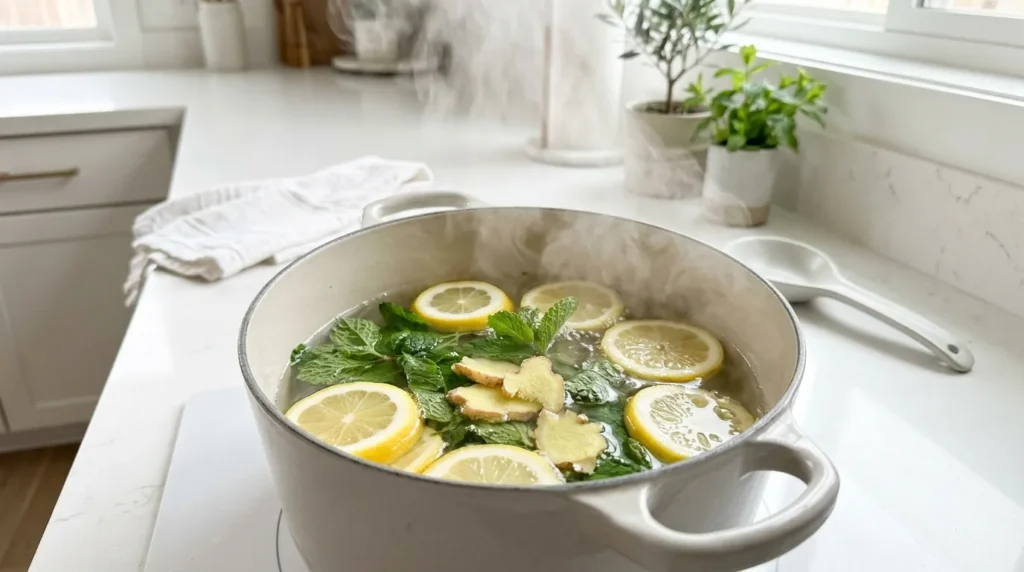
10. New Year Fresh Start Simmer
Quick Benefits
- Crisp, clean scent for post-holiday reset
- Helps clear lingering heavy holiday fragrances
- Uses simple, refreshing ingredients
- Pairs well with post-holiday decluttering
- Light and energizing rather than cozy
Why It Works
After weeks of rich, spiced holiday scents, a lighter, crisper simmering pot recipe can help signal a genuine reset as the new year begins. I’ve noticed that this is one of the more requested simmering pot recipes in early January specifically, since many homeowners want to clear out the heavier holiday fragrance that’s been lingering in soft furnishings and carpets for weeks. A mistake many homeowners make is jumping straight from a heavy holiday blend into an equally heavy new one — a lighter, citrus-forward recipe here creates a more noticeable, refreshing contrast.
How To Style It
Combine one sliced lemon, a few sprigs of fresh mint, and a small piece of fresh ginger in a pot with three cups of water. Simmer gently, and consider running this blend for a few hours while doing post-holiday cleaning and decluttering, since the crisp scent pairs naturally with the “clean slate” feeling many people are going for at the start of a new year. This is a good recipe to keep in rotation throughout January and into early spring, before transitioning into the lighter floral blends of the season ahead.
Frequently Asked Questions
How long does a simmering pot last? Most simmering pot recipes last several hours to a full day on low heat, though this depends on how much water is used and how often it’s topped off. Always monitor the water level and never let the pot boil completely dry, since this can scorch the ingredients and damage the pot.
Is it safe to leave a simmering pot on the stove unattended? It’s not recommended to leave a simmering pot completely unattended, especially for long periods, since the water can evaporate faster than expected and create a fire risk once the pot runs dry. Check on it regularly and consider a slow cooker on low heat as a safer alternative for longer simmering sessions.
Can I reuse simmering pot ingredients for a second batch? Most citrus and spice ingredients can be reused for a second, slightly milder batch by simply adding fresh water and reheating. The scent will generally be lighter the second time around, so many people add one or two fresh ingredients to boost the fragrance again.
What’s the best pot to use for a simmering pot recipe? A small saucepan works well for most stovetop recipes, though a slow cooker on the low setting is a popular alternative since it maintains a gentle, consistent simmer without requiring constant monitoring of the stove. Avoid nonstick pots with the coating exposed to prolonged high heat.
Can I make a simmering pot without a stove? Yes, a slow cooker or a small wax warmer designed for potpourri can both be used as stovetop alternatives, especially for longer simmering sessions where leaving a stovetop pot unattended isn’t ideal. A slow cooker on low heat is generally considered the safest hands-off option.
Do simmering pots actually make a house smell better, or just mask odors? A well-made simmering pot genuinely scents the air with real, natural fragrance from the ingredients themselves, rather than simply covering up existing odors the way some artificial sprays do. For homes with strong existing odors, addressing the source directly alongside a simmering pot will give the best results.
What ingredients should never go in a simmering pot? Avoid using essential oils directly in a simmering pot, since concentrated oils can be a fire hazard when heated and may leave a residue on the stovetop. Stick to whole, natural ingredients like fruit, spices, and fresh herbs for the safest and most effective results.
Final Thoughts
A simmering pot is one of the simplest, most affordable ways to change how a home feels, and once you understand the basic structure — a citrus base, a warm or herbal middle note, and one distinctive accent ingredient — it becomes easy to improvise new blends for any season or occasion. Whether you’re going for the nostalgic warmth of a holiday spice blend or the crisp freshness of a new year reset, the process itself takes only a few minutes to set up.
Start with one or two recipes and gradually build a rotation that reflects the seasons and the way your home actually gets used throughout the year. A pot quietly simmering on the stove has a way of making a house feel cared for, long before anyone even notices what’s actually in the pot.
Related Articles
- Christmas Coffee Table Decor Ideas
- DIY Christmas Porch Planters
- Cozy Living Room Ideas for Winter
- Farmhouse Christmas Decorating Ideas
- Fall Home Decor Ideas for Every Room