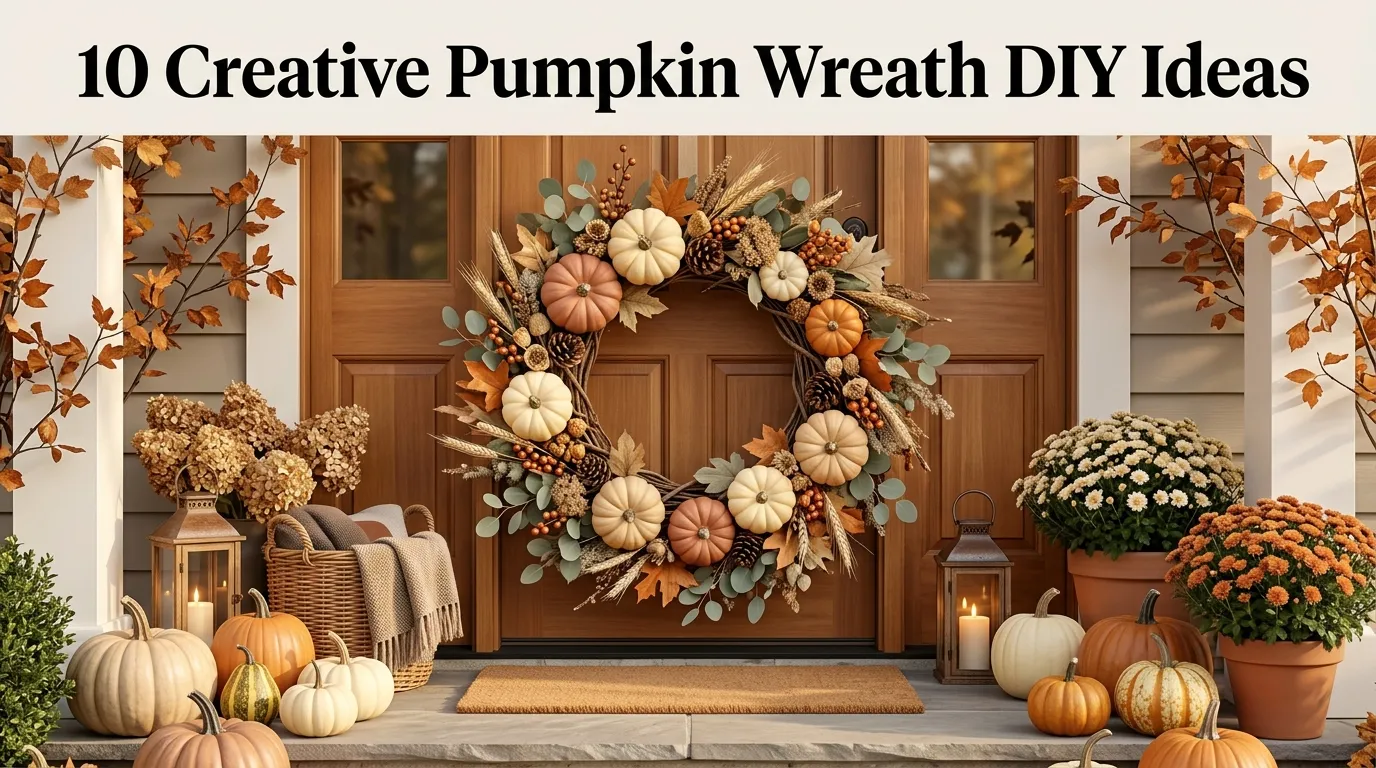
10 Creative Pumpkin Wreath DIY Ideas
Pumpkin season brings an easy excuse to make the front door feel warmer, more welcoming, and ready for fall. A pumpkin wreath combines one of the season’s most recognizable shapes with the charm of handmade decor, making it a natural project for a Pinterest-inspired home.
The best part is that a pumpkin wreath does not have to look complicated. A simple grapevine base, faux pumpkins, fall leaves, ribbon, dried flowers, or leftover craft materials can become the foundation for something that feels personal. You can keep the colors traditional with orange and warm brown, or take a softer approach with cream, sage, muted blue, or dusty pink.
If you’re anything like me, DIY projects are most enjoyable when the finished piece looks special without requiring a huge supply list. That is where these wreath ideas come in. Each design uses a different combination of textures, colors, and seasonal details, so there is plenty of room to adapt an idea to your own front porch or entryway.
Before starting, consider the size of your door and the weather exposure. A covered porch gives you more flexibility with paper, fabric, and dried materials, while an exposed exterior benefits from weather-resistant components.
Whether you prefer farmhouse charm, elegant neutrals, rustic textures, or colorful fall decor, these creative pumpkin wreath projects offer plenty of inspiration. Start with the design that fits your decorating style, then adjust the colors and materials to make the wreath feel like your own.
Table of Contents
1. Mini Pumpkin Wreath
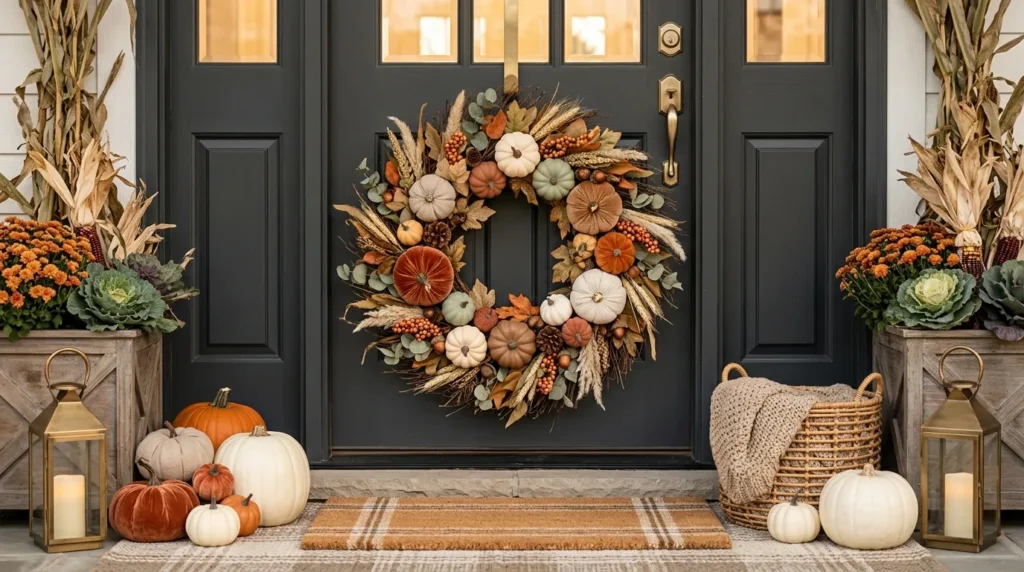
A collection of small pumpkins creates a playful and dimensional fall door decoration.
2. Grapevine Pumpkin Wreath
A natural grapevine base adds rustic texture around colorful seasonal pumpkins.
3. Velvet Pumpkin Wreath
Soft velvet pumpkins bring an elegant, cozy texture to a traditional fall wreath.
4. Floral Pumpkin Wreath
Autumn flowers and pumpkins create a fuller arrangement with romantic seasonal character.
5. White Pumpkin Wreath
Cream and white pumpkins create a refined neutral look for modern fall decorating.
6. Rustic Burlap Wreath
Burlap adds farmhouse texture while pumpkins bring the unmistakable feeling of autumn.
7. Pumpkin Hoop Wreath
A simple metal hoop provides a lightweight foundation for an asymmetrical pumpkin arrangement.
8. Felt Pumpkin Wreath
Handmade felt pumpkins offer a colorful, approachable craft for a cozy seasonal display.
9. Eucalyptus Pumpkin Wreath
Greenery and muted pumpkins create a fresh fall arrangement with a natural appearance.
10. Ribbon Pumpkin Wreath
Layered ribbon adds movement, pattern, and personality to a pumpkin-inspired wreath.
1. Mini Pumpkin Wreath
Quick Benefits
- Easy to customize
- Lightweight materials
- Playful seasonal appearance
- Works with many color palettes
- Great for smaller doors
Why It Works
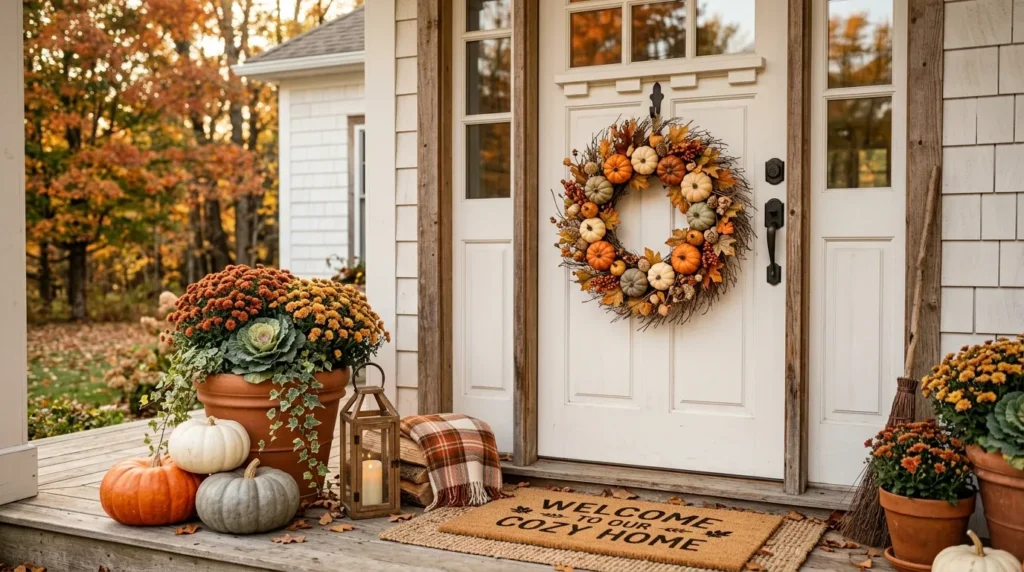
Mini pumpkins create instant visual interest because they can be arranged closely around a wreath base without making the design feel overly heavy. Their different shapes, colors, and textures give the wreath a collected appearance that works beautifully with casual fall decorating.
A mixture of orange, cream, tan, and muted green pumpkins can create a sophisticated palette while still feeling unmistakably seasonal. Adding a few small leaves or berries helps fill visual gaps and softens the overall arrangement.
This idea is especially useful when you want a wreath that looks abundant without using large decorative pieces. The smaller scale also makes it easier to experiment with different arrangements before attaching everything permanently.
How To Style It
Start with a sturdy foam, grapevine, or wire wreath base. Arrange miniature faux pumpkins around the front portion of the wreath, leaving small spaces between some pieces for greenery.
Use floral wire or strong craft adhesive appropriate for the materials. Add faux leaves, small berries, or thin branches between the pumpkins.
For a more modern look, keep the colors within three or four shades. For a traditional fall style, combine orange pumpkins with brown leaves and warm red accents.
Finish with a simple ribbon at the bottom or side. A natural linen ribbon can soften the arrangement without competing with the pumpkins.
2. Grapevine Pumpkin Wreath
Quick Benefits
- Natural texture
- Rustic appearance
- Easy to customize
- Works on farmhouse doors
- Creates an organic fall display
Why It Works
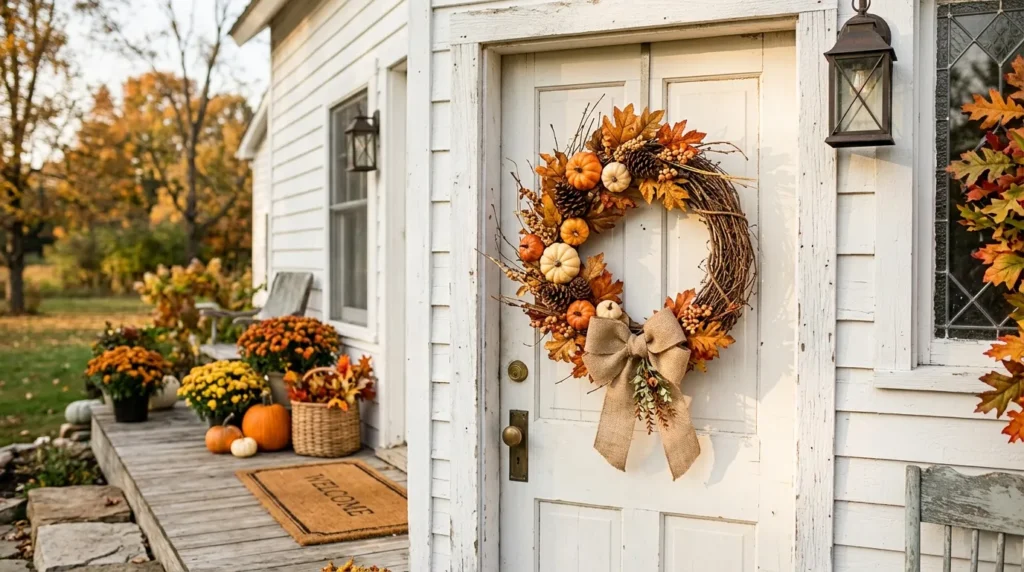
Grapevine wreaths already have the texture of a natural fall landscape. Twisted branches create an irregular foundation that pairs beautifully with pumpkins, leaves, acorns, pinecones, and other seasonal details.
The open structure of grapevine is particularly useful because some of the base remains visible. That prevents the wreath from looking like a solid block of decorations.
For farmhouse or rustic homes, this combination feels especially natural. The brown branches create contrast against orange or cream pumpkins, while greenery introduces a little freshness.
I’ve found that rustic wreaths often look better when they are not perfectly symmetrical. A slightly fuller arrangement on one side gives the piece a collected, handcrafted appearance.
How To Style It
Choose a medium or large grapevine wreath as the foundation. Place several faux pumpkins around one side, gradually reducing their size toward the bottom.
Add preserved-looking leaves, small pinecones, acorns, or thin branches.
Keep the opposite side relatively open so the grapevine remains visible.
Use floral wire to secure larger pieces and smaller adhesive attachments for lightweight accents.
Finish with a wide burlap, cotton, or linen bow. Position it beneath the pumpkin cluster rather than directly over the center to create a more natural asymmetrical composition.
3. Velvet Pumpkin Wreath
Quick Benefits
- Soft luxurious texture
- Elegant fall appearance
- Works with neutral interiors
- Easy to coordinate with decor
- Creates a cozy front door
Why It Works
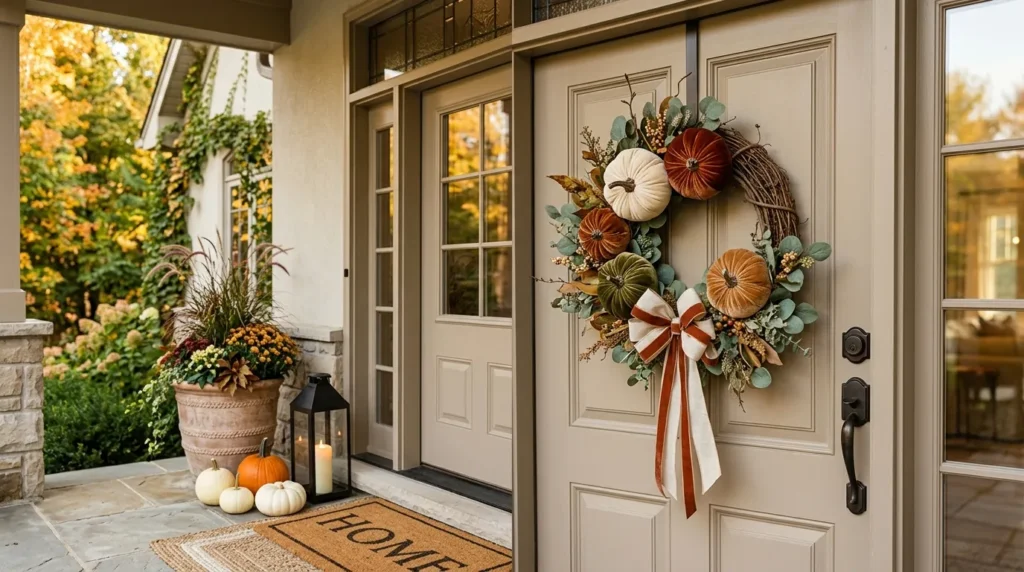
Velvet pumpkins bring a completely different feeling to fall decor. Instead of focusing on rustic textures, they introduce softness and subtle luxury.
Cream, rust, olive, burgundy, and caramel velvet pumpkins work particularly well together. Their plush surfaces catch the light differently from faux leaves and branches, creating depth without requiring elaborate decorations.
This design is ideal for homes with transitional, traditional, or softly modern decor. It can also complement a porch that already uses textiles such as outdoor pillows, blankets, or upholstered seating.
The secret is keeping the palette controlled. Too many colors can make the wreath look busy, while a small collection of coordinated shades feels intentional.
How To Style It
Use a foam or wire wreath form as your foundation. Arrange velvet pumpkins in clusters rather than evenly distributing them around the entire circle.
Add faux eucalyptus, dried-looking grasses, or muted leaves around the pumpkins.
Choose one dominant pumpkin color and two supporting shades. For example, cream can serve as the primary color with rust and olive as accents.
Attach pieces securely and keep the arrangement balanced even when it is asymmetrical.
A velvet or linen ribbon can complete the look. A simple tail rather than an oversized bow keeps the wreath elegant.
4. Floral Pumpkin Wreath
Quick Benefits
- Full and colorful
- Combines flowers and pumpkins
- Romantic seasonal style
- Easy to personalize
- Works for front doors and interiors
Why It Works
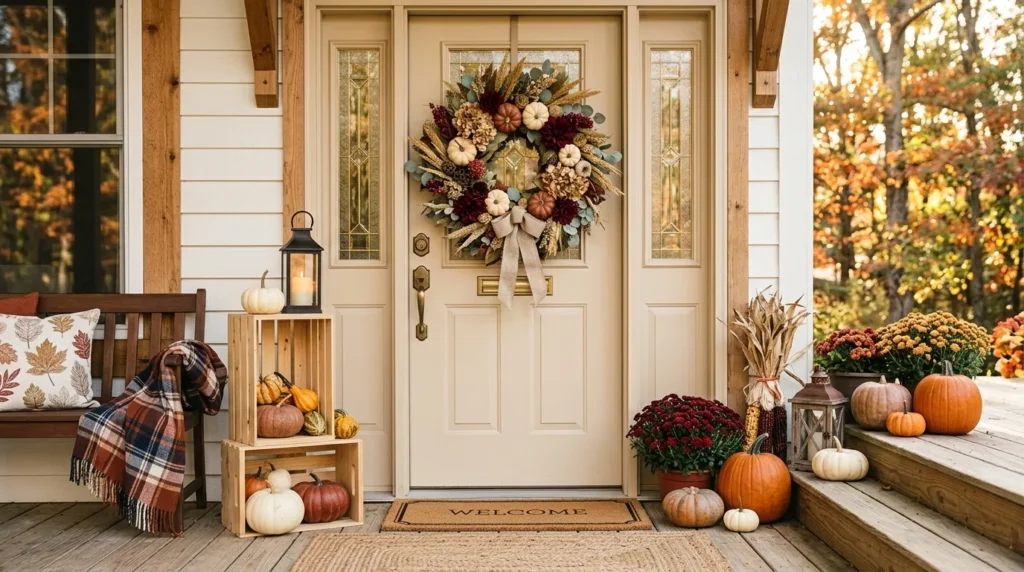
Flowers soften the strong visual shape of pumpkins and create a fuller wreath with plenty of texture. This combination works especially well when you want fall decor that feels warm without looking overly rustic.
Choose flowers in autumn shades such as burnt orange, cream, dusty rose, mustard, or burgundy. Add greenery to connect the different colors.
The pumpkin shapes can remain the focal point while flowers fill the spaces around them. Dried-looking grasses can also add movement and height.
For an elegant arrangement, use fewer flower varieties and repeat the same colors throughout the wreath. Repetition creates cohesion even when the individual materials have different textures.
How To Style It
Start with a grapevine or foam wreath base.
Arrange two or three larger pumpkins as visual anchors. Then add floral stems around them.
Place flowers at different heights rather than trimming every stem to the same length. This creates a more natural arrangement.
Add greenery between larger elements and use smaller flowers to fill gaps.
Secure stems with floral wire or suitable adhesive. Finish with a soft ribbon in cream, rust, or natural tan.
For an indoor wreath, dried or preserved flowers can create a beautiful seasonal display above a mantel or inside an entryway.
5. White Pumpkin Wreath
Quick Benefits
- Elegant neutral palette
- Works with modern homes
- Easy to coordinate
- Feels fresh and sophisticated
- Suitable for indoor or covered outdoor spaces
Why It Works
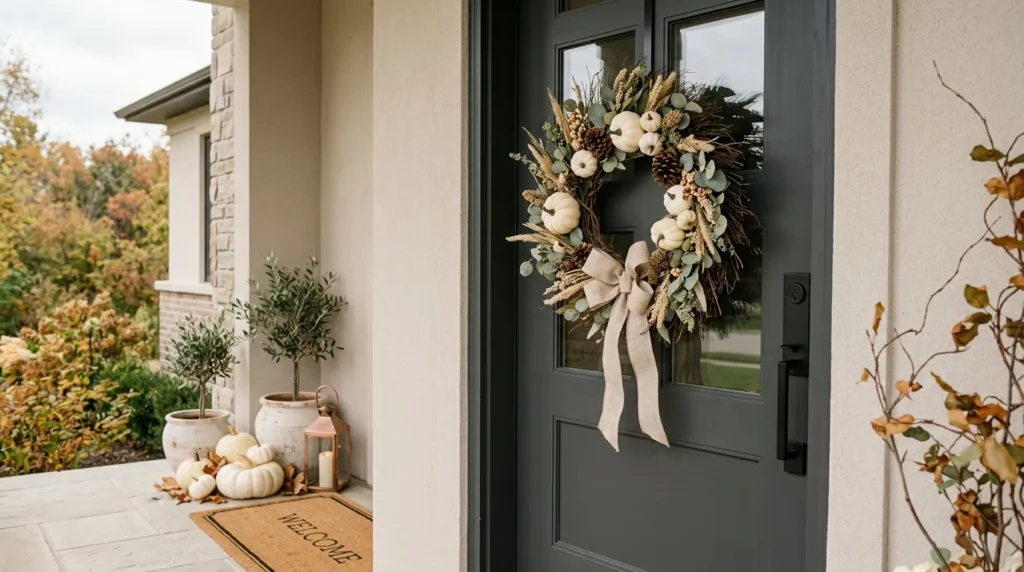
White pumpkins offer a quieter interpretation of traditional fall decor. Instead of bright orange, the palette focuses on cream, ivory, beige, and natural brown.
This makes the wreath particularly easy to coordinate with neutral homes. It can sit against a dark front door for contrast or complement a lighter door with warm natural textures.
The design becomes more interesting when you combine several materials. Smooth faux pumpkins can contrast with grapevine, linen ribbon, dried grasses, and soft greenery.
A neutral wreath also has longevity. It can transition from early fall into Thanksgiving decor without feeling overly tied to one particular holiday.
How To Style It
Use cream and white faux pumpkins in different sizes.
Arrange them primarily on one side of the wreath and add natural greenery around the cluster.
Introduce a small amount of brown through twigs, dried leaves, or pinecones.
Choose a linen or cotton ribbon in beige or taupe.
For a modern appearance, keep the greenery minimal and allow plenty of the wreath base to remain visible.
For a farmhouse look, add more natural branches and textured foliage.
6. Rustic Burlap Wreath
Quick Benefits
- Budget-friendly materials
- Strong farmhouse character
- Easy to customize
- Adds visual texture
- Great for covered porches
Why It Works
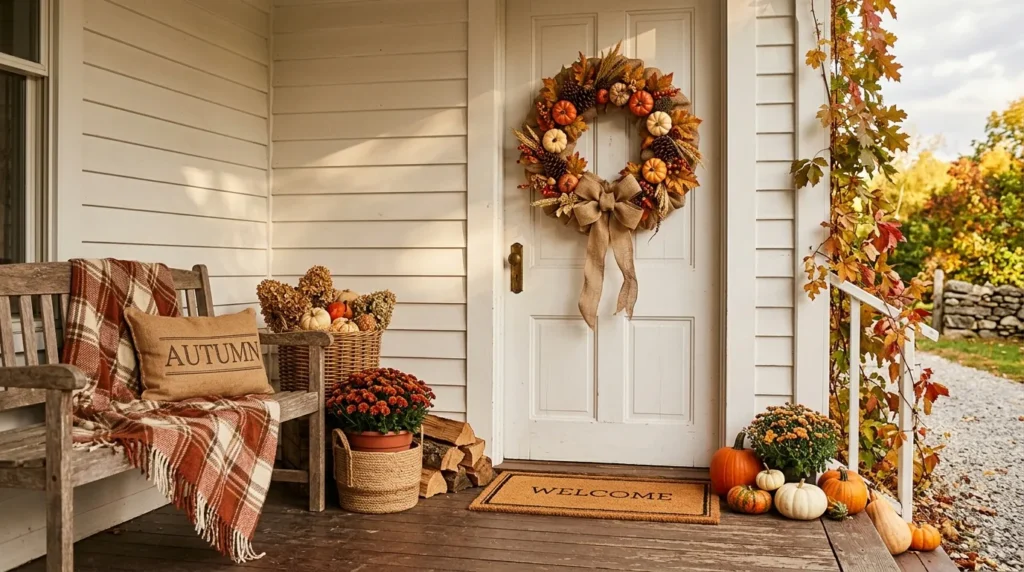
Burlap is a classic material for rustic fall crafts because of its coarse woven texture. When paired with pumpkins, it creates a warm farmhouse-inspired wreath without requiring a complicated arrangement.
The texture is especially attractive when the pumpkins themselves are smooth or lightly patterned. This contrast gives the wreath dimension.
Burlap can also act as the main decorative element rather than simply becoming a bow. Loops of burlap mesh or strips can create volume around a wire wreath frame.
For a cleaner look, use burlap sparingly and let the pumpkin arrangement remain the focal point.
How To Style It
Wrap a wire wreath form with burlap ribbon or create gathered loops around the frame.
Add several faux pumpkins in orange, cream, or muted green.
Include a few fall leaves or small berry clusters.
Avoid filling every inch of the wreath. Open sections allow the burlap texture to remain visible.
Finish with a large burlap bow or a layered combination of burlap and cotton ribbon.
For outdoor use, select materials appropriate for the level of weather exposure and keep delicate components protected.
7. Pumpkin Hoop Wreath
Quick Benefits
- Lightweight design
- Modern appearance
- Uses fewer materials
- Easy to arrange
- Great for asymmetrical decor
Why It Works
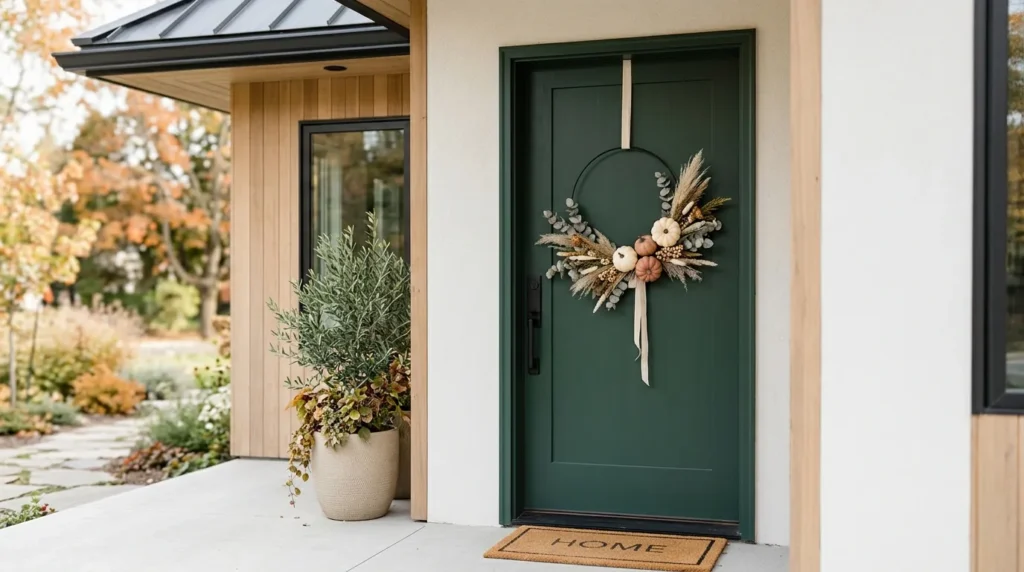
A metal hoop creates a lighter alternative to the traditional full wreath. The open center allows the door color to become part of the design, which can make the finished arrangement feel modern and airy.
Pumpkins work particularly well on hoops because their rounded shapes contrast with the simple circular frame.
An asymmetrical arrangement is often the strongest approach. Place the pumpkins and greenery along one section of the hoop while leaving the rest exposed.
This design is also easy to customize for different seasons. The pumpkin cluster can later be replaced with another seasonal arrangement.
How To Style It
Choose a metal hoop in a finish that coordinates with the door hardware.
Create a cluster of pumpkins near one side of the hoop. Mix two or three sizes for dimension.
Add eucalyptus, dried grasses, faux leaves, or thin branches.
Use floral wire to secure heavier pieces directly to the hoop.
Add a narrow ribbon near the pumpkin cluster rather than covering the entire frame.
Keep the center open and let the door color show through.
8. Felt Pumpkin Wreath
Quick Benefits
- Beginner-friendly craft
- Soft texture
- Lightweight
- Easy to customize
- Fun for family crafting
Why It Works
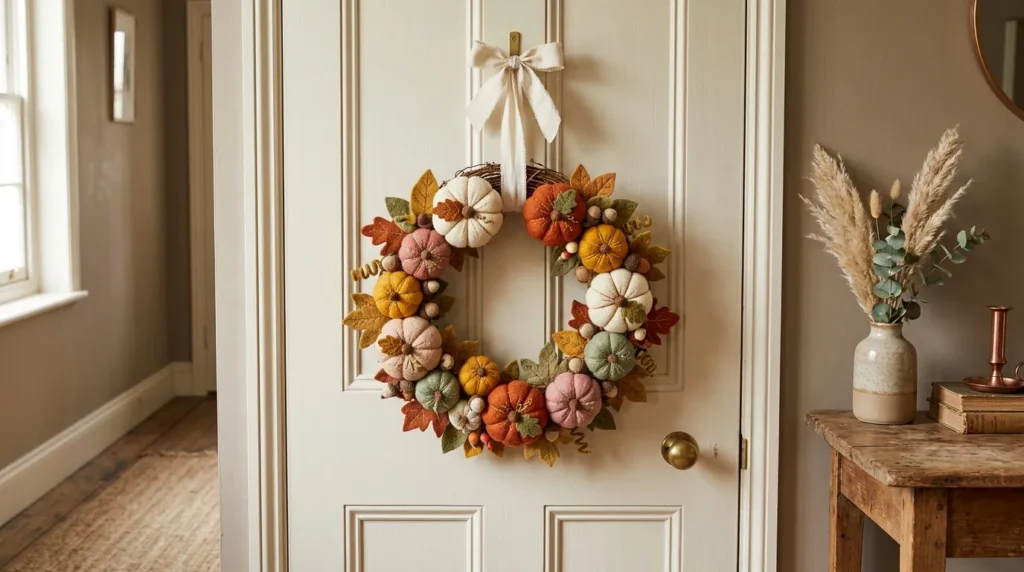
Felt pumpkins are a creative alternative to plastic or fabric pumpkins. They can be made in almost any color and are lightweight enough for a simple wreath project.
This idea works particularly well when you want something playful rather than highly traditional. Cream, orange, mustard, sage, dusty pink, and muted blue can all create attractive combinations.
The felt texture adds softness, while embroidery details, buttons, stitched leaves, or small fabric stems can make each pumpkin unique.
Because the materials are lightweight, the wreath can use a thinner base than heavier pumpkin arrangements.
How To Style It
Cut pumpkin shapes from felt and layer or stitch pieces to create dimensional forms.
Use different sizes and colors rather than making every pumpkin identical.
Arrange the pumpkins around a foam, cardboard, or lightweight wire base.
Add felt leaves, fabric ribbon, small fabric flowers, or faux greenery.
For a clean appearance, repeat two or three colors throughout the arrangement.
This project can also work as seasonal wall decor inside a child’s room, craft room, or playroom.
9. Eucalyptus Pumpkin Wreath
Quick Benefits
- Fresh natural appearance
- Soft muted colors
- Modern farmhouse style
- Easy to coordinate
- Works beyond traditional orange decor
Why It Works
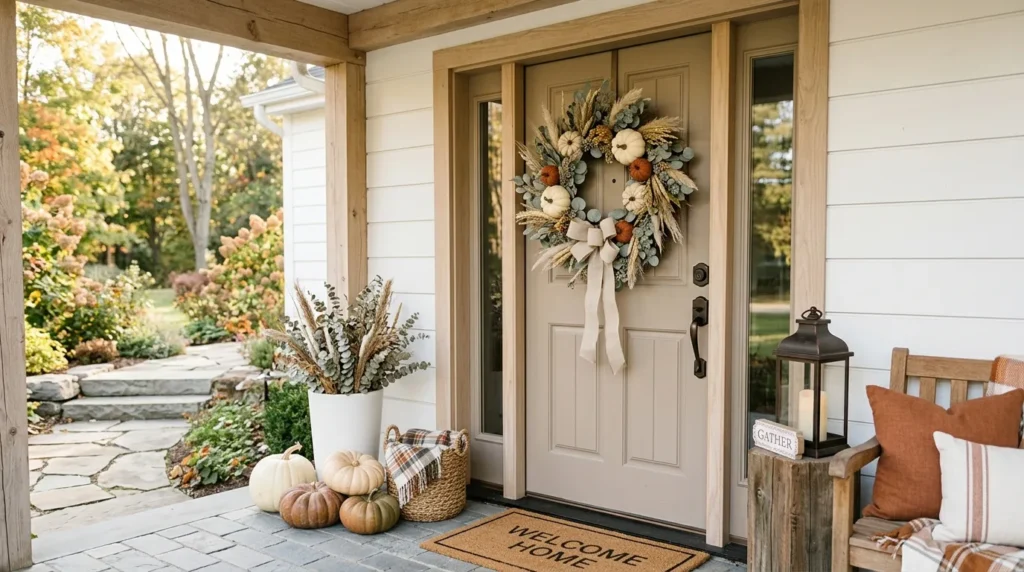
Eucalyptus-inspired greenery creates a calm backdrop for pumpkins. Its muted green-gray color works beautifully with cream, white, tan, rust, and muted orange.
This combination is ideal for anyone who likes fall decor but prefers a softer color palette. Instead of using bright orange throughout the wreath, you can make the pumpkins accents within a mostly neutral arrangement.
The greenery also adds movement. Long stems can extend beyond the wreath’s circular shape, creating a more organic silhouette.
The result feels seasonal without being overly themed.
How To Style It
Start with a grapevine or hoop base.
Layer eucalyptus-style stems across one side of the wreath.
Add cream or muted orange pumpkins among the greenery.
Use a few dried grasses for height and texture.
Secure the stems with floral wire and keep the arrangement slightly asymmetrical.
Finish with a natural linen ribbon in beige or muted olive.
For a particularly clean look, avoid adding too many different decorative elements. Let the greenery and pumpkins carry the design.
10. Ribbon Pumpkin Wreath
Quick Benefits
- Highly customizable
- Adds color and pattern
- Easy to refresh
- Works with many wreath bases
- Creates a fuller appearance
Why It Works
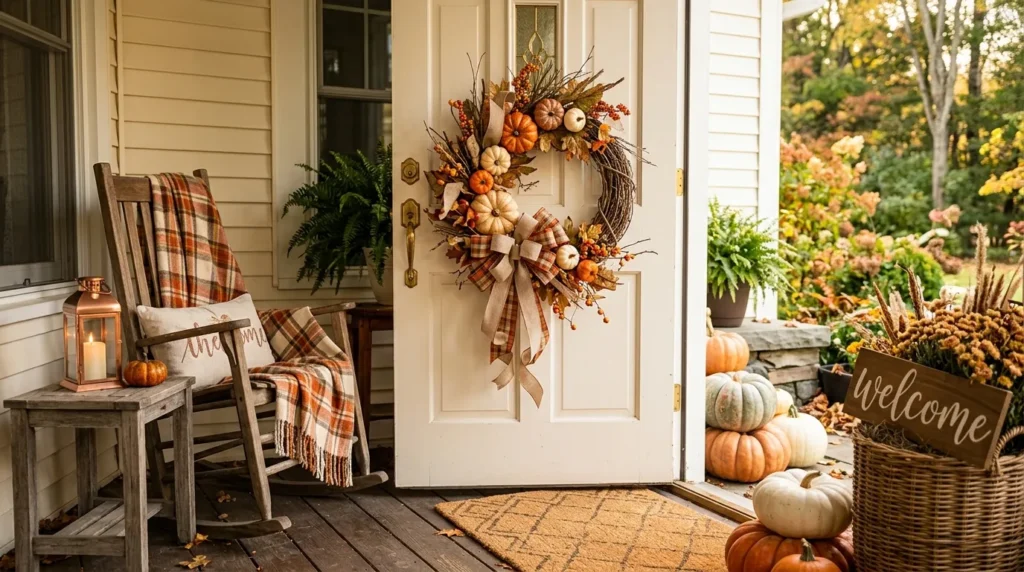
Ribbon gives a pumpkin wreath another layer of texture and personality. Patterns such as plaid, gingham, stripes, velvet, linen, and simple fall prints can change the entire mood of the design.
The key is coordinating rather than collecting too many patterns. One patterned ribbon paired with one solid ribbon is often enough.
Ribbon can also fill empty spaces between pumpkins and greenery while adding movement around the wreath.
This is a useful technique when your wreath base looks too sparse or when you want to introduce a specific color from your porch decor.
How To Style It
Choose a wire, grapevine, or foam wreath base.
Select two coordinating ribbons with different textures or widths.
Create loops throughout the wreath or use ribbon only around the pumpkin cluster.
Add faux pumpkins, leaves, berries, and small branches.
For a traditional look, combine plaid with orange pumpkins. For a neutral style, pair cream pumpkins with beige linen ribbon.
Finish with a layered bow positioned slightly off-center.
How to Choose a Pumpkin Wreath Style
Before gathering supplies, think about where the wreath is going.
For a traditional front door, orange pumpkins with warm foliage create an unmistakable fall look.
For a modern home, white pumpkins, eucalyptus, and a simple metal hoop can feel more appropriate.
For farmhouse decor, grapevine, burlap, rustic wood details, and warm orange pumpkins work naturally together.
For an elegant entryway, velvet pumpkins, neutral flowers, and soft ribbon provide more refined texture.
The door color matters too. Bright orange pumpkins stand out beautifully against dark doors, while cream pumpkins can look especially attractive against navy, black, deep green, or natural wood.
If the door is already visually busy, a simpler wreath may create a better balance.
Best Materials for a DIY Pumpkin Wreath
A basic project can use:
- Faux pumpkins
- Grapevine wreath
- Wire wreath form
- Metal hoop
- Foam wreath
- Faux fall leaves
- Eucalyptus stems
- Dried-looking grasses
- Burlap
- Linen ribbon
- Velvet ribbon
- Floral wire
- Floral adhesive
- Pinecones
- Faux berries
- Felt
- Small branches
You do not need every material on the list.
Choose a base, a focal element, greenery or texture, and one finishing detail. This simple formula can prevent the wreath from becoming overcrowded.
How to Make a Pumpkin Wreath Look Expensive
The most expensive-looking wreaths are not necessarily the ones with the most decorations.
Focus on scale first. Combine small, medium, and large elements rather than using everything in one size.
Next, limit the color palette. Three or four coordinated shades often look more intentional than a rainbow of unrelated colors.
Texture also matters. Pair smooth pumpkins with rough grapevine, soft velvet, natural linen, or airy greenery.
Finally, create a focal point. A strong pumpkin cluster placed slightly off-center can look more sophisticated than evenly distributing small decorations around the entire wreath.
Good spacing is just as important as the decorations themselves.
How to Attach Pumpkins to a Wreath
Lightweight faux pumpkins can often be attached using suitable craft adhesive or floral wire.
Heavier pieces require stronger mechanical attachment. Floral wire can be wrapped around the pumpkin stem or another secure point and then attached to the wreath base.
Before hanging the finished wreath, gently move it and check whether anything shifts.
Avoid depending entirely on adhesive when a component is heavy or exposed to outdoor temperature changes.
For outdoor wreaths, choose attachment methods and materials appropriate for the weather conditions.
How to Protect a Pumpkin Wreath Outdoors
Outdoor exposure can affect fabric, paper, ribbon, dried flowers, and unfinished wood.
A covered porch provides more protection than a fully exposed front door.
If your wreath will encounter rain or direct sunlight, choose materials labeled or designed for outdoor use when possible.
Store delicate wreaths indoors after the season.
A large plastic storage container can protect the wreath from dust and crushing during the rest of the year. Avoid placing heavy decorations on top of the wreath.
Frequently Asked Questions
1. What can I use to make a pumpkin wreath?
You can use faux pumpkins, a grapevine or wire wreath base, fall leaves, greenery, ribbon, burlap, dried-looking flowers, pinecones, berries, and small branches. The exact materials depend on the style. A simple wreath can look complete with only three or four coordinated elements.
2. How do you attach mini pumpkins to a wreath?
Lightweight mini pumpkins can be attached with suitable craft adhesive or floral wire. Floral wire is useful when you want to reposition decorations or create a stronger mechanical connection. Always test the finished wreath before hanging it, particularly when it will be displayed outdoors.
3. Can a pumpkin wreath go outside?
Yes, but the materials matter. A covered porch offers more protection than an exposed location. Faux pumpkins and weather-resistant greenery are generally more practical outdoors than paper or delicate fabric components. Store the wreath indoors when the season ends to help preserve its appearance.
4. How many pumpkins do I need for a wreath?
The number depends on the wreath size and pumpkin dimensions. A medium wreath may look complete with a small cluster of pumpkins rather than being completely covered. Mixing several sizes can create more visual depth than using many identical pumpkins.
5. How do I make a pumpkin wreath look less crowded?
Use a limited color palette and leave some of the wreath base visible. Create one main focal cluster instead of distributing decorations evenly everywhere. Adding greenery between larger pieces can also create breathing room while still making the wreath feel full.
6. What colors work with pumpkin wreaths?
Traditional combinations include orange, rust, brown, mustard, and deep red. Neutral fall wreaths can use cream, ivory, beige, sage, and muted brown. For a modern look, try white pumpkins with eucalyptus-inspired greenery and natural linen. The best palette usually connects with the colors already used around the front door.
7. Can I make a pumpkin wreath without a wreath form?
Yes. A metal hoop, grapevine base, cardboard ring, or other sturdy circular foundation can work depending on the materials and weight of the finished design. Lightweight projects have more flexibility, while heavier pumpkins require a stronger base and secure attachment method.
Related Articles
- 10 Fall Front Porch Decor Ideas
- 10 DIY Fall Decor Ideas for a Cozy Home
- 10 Pumpkin Decorating Ideas for Fall
- 10 Farmhouse Fall Decorating Ideas
- 10 Easy DIY Wreath Ideas for Every Season
Conclusion
A pumpkin wreath is one of those fall projects that can be as simple or creative as you want. You can begin with a basic grapevine wreath and a few faux pumpkins, or create a more detailed arrangement using velvet, flowers, eucalyptus, ribbon, felt, or rustic textures.
The key is choosing a style that works with your existing home decor. Traditional orange pumpkins create a cheerful seasonal statement, while white pumpkins and greenery offer a softer modern look. Burlap and grapevine bring farmhouse warmth, while velvet and floral details create a more elegant finish.
Think about color, scale, texture, and placement before attaching anything permanently. A small amount of planning makes it easier to create a balanced arrangement.
Most importantly, leave room for your own creativity. Change the ribbon, mix pumpkin colors, add materials from your craft collection, or simplify one of these ideas to fit your budget.
Choose one design and start with the materials you already have. A handmade wreath can give your front door a welcoming fall update while adding a personal touch that store-bought decor often lacks.