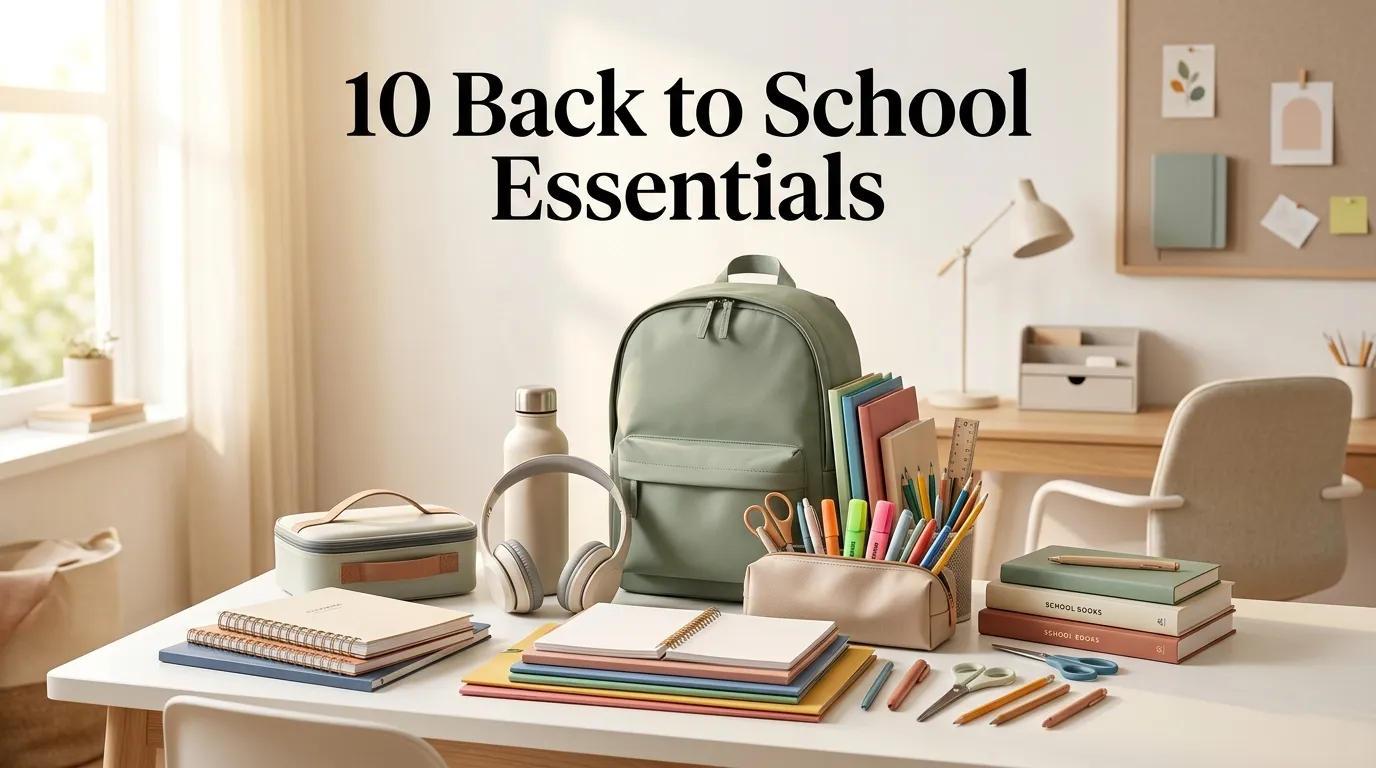
10 Back to School Essentials
Back-to-school season has a way of arriving faster than expected. One minute summer is in full swing, and the next, families are checking school lists, organizing backpacks, replacing worn-out supplies, and trying to get everyone back into a weekday routine.
The good news is that preparing for a new school year does not have to mean buying everything in sight. A thoughtful collection of useful essentials can make mornings smoother, homework easier to manage, and the transition from summer to school much less stressful.
The most helpful approach is to think beyond the traditional supply list. Students also need practical organization tools, comfortable everyday items, a reliable place for homework, and simple systems for keeping track of assignments and belongings.
In my experience, the best back-to-school setup is one that matches the student’s actual routine. A younger child may benefit from clearly labeled containers and easy-to-reach supplies, while an older student may prefer a streamlined backpack, technology accessories, and a dedicated study area.
This guide covers 10 back-to-school essentials that combine practical function with organization. These ideas work for elementary students, middle schoolers, and high school students, with small adjustments based on age and school requirements.
Before shopping, check the school’s official supply list. Requirements can vary considerably between schools, teachers, grade levels, and districts. Starting with what is actually needed helps avoid unnecessary purchases and keeps the preparation process more intentional.
Whether you’re preparing for kindergarten or getting a teenager ready for another busy academic year, these essentials can help create a more organized and comfortable start.
Table of Contents
1. Reliable Backpack
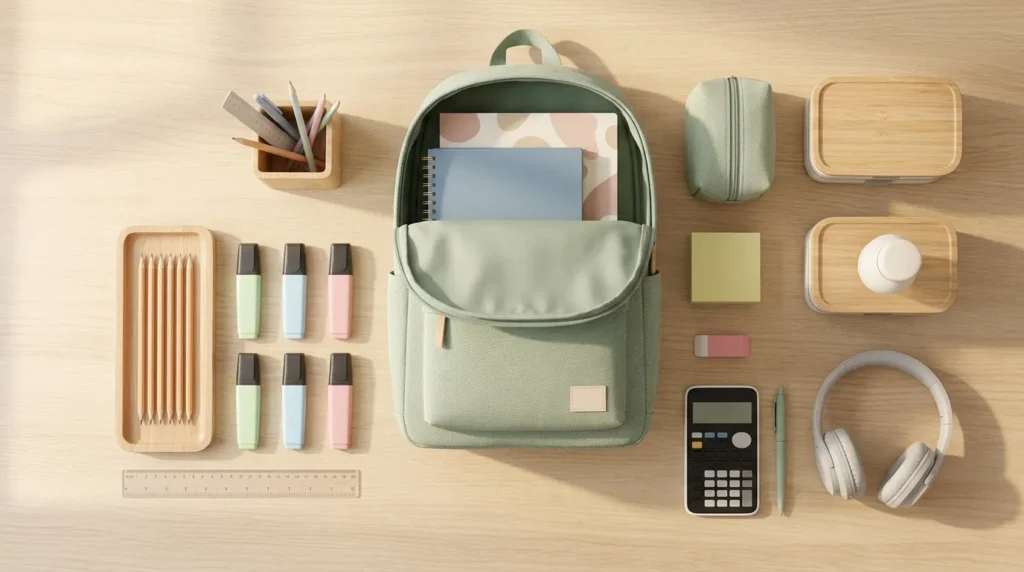
A properly sized backpack provides a practical home for school supplies, books, technology, and everyday essentials.
2. Pencil Case
A well-organized pencil case keeps frequently used writing tools together and easy to find.
3. School Supplies
Basic notebooks, folders, writing tools, and classroom supplies create the foundation for daily schoolwork.
4. Water Bottle
A reusable water bottle makes it easier for students to carry water throughout a busy school day.
5. Lunch Container
A practical lunch container keeps meals and snacks organized while making packing easier.
6. Planner System
A planner provides a simple way to track assignments, activities, projects, and important dates.
7. Study Station
A dedicated homework area creates a consistent place for reading, writing, studying, and organizing schoolwork.
8. Tech Accessories
Simple technology accessories can help students protect and organize devices used for school.
9. Organization Labels
Labels make it easier to identify school belongings and maintain order at home and in the classroom.
10. Daily Routine
A predictable school-day routine helps students transition from summer habits into organized weekday schedules.
1. Reliable Backpack
Quick Benefits
- Keeps school items together
- Makes daily transportation easier
- Provides organization
- Reduces loose supplies
- Works for multiple school years when cared for properly
Why It Works
A backpack is one of the most important everyday school items because students carry nearly everything they need inside it. The right design can make that load easier to organize and more comfortable to manage.
Look for a backpack that fits the student’s size rather than choosing one based only on appearance. Adjustable shoulder straps, useful compartments, durable construction, and a manageable overall weight are practical features to consider.
A backpack that is too large can encourage unnecessary overpacking, while one that is too small may leave books and supplies crammed together.
Organization matters as well. Separate compartments can keep notebooks away from water bottles, lunch containers, and smaller supplies.
For younger students, simple organization is often better than a complicated collection of pockets. Older students may appreciate dedicated sections for laptops, chargers, folders, and personal items.
How To Choose It
Start by checking the school’s requirements. Some schools have restrictions on backpack size or style.
Choose a bag with adjustable straps that sit comfortably on the student’s shoulders. A padded back can add comfort, particularly when the backpack is carried for longer periods.
Look for durable seams and zippers if the backpack is expected to handle daily use.
Encourage students to remove unnecessary papers, toys, and old supplies each week. A lighter, organized backpack is easier to manage than one filled with everything accumulated throughout the semester.
Keep frequently used items in consistent compartments so the student knows where to find them.
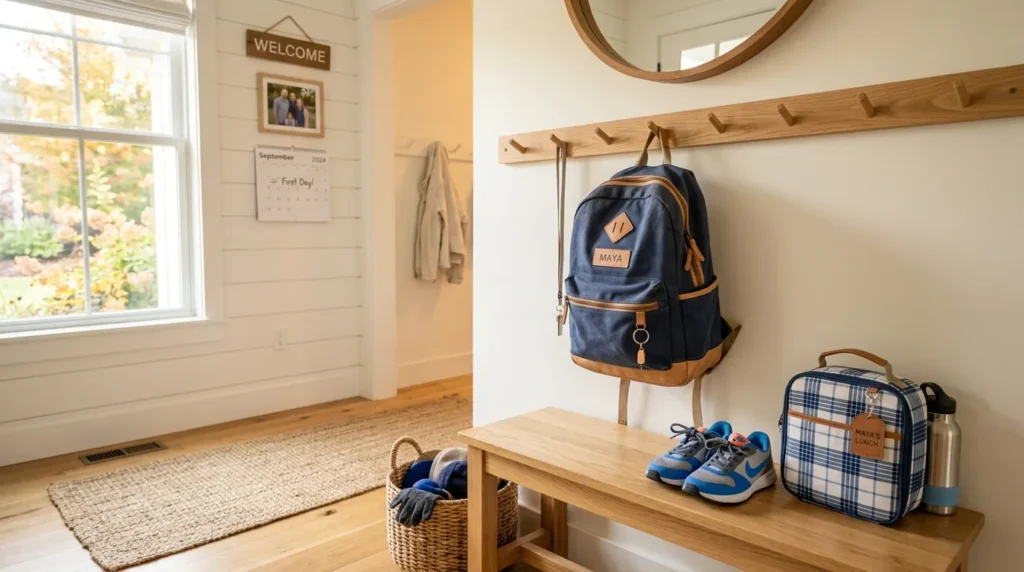
For younger children, adding a simple name label can make identification easier when multiple students have similar bags.
2. Pencil Case
Quick Benefits
- Keeps writing tools together
- Prevents loose supplies
- Saves time during class
- Fits easily inside a backpack
- Makes restocking simple
Why It Works
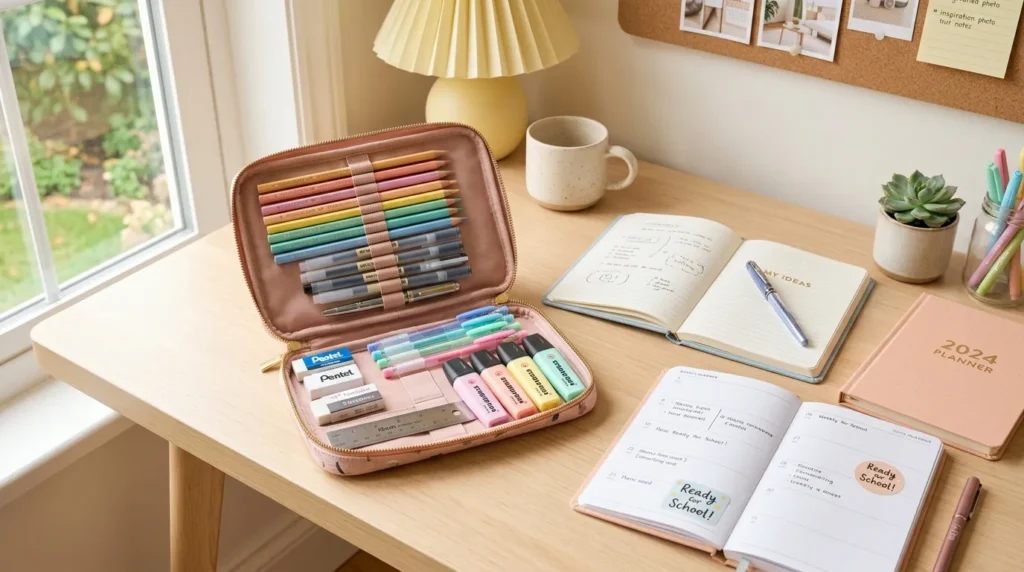
A pencil case may seem like a small detail, but it can make a noticeable difference in school organization. Loose pencils, erasers, markers, and highlighters tend to disappear into the bottom of a backpack when they do not have a designated home.
A simple case keeps frequently used tools together and makes it easier to see what needs replacing.
The ideal size depends on the student’s grade level. Younger children may need space for crayons, colored pencils, and markers, while older students may only need pencils, pens, erasers, and a few highlighters.
Avoid filling the case with every possible writing tool. Carrying only what is regularly used keeps it lighter and easier to organize.
How To Organize It
Start with the supplies listed by the school or teacher.
Place everyday writing tools in the easiest-to-reach section. Store specialty items such as colored pencils or highlighters separately if the case has multiple compartments.
At the end of each week, check for broken pencils, dried markers, missing erasers, or empty pens.
A clear or semi-transparent case can make finding supplies faster, while a fabric case can provide a more traditional look.
Choose a durable zipper and washable material when possible, especially for younger students.
A small pencil sharpener with a secure container can also be useful when permitted by the school.
3. School Supplies
Quick Benefits
- Supports everyday classroom work
- Keeps assignments organized
- Helps students prepare for class
- Makes homework easier
- Creates a predictable supply system
Why It Works
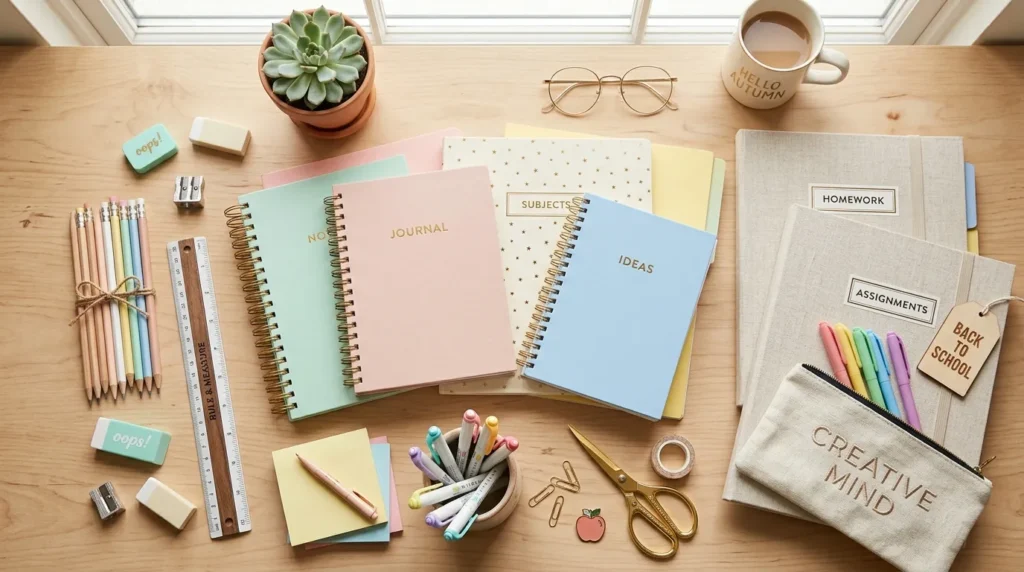
School supplies form the foundation of a student’s daily routine. Notebooks, folders, pencils, pens, erasers, rulers, and other classroom materials may seem basic, but having the correct supplies available can prevent unnecessary interruptions.
The key is buying according to the actual school list. Teachers sometimes request specific notebook sizes, folder colors, calculator types, art materials, or organizational systems.
It is also helpful to avoid buying large quantities of supplies simply because they are inexpensive during back-to-school sales. Students may not use every item, and excessive supplies can create clutter.
A simple home backup system can be useful for frequently misplaced items. Keeping a small reserve of pencils, paper, folders, and other common supplies can save a last-minute store trip.
How To Organize Them
Sort supplies into categories before the first day.
Keep daily items in the backpack or pencil case. Store extra supplies in a labeled container at home.
Use folders for subjects that generate loose papers. If the student prefers digital assignments, the physical organization system can be smaller.
Label notebooks and folders according to class or subject.
For younger children, use simple labels with both words and colors when helpful. Older students may prefer a more minimal system.
Check supplies every few weeks rather than waiting until something runs out completely.
4. Water Bottle
Quick Benefits
- Makes water portable
- Reduces disposable bottle use
- Fits into a daily routine
- Useful beyond school
- Easy to personalize
Why It Works
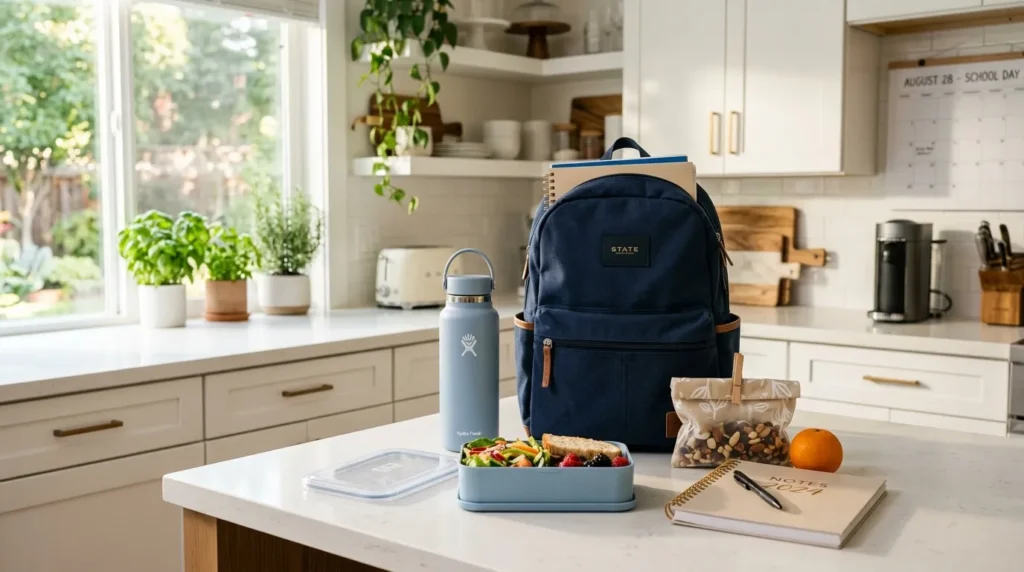
A reusable water bottle is a practical everyday item because students spend many hours away from home. Having water available can be especially convenient during active school days, sports, field trips, and extracurricular activities.
The bottle should be easy for the student to open, close, carry, and clean. A complicated lid can become frustrating, especially for younger children.
Size also matters. A very large bottle can add unnecessary weight to a backpack, while a very small bottle may require frequent refilling.
Leak resistance is particularly important when the bottle travels alongside notebooks, electronics, and homework.
How To Choose It
Choose a size that fits the student’s daily schedule and school rules.
Look for a secure lid and a design that is easy to clean thoroughly. Wide openings can make washing the interior easier.
If the student uses the bottle every day, label it clearly.
Teach children to empty and rinse the bottle regularly. Follow the manufacturer’s cleaning instructions, particularly for lids with multiple pieces or silicone seals.
For older students, an insulated design can be useful when they prefer cold water throughout the day.
Avoid overloading the backpack with a very large bottle unless there is a practical reason for the extra capacity.
5. Lunch Container
Quick Benefits
- Keeps food organized
- Makes packing easier
- Protects food inside the backpack
- Supports portion organization
- Can reduce disposable packaging
Why It Works
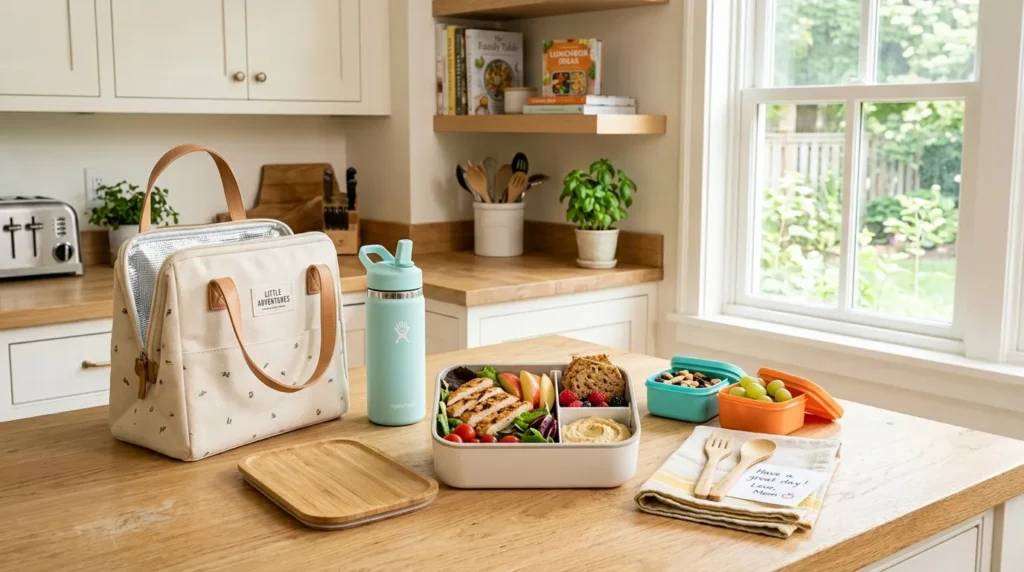
A lunch container can simplify both morning preparation and school-day organization. Instead of placing multiple loose food containers inside a backpack, a dedicated lunch bag or box creates one clear location for the meal.
The best choice depends on the student’s age, food preferences, school schedule, and available storage.
Insulated lunch bags can be useful when food needs temperature control, but they still require appropriate food-safety practices. Perishable foods need to be handled and stored according to established food-safety guidance.
Leak resistance is another major consideration. A small spill inside a backpack can quickly become a large cleanup problem when it reaches notebooks and electronics.
How To Organize It
Choose containers that fit comfortably inside the lunch bag.
Use smaller reusable containers for foods that need to stay separate. Keep liquids securely sealed.
Label the lunch container if several students at school use similar bags.
At the end of the school day, remove leftover food and wash containers promptly according to their care instructions.
A simple lunch-packing station at home can make mornings easier. Keep reusable containers, lunch bags, napkins, and other frequently used items together.
6. Planner System
Quick Benefits
- Tracks assignments
- Organizes important dates
- Helps manage activities
- Supports time awareness
- Creates a visible school routine
Why It Works
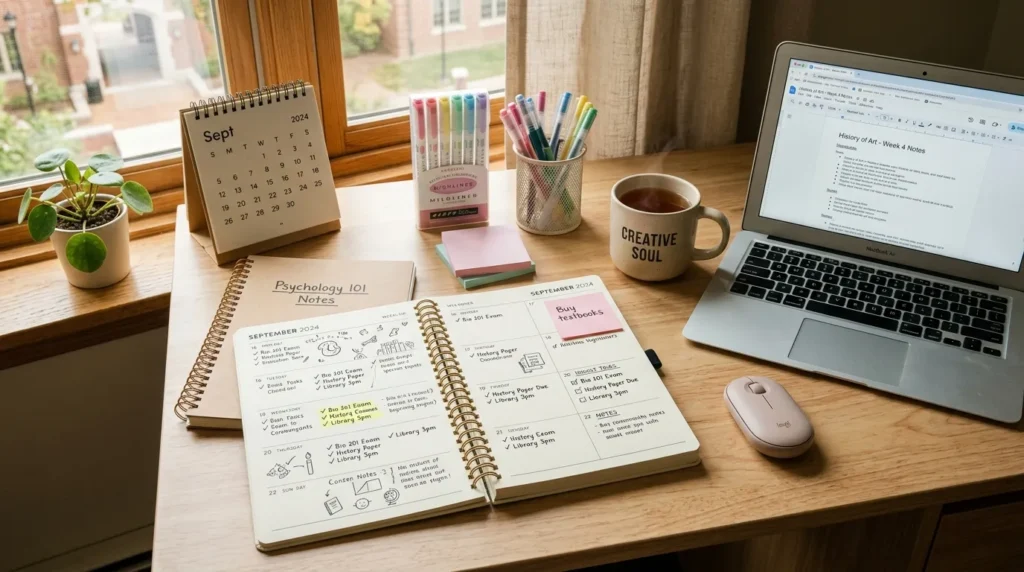
As students get older, school organization becomes more complicated. Multiple classes can mean different teachers, assignments, projects, tests, and deadlines. A planner gives those responsibilities a central location.
Younger students may need a very simple visual system, while middle and high school students may prefer a weekly planner, digital calendar, or combination of both.
The best system is the one the student actually uses. A beautifully designed planner has little value if it stays inside a drawer.
Encourage students to record assignments as soon as they receive them. Breaking larger projects into smaller tasks can also make deadlines feel more manageable.
Parents can help younger students establish the habit without taking over the system completely.
How To Use It
Choose either a paper planner, digital calendar, school-approved planning system, or a combination.
At the beginning of each week, review upcoming assignments, activities, appointments, and deadlines.
Use simple categories or colors if they genuinely make information easier to understand.
For larger projects, write down intermediate steps rather than only the final due date.
Set aside a few minutes each afternoon or evening to review what has been completed and what remains.
Keep the system consistent. Switching between several unrelated planning methods can create more confusion than organization.
7. Study Station
Quick Benefits
- Creates a consistent homework area
- Reduces distractions
- Keeps supplies nearby
- Encourages organization
- Makes schoolwork easier to start
Why It Works
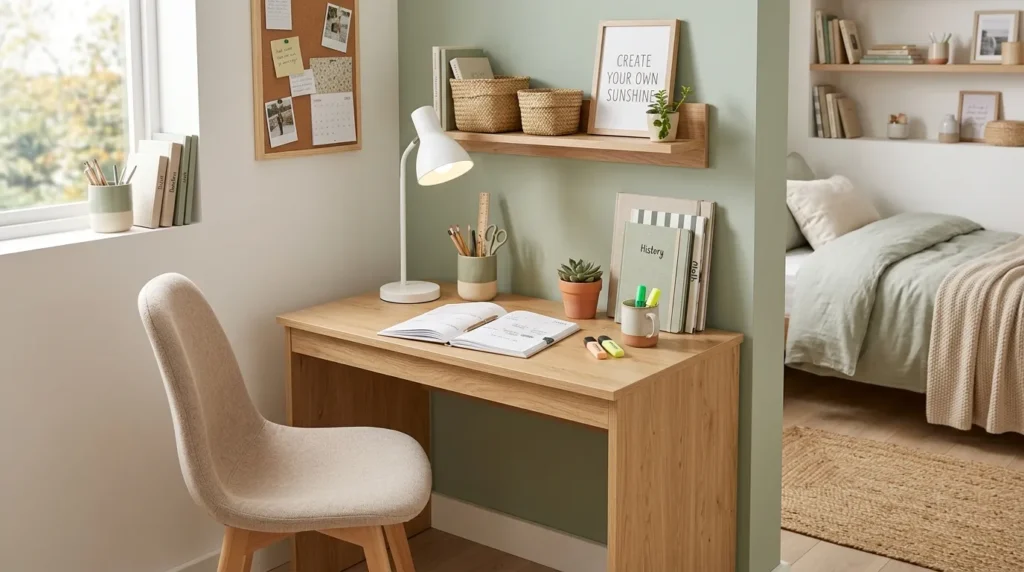
A dedicated study station does not need to be a separate home office. A small desk, kitchen corner, bedroom table, or quiet section of a shared room can become a useful homework area.
The goal is consistency. When school supplies, notebooks, chargers, and reference materials have a predictable location, students spend less time searching and more time working.
The space should match the student’s age and learning habits. Younger children may benefit from visible supplies and simple storage. Older students may prefer a cleaner desk with room for a laptop and textbooks.
Lighting also matters. A well-lit workspace can make reading and writing more comfortable.
How To Set It Up
Choose a stable surface with enough room for the student’s usual schoolwork.
Add a comfortable chair that fits the desk height appropriately.
Keep frequently used supplies within easy reach. Use a small organizer, drawer, or basket instead of covering the entire desk with supplies.
Provide suitable lighting, especially if homework often happens after sunset.
Keep distractions under control. The exact approach depends on the student, but unnecessary notifications, entertainment devices, and clutter can make concentration harder.
At the end of each study session, spend a few minutes returning supplies and papers to their designated places.
8. Tech Accessories
Quick Benefits
- Protects school technology
- Keeps chargers organized
- Reduces cable clutter
- Makes devices easier to transport
- Supports digital schoolwork
Why It Works
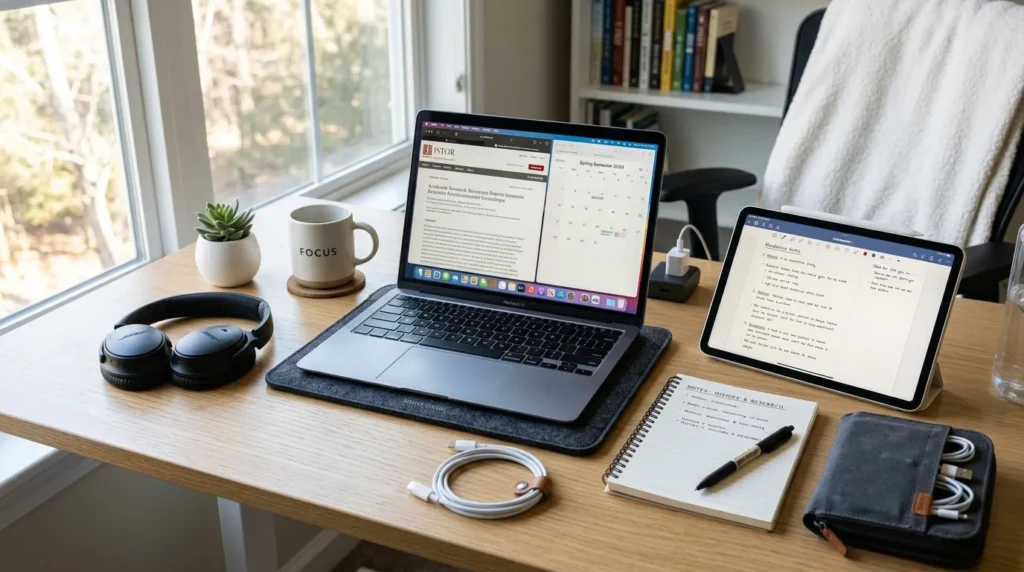
Technology has become part of many students’ school routines, particularly in middle school and high school. Laptops, tablets, headphones, chargers, and other accessories can quickly become difficult to manage when they do not have designated storage.
A protective sleeve or case can help prevent scratches and everyday damage during transportation. Cable organizers can keep chargers from becoming tangled inside a backpack.
Not every student needs a large collection of technology accessories. Start with what the school actually requires.
Headphones can also be useful for digital lessons when permitted, but students should follow classroom rules and school policies.
How To Organize It
Give the laptop or tablet a dedicated compartment rather than placing it loose between books.
Keep the charger in a consistent pouch or section of the backpack.
Use a simple cable tie or organizer to prevent cords from tangling.
Label chargers when multiple devices in the household use similar cables.
Create a charging station at home where school devices return each evening.
Encourage students to charge devices before school rather than relying on a nearly empty battery during the first class.
Follow school technology policies and use only approved devices or accessories when required.
9. Organization Labels
Quick Benefits
- Makes belongings easier to identify
- Supports organization
- Helps reduce mix-ups
- Useful for younger students
- Creates consistent storage
Why It Works
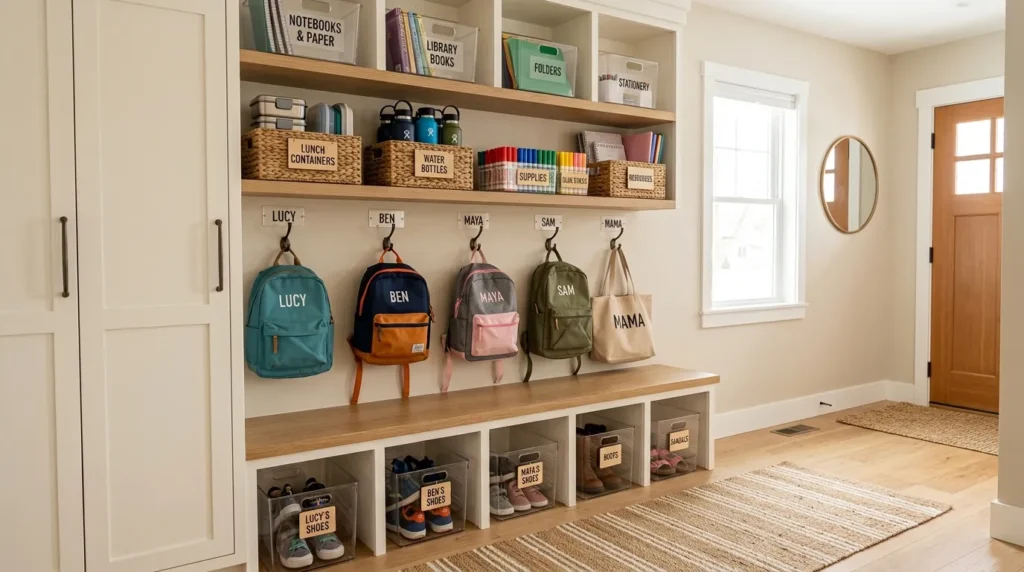
Labels are one of the simplest organization tools for back-to-school season. They can identify backpacks, lunch containers, water bottles, folders, notebooks, clothing, and other belongings.
For younger children, a clear name label can be especially useful when several students have similar items.
Labels also help at home. Baskets for school papers, homework, sports equipment, or supplies can create simple systems that children understand.
The best labels are easy to read and durable enough for the environment where they are used. Items exposed to water require labels designed to withstand moisture.
Avoid labeling sensitive personal information where it could create an unnecessary privacy concern. A first name or family-approved identifier may be sufficient for many items.
How To Use Them
Make a list of items that frequently get misplaced.
Label high-priority belongings such as lunch containers, water bottles, backpacks, and school supply cases.
Use simple category labels for home storage, such as “Homework,” “School Papers,” or “Extra Supplies.”
For clothing or fabric items, use labels appropriate for the material and follow their application instructions.
Check labels periodically and replace those that peel, fade, or become unreadable.
The goal is not to label everything. Focus on items that genuinely benefit from identification.
10. Daily Routine
Quick Benefits
- Makes mornings more predictable
- Reduces forgotten items
- Supports better organization
- Helps students transition into school
- Creates repeatable habits
Why It Works
The most useful back-to-school essential may not be something that can be purchased at all. A predictable routine can make school mornings and evenings significantly easier.
Summer often brings later bedtimes, flexible meals, spontaneous activities, and less structured mornings. Returning to school can feel abrupt when those habits change overnight.
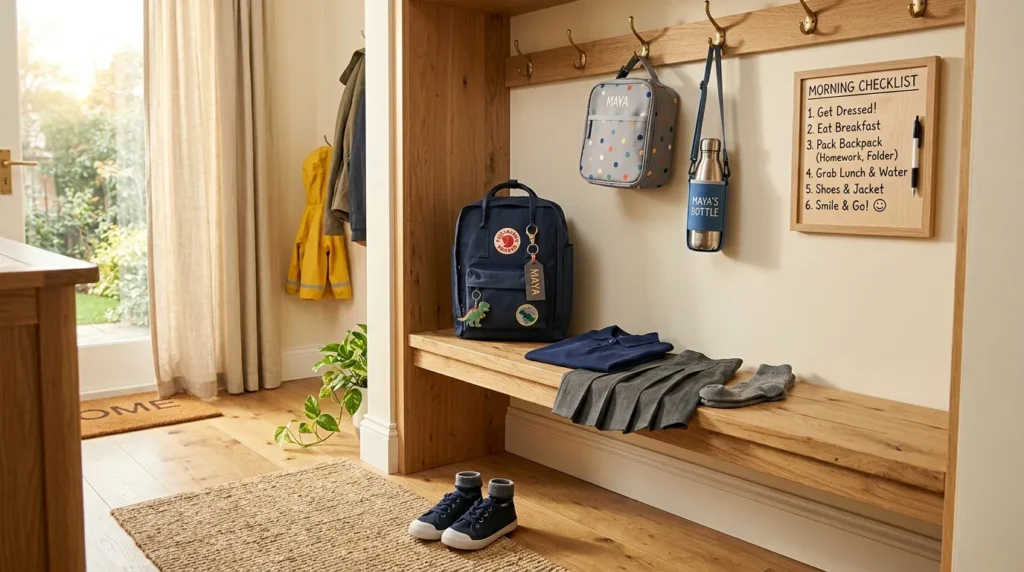
A gradual routine gives students time to adjust. Preparing clothes, backpacks, lunches, and school supplies the evening before can also reduce morning decisions.
The routine should be realistic. A complicated schedule with too many steps is difficult to maintain.
For younger students, visual checklists can help. Older students may manage their own routine with reminders or a digital calendar.
How To Create It
Start adjusting bedtime and wake-up times gradually before school begins.
Create an evening checklist that includes homework, backpack preparation, charging devices, preparing clothes, and organizing lunch items.
Keep frequently used school items in predictable locations.
Set aside a few minutes each evening to check the next day’s schedule.
In the morning, use the same general sequence whenever possible: wake up, get dressed, eat breakfast, complete personal care, collect the backpack, and leave.
At the end of the first few weeks, review what is working and simplify anything that creates unnecessary stress.
A routine does not need to be perfect. It needs to be repeatable.
How to Prepare for Back-to-School Shopping
The easiest way to make school shopping manageable is to start with the official supply list.
Separate the list into categories such as:
- Classroom supplies
- Writing supplies
- Organization
- Clothing
- Lunch items
- Technology
- Personal items
Check the home first. Many families already have unopened notebooks, extra pencils, folders, or art supplies from the previous year.
Next, identify what actually needs replacing.
This approach prevents duplicate purchases and makes the shopping trip more focused.
It is also helpful to involve older children in the process. Allowing them to compare options and choose certain colors or styles can make them more invested in organizing their belongings.
For younger children, keep choices limited. Too many options can make a simple shopping trip unnecessarily complicated.
Back-to-School Organization at Home
A small home organization system can make the school year easier.
Create a designated place for backpacks near the entrance. Add hooks, baskets, or a small bench if the space allows.
Keep lunch containers together in the kitchen. Store school papers in a simple tray or folder system.
Create a charging location for school devices.
Keep extra supplies in a labeled container rather than scattered across drawers.
For homework, establish a consistent study location.
These small systems work because they remove repeated decisions from the daily routine. Students learn where things belong, and parents spend less time searching for missing supplies.
The system does not need to look like a perfectly styled Pinterest command center. It only needs to work for the people using it.
Back-to-School Essentials by Age
Different students have different needs.
Elementary School
Younger students often benefit from simple organization, clearly labeled belongings, comfortable backpacks, basic school supplies, lunch containers, and visual routines.
Middle School
Middle school introduces more classes and changing schedules. A planner, organized backpack, pencil case, water bottle, and reliable study area become increasingly useful.
High School
Older students may need more technology organization, subject-specific notebooks, calculators, planners, chargers, headphones, and a flexible study system.
The school’s requirements always come first. Grade level provides a general guide, but individual classrooms can have very different expectations.
Back-to-School Mistakes to Avoid
A little planning can prevent common problems.
Avoid buying supplies before checking the official school list.
Do not assume the most expensive item is automatically the best choice.
Avoid overpacking backpacks with unnecessary supplies.
Do not create an elaborate organization system that takes longer to maintain than the schoolwork itself.
Avoid waiting until the first morning to locate school supplies, charge devices, or prepare lunches.
Do not completely overhaul a student’s routine overnight if gradual changes are possible.
Most importantly, avoid turning preparation into a stressful race for perfection.
The purpose of back-to-school organization is to make everyday life easier, not create another source of pressure.
Frequently Asked Questions
1. What are the most important back-to-school essentials?
The most useful essentials depend on the student’s grade and school requirements, but common basics include a properly sized backpack, pencil case, required school supplies, reusable water bottle, lunch container, planner, study area, and organization tools. Technology accessories may also be necessary for schools that use laptops or tablets.
2. When should I start preparing for back to school?
Starting a few weeks before school begins gives families time to check supply lists, organize existing items, purchase missing supplies, and gradually adjust daily routines. There is no need to buy everything at once. Beginning with the official school list and household inventory can make preparation more efficient.
3. How can I organize my child’s backpack?
Keep frequently used items in consistent compartments. Use a pencil case for writing tools, folders for loose papers, and a dedicated section for technology when needed. Remove old papers, trash, and unnecessary items regularly. A short backpack reset once a week can prevent clutter from accumulating.
4. What should every student have in their backpack?
The exact contents depend on the school, but common items include required notebooks, folders, writing supplies, a planner if used, water bottle, lunch items, and school-approved technology. Students do not need to carry every supply they own. Keeping the backpack limited to daily essentials helps reduce unnecessary weight.
5. How can I make mornings easier during the school year?
Prepare as much as possible the night before. Pack the backpack, organize lunch items, charge school devices, choose clothing, and check the next day’s schedule. Keeping these tasks in a consistent order reduces morning decisions and makes it easier to notice missing items before leaving home.
6. What is a good study setup for a student at home?
A useful study setup needs a stable work surface, comfortable seating, suitable lighting, and enough space for the student’s normal schoolwork. Keep frequently used supplies nearby and minimize unnecessary distractions. The setup can be a dedicated desk or a small area of an existing room.
7. How can I save money on back-to-school supplies?
Check what you already own before shopping, compare the school list with your household inventory, and prioritize required supplies over extras. Reusable items such as backpacks, lunch containers, water bottles, and pencil cases can often be used for multiple years when they remain in good condition.
Related Articles
- 10 Easy Back-to-School Organization Ideas for Busy Families
- How to Create a Homework Station at Home
- 10 Kids’ Room Organization Ideas for a Fresh Start
- How to Organize a Small Study Space
- 10 Simple Home Organization Ideas for Families
Conclusion
Back-to-school preparation does not need to become a giant shopping project. The most useful approach is to focus on the items and routines that genuinely support a student’s school day.
A dependable backpack, organized pencil case, required school supplies, reusable water bottle, lunch container, and planner create a practical foundation. A comfortable study station, technology organization, clear labels, and a predictable daily routine can make the transition even smoother.
The most important step is to personalize the system. An elementary student may need visible labels and simple storage, while a high school student may benefit more from technology organization and a flexible planning system.
Before buying anything, check the school’s official requirements and take inventory of what is already at home. This can reduce unnecessary spending and keep the preparation process manageable.
Then focus on the small habits that make school days easier: packing the night before, keeping supplies in predictable places, checking assignments regularly, and maintaining a simple morning routine.
Start with the essentials, keep the organization realistic, and let the system evolve as the school year progresses. A little preparation can create a calmer beginning and a more manageable rhythm for the months ahead.