
10 Ideas on How to Make a Small Bedroom Feel Bigger with Color
Color has a powerful influence on how large or small a room feels. In a compact bedroom, the right color palette can brighten dark corners, reflect natural light, and create the illusion of more space without moving a single wall. Soft neutrals, airy pastels, and coordinated tones help open up the room, while thoughtful accents add personality without overwhelming the design. With a few strategic color choices, even the smallest bedroom can feel fresh, spacious, and inviting.
In my experience, creating the illusion of space is less about using only white paint and more about maintaining visual continuity. When walls, furniture, bedding, and décor work together in a cohesive palette, the room feels calmer and more expansive. Small contrasts and layered textures keep the design interesting while preserving an open, uncluttered look.
I’ve noticed Pinterest users consistently save bedrooms featuring warm white walls, soft beige bedding, sage green accents, light wood furniture, monochromatic color schemes, sheer curtains, muted blue details, natural textures, minimalist décor, and bright reflective surfaces. These timeless combinations remain popular because they make compact bedrooms feel elegant, comfortable, and larger than they actually are.
Whether you’re decorating a tiny apartment bedroom, guest room, or small primary suite, these color-focused ideas will help you maximize both style and space.
Table of Contents
- Paint the Walls Warm White
- Choose a Soft Neutral Color Palette
- Layer Different Shades of Beige
- Add Gentle Sage Green Accents
- Use Light Wood Furniture
- Decorate with Soft Blue Details
- Keep Bedding Light and Airy
- Introduce Reflective Metallic Accents
- Match Curtains to the Wall Color
- Limit Bold Accent Colors
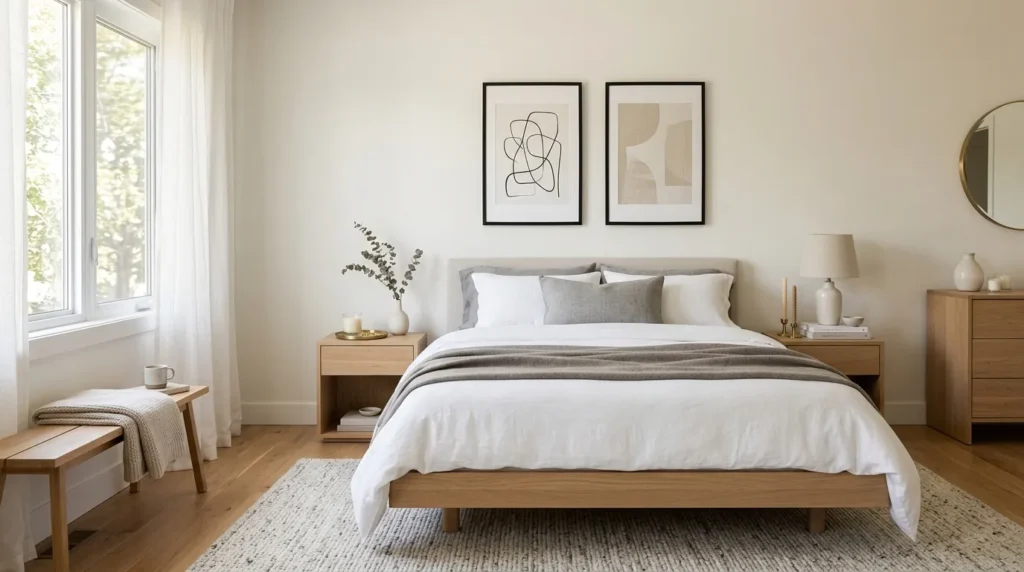
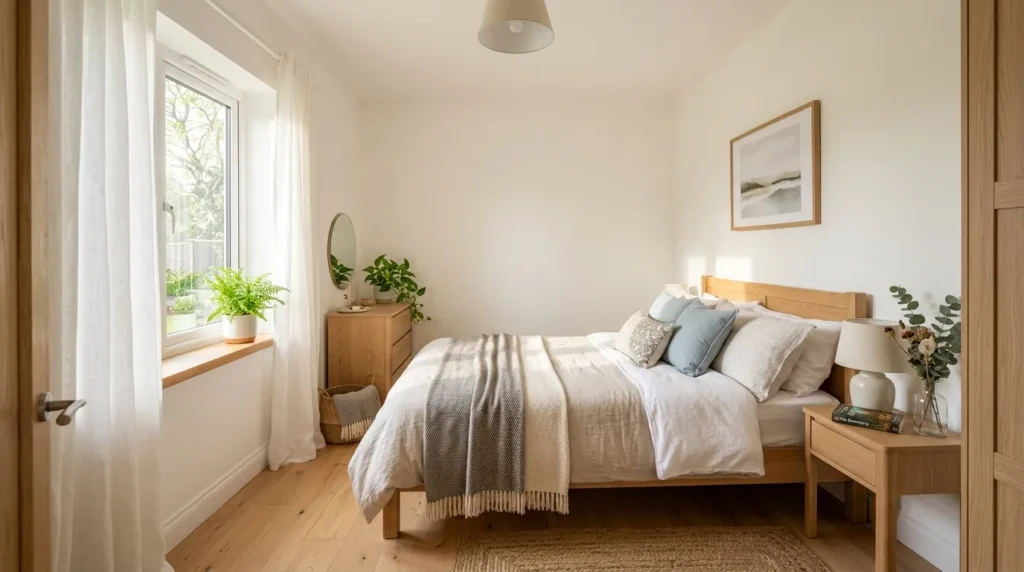
1. Paint the Walls Warm White
Quick Benefits
- Reflects natural light
- Makes rooms feel larger
- Timeless appearance
- Easy to decorate
- Bright atmosphere
Why It Works
Warm white walls bounce light throughout the room, creating an airy and open feeling while providing a versatile backdrop for furniture.
How To Style It
Pair warm white paint with natural wood furniture, cream bedding, and woven accessories to create a welcoming space.
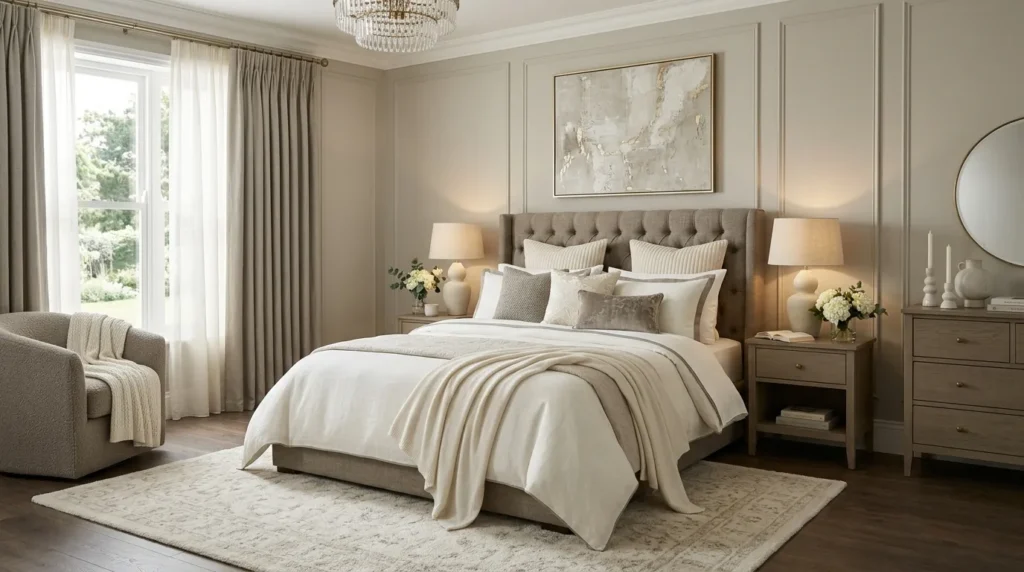
2. Choose a Soft Neutral Color Palette
Quick Benefits
- Calm atmosphere
- Cohesive design
- Easy coordination
- Timeless style
- Spacious appearance
Why It Works
A consistent neutral palette minimizes visual interruptions, allowing the eye to move smoothly around the room.
How To Style It
Blend ivory, beige, greige, and soft taupe through bedding, rugs, curtains, and decorative accessories.
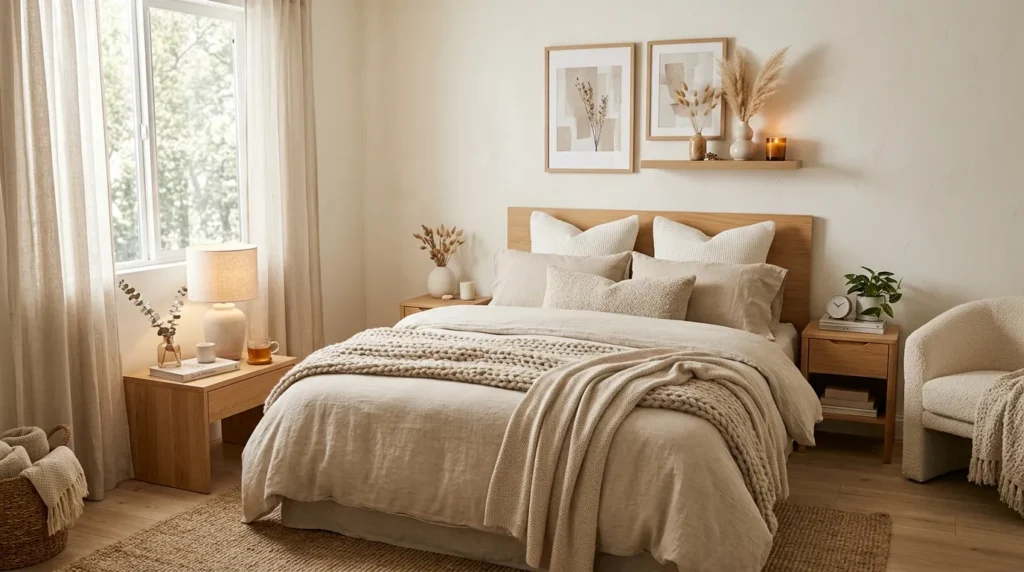
3. Layer Different Shades of Beige
Quick Benefits
- Adds warmth
- Creates depth
- Elegant appearance
- Cozy atmosphere
- Designer look
Why It Works
Using multiple shades of the same color creates subtle contrast without making the room feel busy.
How To Style It
Combine beige walls with oatmeal bedding, cream pillows, linen throws, and light oak furniture.
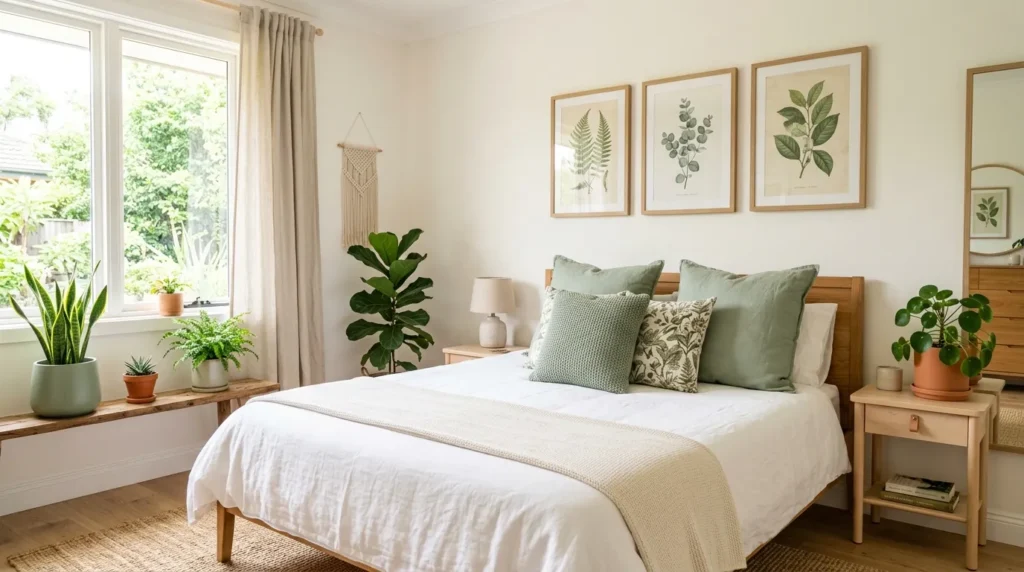
4. Add Gentle Sage Green Accents
Quick Benefits
- Natural color
- Relaxing mood
- Fresh appearance
- Easy updates
- Timeless accent
Why It Works
Soft sage green introduces color while maintaining the peaceful feel of a neutral bedroom.
How To Style It
Use sage green pillows, artwork, planters, or a throw blanket while keeping larger furniture neutral.
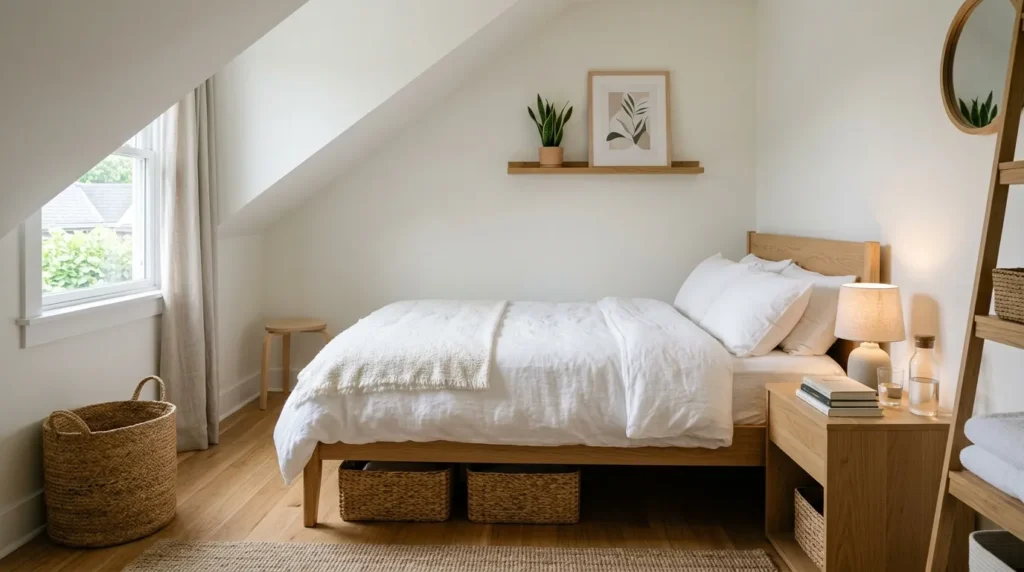
5. Use Light Wood Furniture
Quick Benefits
- Brightens the room
- Natural warmth
- Timeless appeal
- Easy styling
- Airy appearance
Why It Works
Light oak and ash finishes prevent furniture from feeling visually heavy in compact spaces.
How To Style It
Choose streamlined wood furniture with simple silhouettes and pair it with white or beige décor.
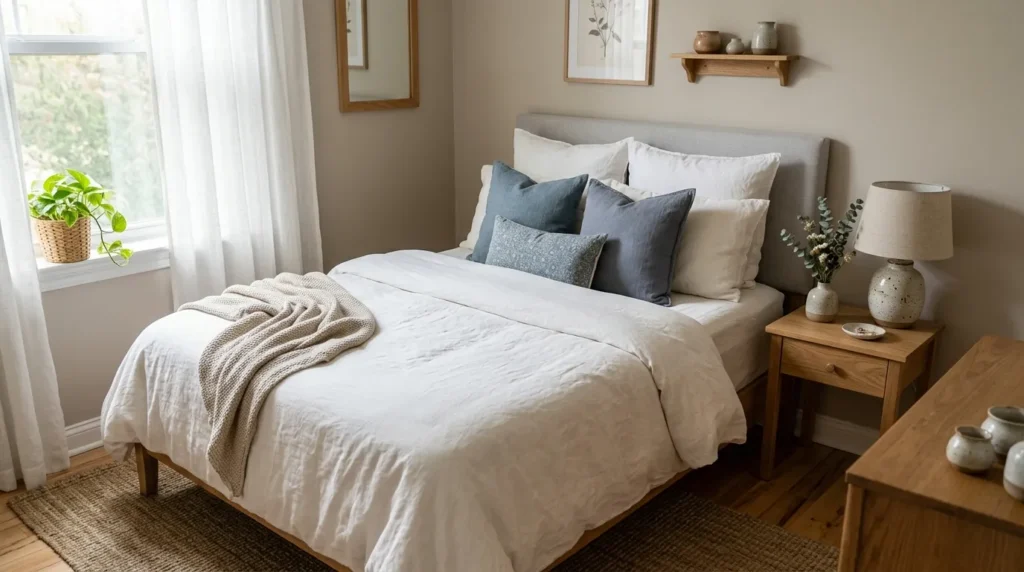
6. Decorate with Soft Blue Details
Quick Benefits
- Calming effect
- Fresh atmosphere
- Elegant contrast
- Coastal inspiration
- Relaxing palette
Why It Works
Muted blue accents create depth while preserving the room’s light and open appearance.
How To Style It
Incorporate pale blue pillows, artwork, ceramic vases, or lightweight bedding for subtle color.
7. Keep Bedding Light and Airy
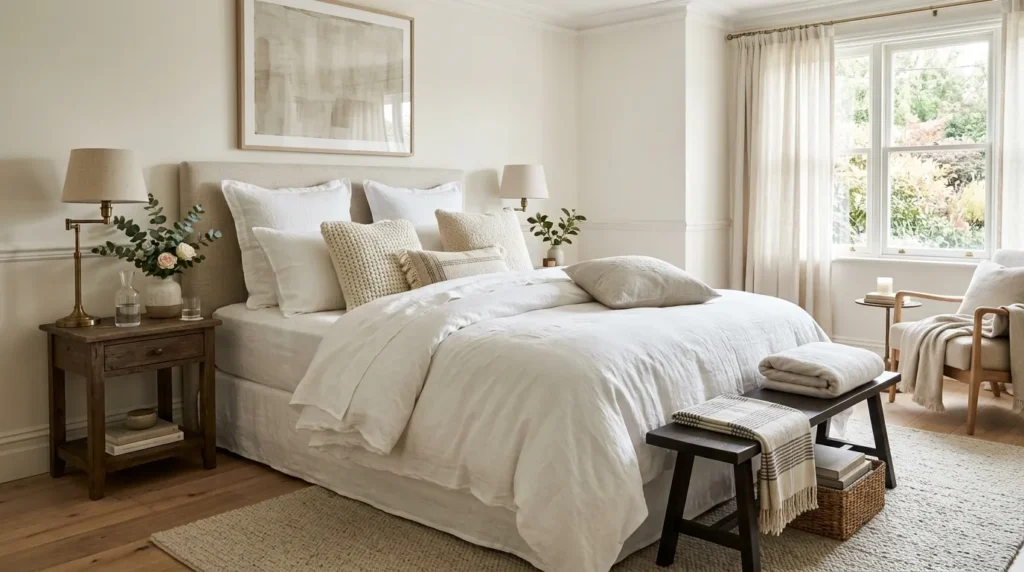
Quick Benefits
- Bright appearance
- Comfortable layers
- Hotel-inspired style
- Soft textures
- Spacious feel
Why It Works
Light-colored bedding reflects more light and keeps the bed from dominating a small room.
How To Style It
Layer white sheets with cream quilts, linen duvet covers, and textured neutral throw pillows.
8. Introduce Reflective Metallic Accents
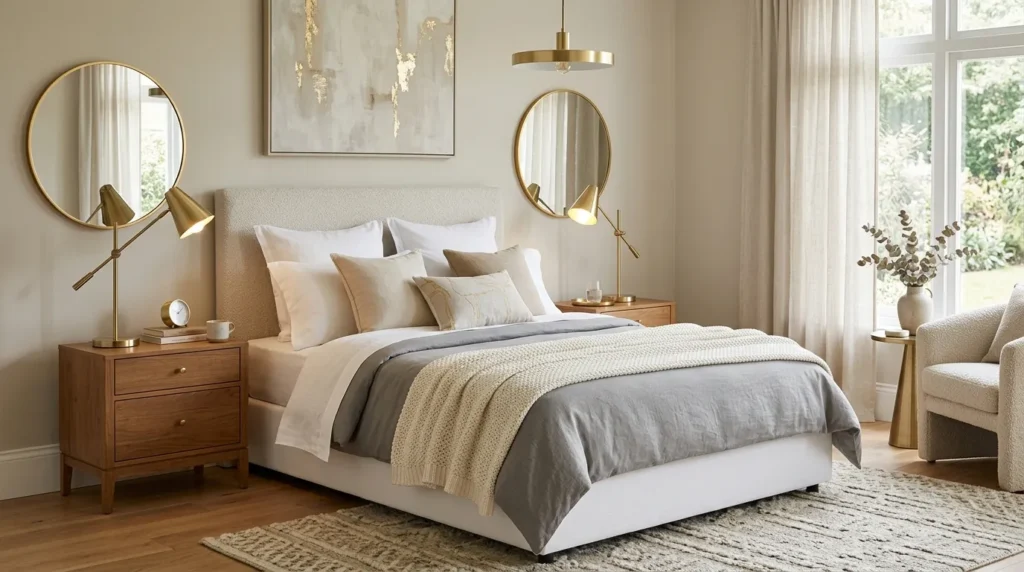
Quick Benefits
- Reflects light
- Elegant details
- Luxury appearance
- Visual brightness
- Modern style
Why It Works
Small metallic accents help distribute light throughout the room while adding sophistication.
How To Style It
Use brushed brass lamps, gold-framed mirrors, or polished chrome hardware without overdoing the shine.
9. Match Curtains to the Wall Color
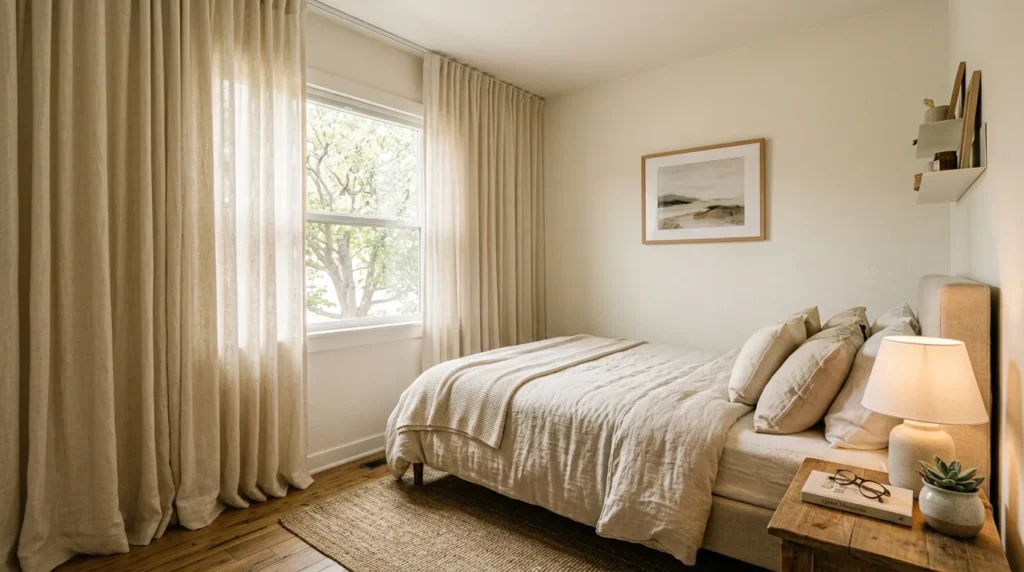
Quick Benefits
- Seamless appearance
- Taller-looking ceilings
- Less visual clutter
- Elegant finish
- Open feeling
Why It Works
Curtains that closely match the wall color create uninterrupted visual flow, making the room appear larger.
How To Style It
Install ceiling-mounted curtain rods with full-length linen curtains in the same tone as the walls.
10. Limit Bold Accent Colors
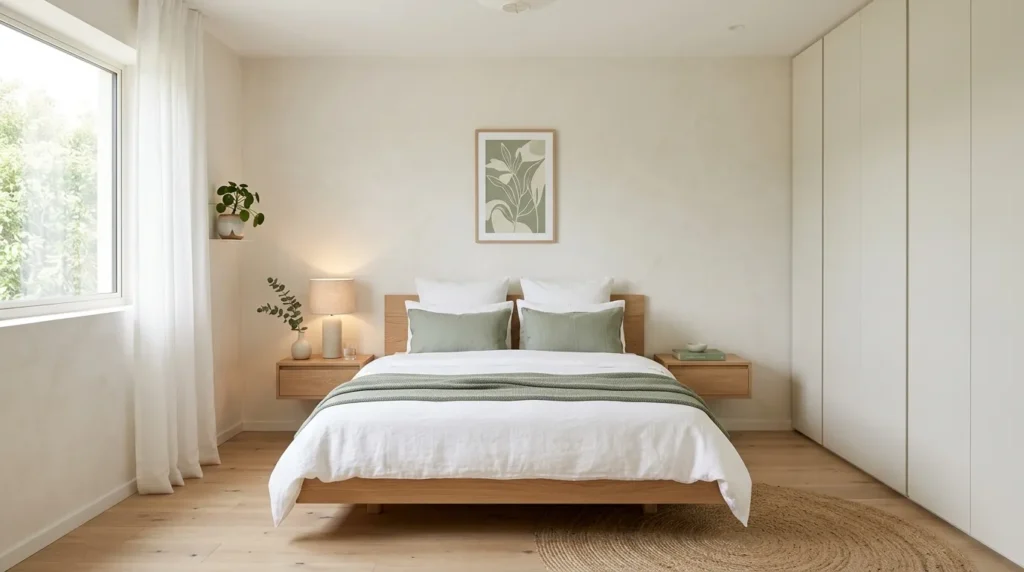
Quick Benefits
- Cleaner design
- Calmer atmosphere
- Timeless style
- Easy coordination
- Spacious appearance
Why It Works
Too many contrasting colors can visually divide a small room and make it feel more crowded.
How To Style It
Choose one or two accent colors and repeat them subtly throughout the room using artwork, textiles, and decorative accessories.
FAQ
What colors make a small bedroom look bigger?
Warm white, ivory, cream, beige, greige, light gray, pale blue, and soft sage green are excellent choices for creating a spacious feel.
Is white the only color that works in a small bedroom?
No. Soft neutrals, muted earth tones, and light pastel shades can also make a room feel larger while adding warmth and personality.
Should furniture match the wall color?
It doesn’t have to match exactly, but choosing furniture in similar light tones creates a more open and cohesive appearance.
How many accent colors should I use?
One or two accent colors are usually enough to add interest without overwhelming a compact space.
Can dark colors ever work in a small bedroom?
Yes. Dark colors can be used sparingly through accessories or accent walls, but lighter shades generally create a more spacious effect.
Conclusion
Making a small bedroom feel bigger with color is all about creating a bright, cohesive, and calming environment. By choosing light wall colors, layering soft neutrals, incorporating natural wood, and using subtle accent colors, you can visually expand your space while maintaining warmth and personality. Start with a simple color palette, build gradually, and enjoy a bedroom that feels open, elegant, and wonderfully inviting.