10 Gingerbread House Tablescape Ideas for a Sweet Holiday Table
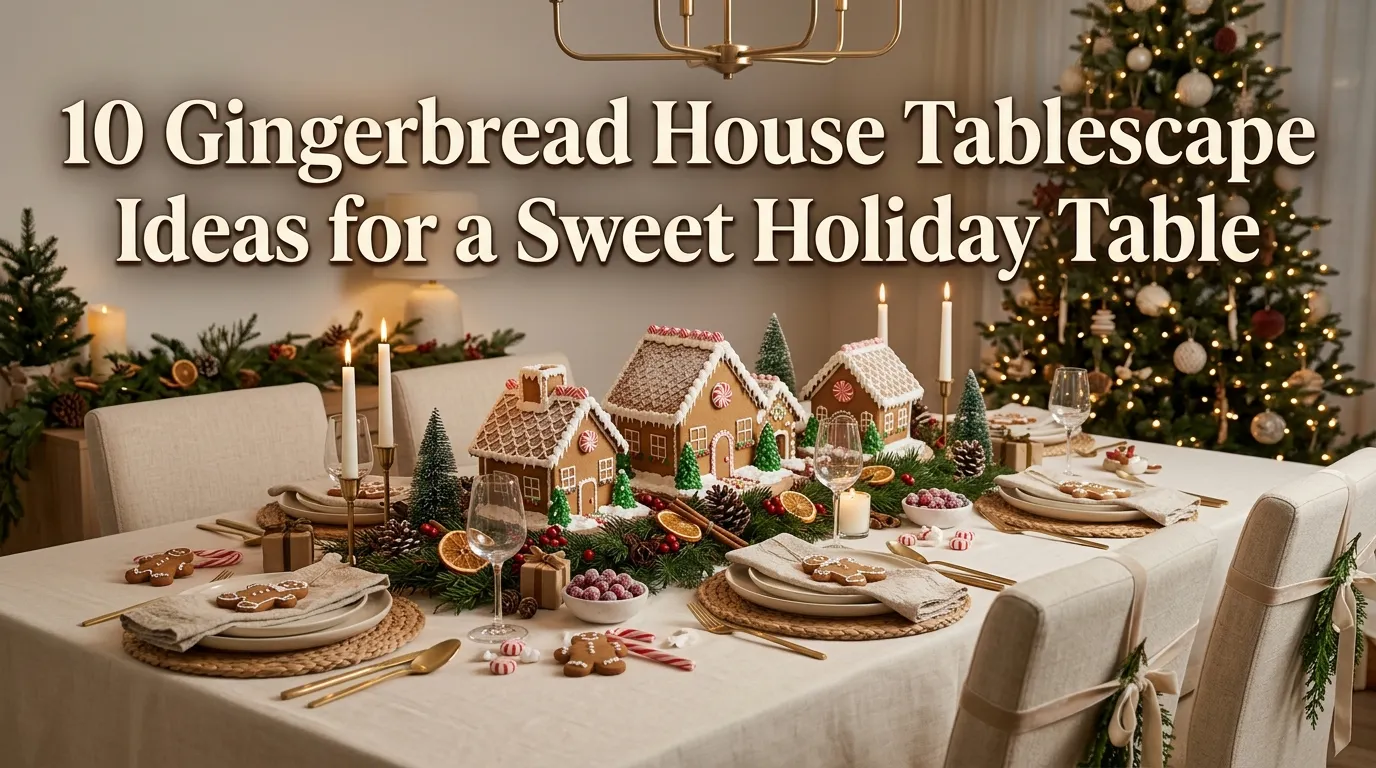
If you’ve ever set out a single gingerbread house on an otherwise plain table and felt like something was missing, you’re picking up on something real. A gingerbread house on its own is charming, but it’s the surrounding tablescape — the linens, lighting, greenery, and small styled details — that turns it into the kind of holiday table people actually stop to photograph.
In my experience, a gingerbread tablescape is one of the most forgiving holiday decorating projects there is, because gingerbread itself brings so much built-in charm and whimsy. A mistake many homeowners make is centering the whole table around one large house and leaving everything else around it plain, when really the magic comes from building out a little “village” feeling with layered textures, lighting, and a few smaller sweet touches surrounding the main house.
This guide covers ten gingerbread house tablescape ideas that work whether you’re setting a small side table for a party appetizer or a full dining table centerpiece for a holiday dinner. I’ve noticed that the tablescapes people remember most combine a few of these elements together — a lit base, some greenery, a bit of faux snow, and a cohesive color palette — rather than relying on the gingerbread house alone to carry the whole display.
You don’t need a professional pastry background to pull this off. Start with the idea that fits your table size and time budget, whether that’s a simple lit gingerbread scene or a full layered village with multiple houses. By the end of this article, you’ll have plenty of ways to make your gingerbread display feel like a genuine centerpiece rather than an afterthought sitting next to the real decorations.
Table of Contents
- Layered Linen Bases — Build the tablescape’s foundation with texture and contrast.
- Twinkling Village Lights — Add warm glow beneath and around the houses.
- Faux Snow Drifts — Create a wintery base for the gingerbread scene.
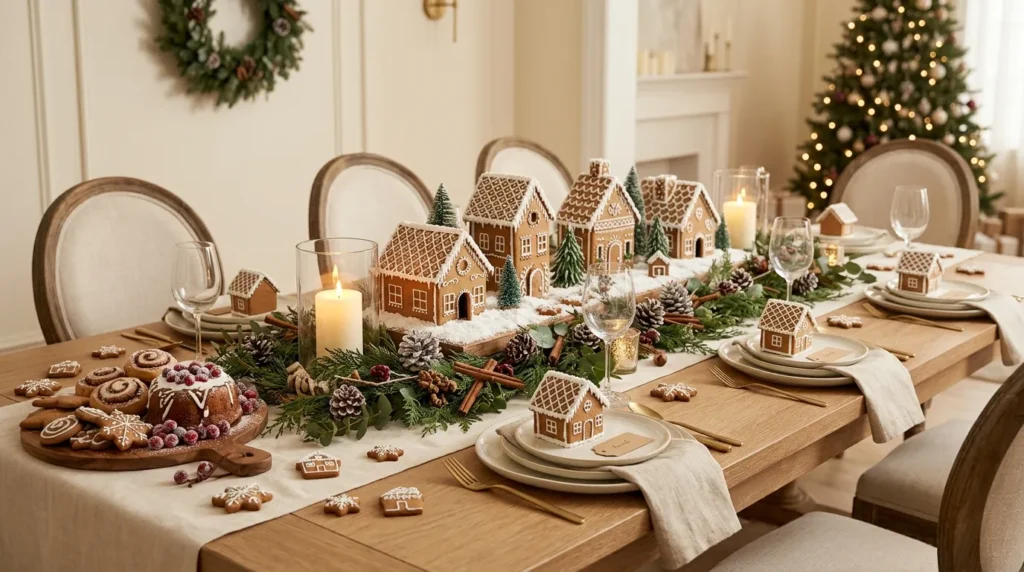
- Multi-House Village Displays — Arrange several houses for a fuller scene.
- Fresh Greenery Borders — Frame the display with natural pine accents.
- Candy Cane Accent Details — Add playful color with classic candy touches.
- Mirror Base Reflections — Amplify light and create an icy pond effect.
- Rustic Wood Slice Platforms — Elevate houses on natural wood risers.
- Pinecone And Berry Accents — Layer in natural texture around the scene.
- Place Card Pairing Details — Tie the tablescape into individual place settings.
1. Layered Linen Bases
Quick Benefits
- Creates a defined foundation for the display
- Adds texture without competing with the houses
- Easy to update or swap seasonally
- Works with any table size or shape
- Ties the whole tablescape together visually
Why It Works
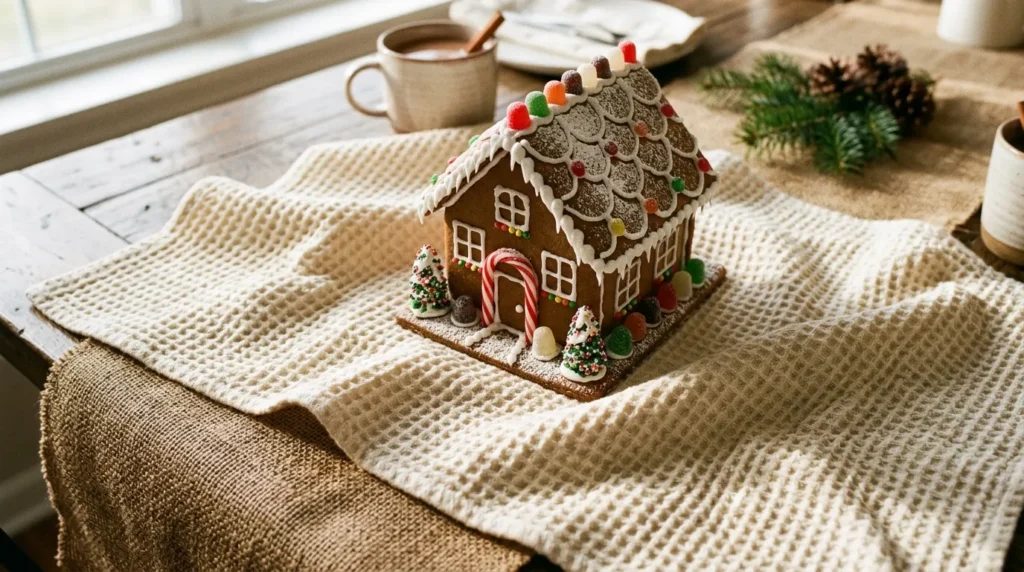
A gingerbread house placed directly on a bare table can look a little unfinished, no matter how well-decorated the house itself is. Layering linens underneath — a table runner topped with a smaller textured cloth or a few folded napkins — gives the display a defined foundation, the same way a rug anchors a room. In my experience, this is the step people skip most often, even though it’s one of the simplest ways to make a gingerbread display look intentionally styled rather than plopped down at the last minute.
How To Style It
Start with a base table runner in a neutral tone like cream, burlap, or soft gray, then layer a smaller textured piece, like a knit or quilted table topper, where the gingerbread houses will sit. Choose fabrics with visible texture, such as waffle knit or linen, since flat fabric tends to disappear visually next to the houses’ detailed icing work. Keep the color palette limited to two or three tones so the linens support the display rather than pulling focus from it.
2. Twinkling Village Lights
Quick Benefits
- Adds warm glow to the display
- Makes the tablescape usable for evening gatherings
- Works with battery-operated or plug-in options
- Creates a cozy, magical village feel
- Simple to tuck beneath or around houses
Why It Works
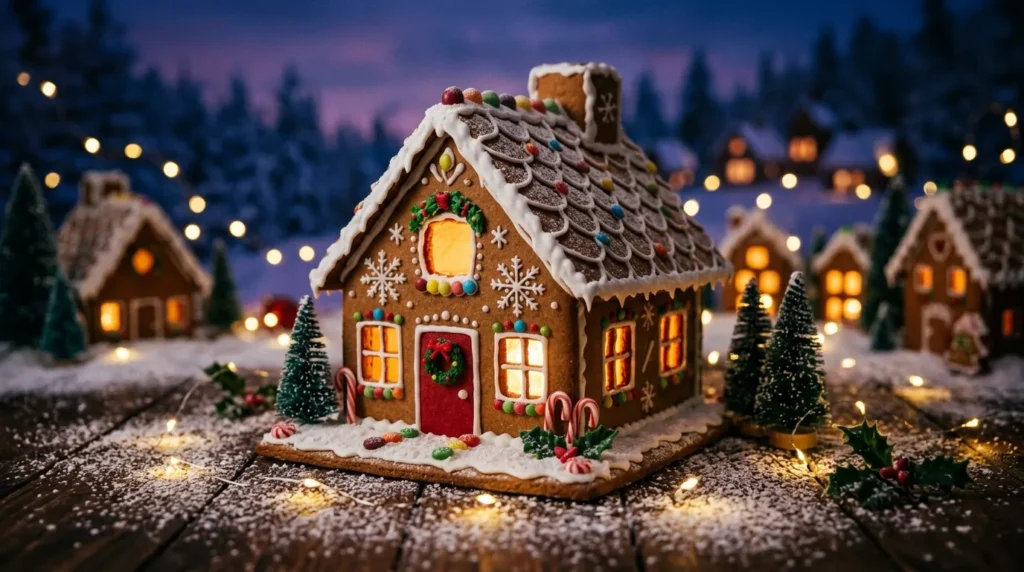
A gingerbread house lit from within, or surrounded by a scattering of small lights, transforms a daytime display into something genuinely magical once the sun goes down. One thing that works especially well is placing a small battery-operated tea light directly inside or beneath a house with a cut-out window, since the glow through the icing “windows” mimics a warm, lived-in cottage. This small detail tends to be the first thing people notice and comment on when they see the display in person.
How To Style It
Use flameless LED tea lights or micro string lights rather than real candles, since a gingerbread house is highly flammable and often sits close to fabric linens. Tuck a few lights beneath the base of each house, and if the house design allows, place one small light inside for a lit-window effect. Warm white light reads as far cozier than cool white in this context, and a few scattered lights around the display’s edges help extend the glow beyond just the houses themselves.
3. Faux Snow Drifts
Quick Benefits
- Adds a realistic wintery base
- Doesn’t melt or create mess like real snow
- Reusable for future tablescapes
- Works well combined with lighting
- Enhances the overall scene without overwhelming it
Why It Works
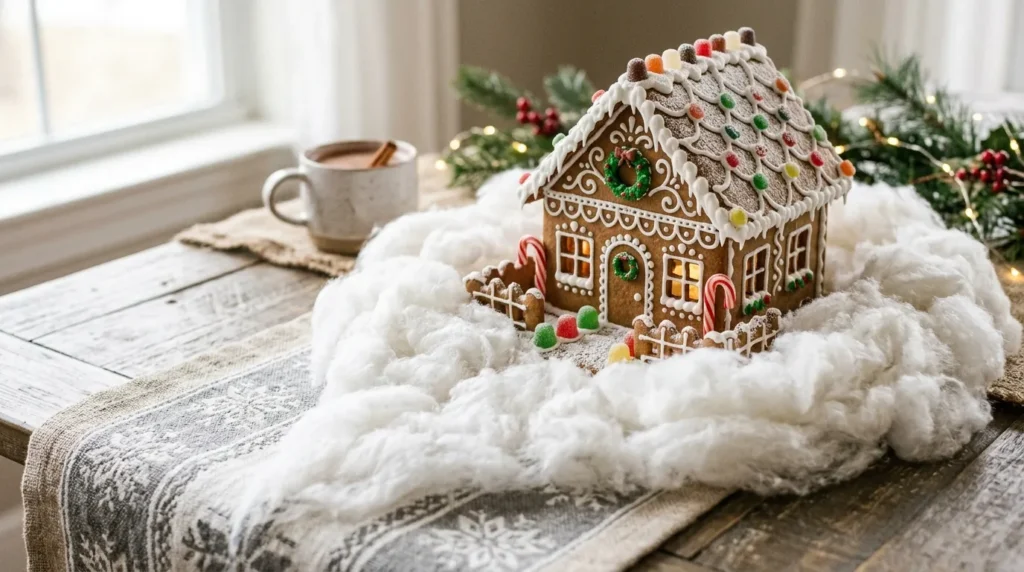
A dusting or drift of faux snow around the base of a gingerbread house does more to sell the “winter village” feeling than almost any other single element on this list. That’s why many designers recommend faux snow as one of the first additions after the base linens are in place, since it visually grounds the houses into a believable scene rather than leaving them looking like they’re floating on a bare tablecloth.
How To Style It
Use spun cotton batting or a purpose-made faux snow blanket rather than loose glitter-based products, which tend to shed and stick to everything nearby. Build the snow up slightly higher around the base of each house and taper it thinner as it spreads outward across the table. Tuck a few lights beneath the snow layer for a soft glow that reads as light shining through fresh snow, which adds noticeably to the overall effect.
4. Multi-House Village Displays
Quick Benefits
- Creates a fuller, more immersive scene
- Works well as a true table centerpiece
- Allows for varied house sizes and styles
- Encourages guests to look closer at details
- Scales easily to fit larger tables
Why It Works
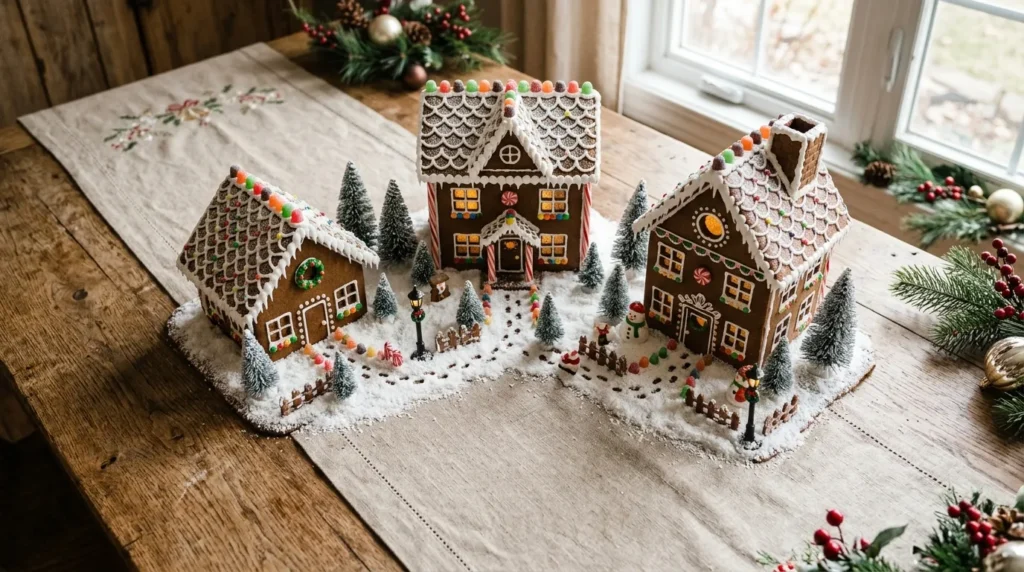
A single gingerbread house is charming, but a small cluster of two or three houses of varying sizes creates the impression of an actual village, which reads as a much more complete tablescape. I’ve seen this idea transform a modest holiday table into a genuine conversation piece, largely because a multi-house display invites guests to look closely and notice the different details on each individual structure rather than glancing at one house and moving on.
How To Style It
Vary the size and rooflines of each house slightly so the village doesn’t look like an evenly stamped, repeated pattern. Arrange houses in a loose cluster rather than a straight row, leaving small “streets” or open pathways of snow between them. If houses vary significantly in skill level or decoration (say, a store-bought kit next to a homemade one), tie them together visually with matching icing colors or a shared color scheme so the differences feel intentional rather than mismatched.
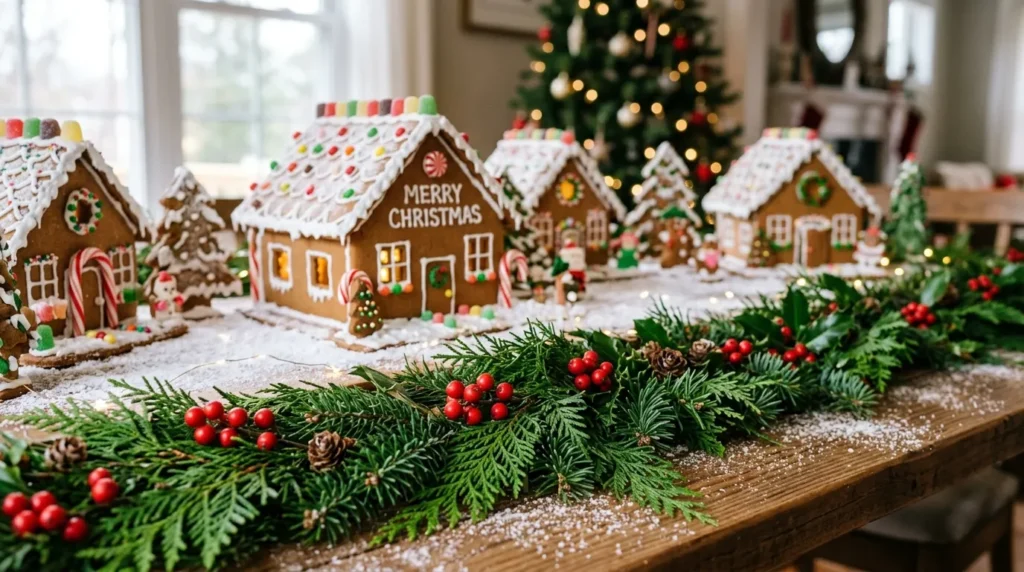
5. Fresh Greenery Borders
Quick Benefits
- Frames the display with natural texture
- Adds fragrance and seasonal authenticity
- Softens the sweetness of an all-gingerbread scene
- Works well along the edges of the tablescape
- Ties the display into the rest of the room’s decor
Why It Works
Bordering a gingerbread tablescape with a strip of fresh greenery, like cedar sprigs or small pine boughs, adds a natural counterbalance to what’s otherwise a very sweet, sugary display. A mistake many homeowners make is keeping a gingerbread tablescape entirely candy-themed without any natural elements, which can end up feeling a bit one-note. Greenery softens that, and the genuine pine scent adds a sensory layer that candy and icing alone can’t provide.
How To Style It
Lay a thin strip of greenery along one or both long edges of the display, leaving the houses and snow themselves as the clear central focus. Cedar, boxwood, or small pine clippings all work well and tend to hold up for the length of a gathering without needing water. Tuck in a few small pinecones or a scattering of red berries along the greenery for extra color without adding more sugar-themed elements to the mix.
6. Candy Cane Accent Details

Quick Benefits
- Adds classic holiday color
- Reinforces the sweet, playful theme
- Inexpensive and widely available
- Works as both decor and an edible touch
- Easy to incorporate at any table size
Why It Works
Candy canes are an obvious pairing with a gingerbread house theme, but the way they’re used matters more than simply having them on the table. In my experience, scattering a few mini candy canes or using full-size ones as small decorative accents (rather than piling them in a bowl) reinforces the red-and-white color scheme that ties a lot of classic gingerbread displays together, adding pops of color that break up the brown and white tones of the houses and snow.
How To Style It
Tuck a few mini candy canes into the faux snow near the base of each house, angled slightly for a more natural, scattered look rather than standing perfectly upright. A small cluster of full-size candy canes tied together with red ribbon can serve as an accent piece at one end of the display. Keep candy cane placement intentional rather than scattering large quantities everywhere, since a few well-placed pieces read as styled while too many can look cluttered.
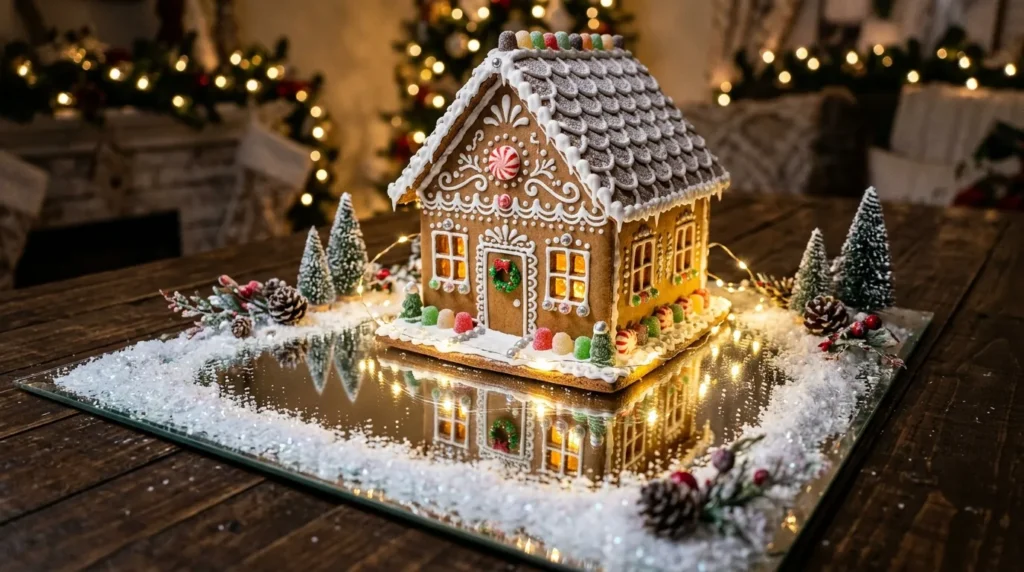
7. Mirror Base Reflections
Quick Benefits
- Amplifies light throughout the display
- Creates an icy, pond-like visual effect
- Makes a small display feel larger
- Adds a touch of elegance
- Works especially well with candlelight or fairy lights
Why It Works
Placing gingerbread houses on or near a mirrored surface, such as a mirrored tray or a strip of mirror glass, adds a reflective quality that amplifies whatever lighting is already part of the display. One simple trick I always suggest for anyone wanting a slightly more elevated, formal gingerbread tablescape is incorporating a mirror base, since the reflection of lights and snow creates a subtle icy or pond-like effect that reads as more polished than a flat fabric base alone.
How To Style It
Use a mirrored tray, charger plate, or a cut piece of mirror glass as the base layer beneath one section of the display, particularly under the primary or largest house. Add faux snow sparingly around the mirror’s edges so some of the reflective surface stays visible rather than being fully covered. Position lights so their reflection is visible in the mirror for the strongest visual payoff, especially for evening gatherings.
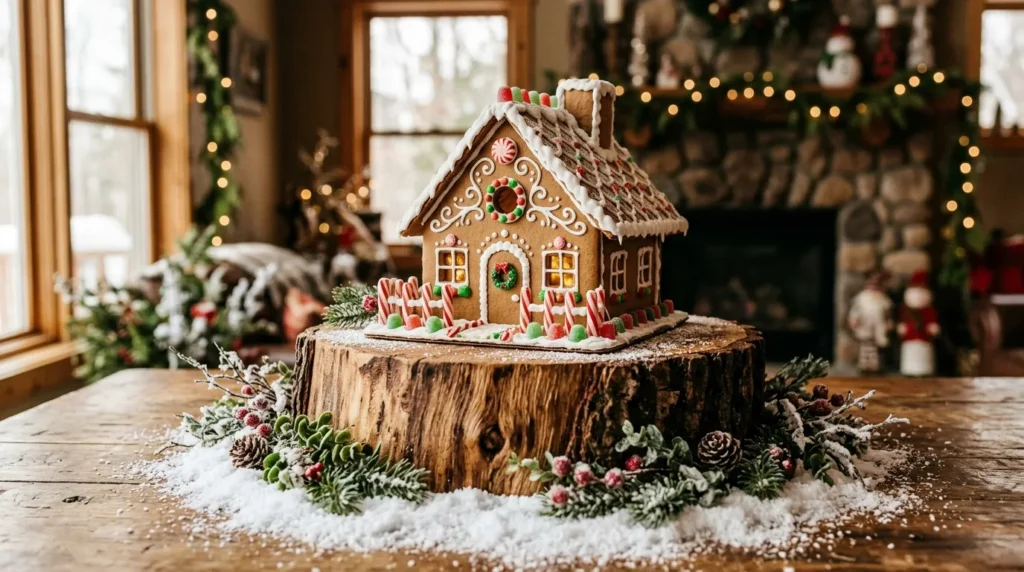
8. Rustic Wood Slice Platforms
Quick Benefits
- Adds natural texture and warmth
- Elevates houses for better visibility
- Creates a farmhouse or rustic aesthetic
- Provides stable individual bases per house
- Pairs well with greenery and candles
Why It Works
Placing each gingerbread house on its own wood slice or small rustic riser adds both practical stability and a natural, farmhouse-style texture that pairs beautifully with the sweetness of the gingerbread itself. A mistake many homeowners make is placing all the houses directly on a flat surface, which can make a display feel visually flat; individual wood platforms add just enough elevation and texture variation to give the village more depth and dimension.
How To Style It
Choose wood slices or small rustic risers sized slightly larger than each house’s base for a clean, framed look. A light stain or natural raw wood finish tends to suit gingerbread displays better than a painted or glossy finish, which can compete visually with the icing details. Vary platform heights slightly across the display if you’re using multiple houses, since a bit of height variation adds noticeably more visual interest than uniform elevation throughout.
9. Pinecone And Berry Accents

Quick Benefits
- Adds natural color and texture
- Complements greenery and wood elements
- Inexpensive and easy to source
- Works well tucked into snow or greenery
- Enhances the overall winter village feel
Why It Works
Small clusters of pinecones and red berries scattered through a gingerbread tablescape add a layer of natural detail that ties the display together with the broader winter aesthetic, beyond just candy and icing. I’ve noticed that these small natural accents are often what separates a tablescape that feels fully finished from one that still reads as slightly sparse, since they fill in small gaps in the display without competing for attention with the houses themselves.
How To Style It
Tuck small pinecones into faux snow drifts near the base of the houses, and scatter a few loose red berries or berry sprigs throughout the greenery border. Choose pinecones on the smaller side, generally under 3 inches, so they stay proportional to the gingerbread houses rather than overwhelming them in scale. A light dusting of faux snow on the pinecones themselves helps them blend naturally into the wintery theme.
10. Place Card Pairing Details

Quick Benefits
- Extends the theme to individual place settings
- Adds a personal, thoughtful touch for guests
- Works well for hosted holiday dinners
- Creates a cohesive tablescape from centerpiece to place setting
- Doubles as a small party favor
Why It Works
For a hosted dinner or holiday gathering, extending the gingerbread theme out to individual place settings ties the whole table together in a way that a standalone centerpiece can’t achieve on its own. That’s why many designers recommend carrying at least one element of a centerpiece theme to each place setting, since it makes guests feel like the whole table was thoughtfully planned around them rather than decorated only in the middle.
How To Style It
Pair each place setting with a small individual gingerbread cookie or mini house tied with a name tag, doubling as both a place card and a take-home treat. Echo the same color palette from the centerpiece — red, white, and brown, for example — in the napkin and place card design for visual continuity. A single sprig of greenery tucked into each napkin fold connects the place setting back to the greenery used in the main display.
Frequently Asked Questions
How do I keep a gingerbread house tablescape from looking cluttered?
Stick to a consistent color palette, generally red, white, and brown tones, and avoid adding too many competing elements at once. Building the display in layers — linens, snow, houses, then small accents — rather than adding everything simultaneously tends to result in a more balanced, less cluttered look.
Can I use real candles in a gingerbread tablescape?
Flameless LED candles or battery-operated tea lights are strongly recommended instead of real flame, since gingerbread houses, faux snow, and table linens are all highly flammable. Flameless options provide a similar warm glow without the fire risk, especially in a display with this much surrounding material.
How long does a gingerbread house tablescape typically last?
A well-sealed gingerbread house with royal icing can generally hold up as a display piece for several weeks without significant degradation, especially if kept away from direct heat or humidity. Faux snow, greenery risers, and other non-edible accents can often be reused for multiple holiday seasons if stored properly.
What size table works best for a gingerbread village display?
A single house works well even on a small side table or entryway console, while a multi-house village display generally looks best with at least 3 to 4 feet of table length to allow proper spacing between houses. Larger dining tables can support a more elaborate, fuller village scene.
Should I use store-bought or homemade gingerbread houses for a tablescape?
Either works well for a tablescape, since the surrounding styling, lighting, and snow do much of the visual work regardless of the houses’ construction. Store-bought kits are a practical option for time-constrained hosts, while homemade houses allow for more custom sizing and decoration if time allows.
What colors work best for a gingerbread house tablescape?
Classic red, white, and warm brown tones tend to suit gingerbread displays most naturally, echoing the color of the gingerbread itself alongside icing and candy accents. Adding touches of green through greenery accents rounds out a traditional, cohesive holiday palette.
How do I light a gingerbread tablescape for evening use?
Layering a few different light sources works best: small lights tucked beneath the base of each house, a light placed inside a house with a cut-out window if the design allows, and a few scattered lights or candles around the display’s edges. Warm white lighting throughout creates the coziest overall effect.
Final Thoughts
A gingerbread house tablescape becomes truly memorable when the details around the houses get just as much thought as the houses themselves. Layering in linens, lighting, faux snow, and a bit of natural greenery turns a simple candy display into a full winter scene that guests will want to look closely at, rather than glance past on their way to the food.
You don’t need to include every idea on this list to create something special. Start with one or two ideas and gradually build a display that reflects your style and supports everyday comfort at your table — the kind of centerpiece that makes your holiday gathering feel just a little more thoughtfully put together.
Related Articles
- Christmas Front Porch Decorations
- 20 Ways to Decorate a Small Living Room for Christmas
- Cozy Holiday Dinner Table Ideas
- DIY Holiday Wreath Ideas
- Farmhouse Christmas Decor Inspiration