10 DIY Christmas Porch Planters to Welcome the Season
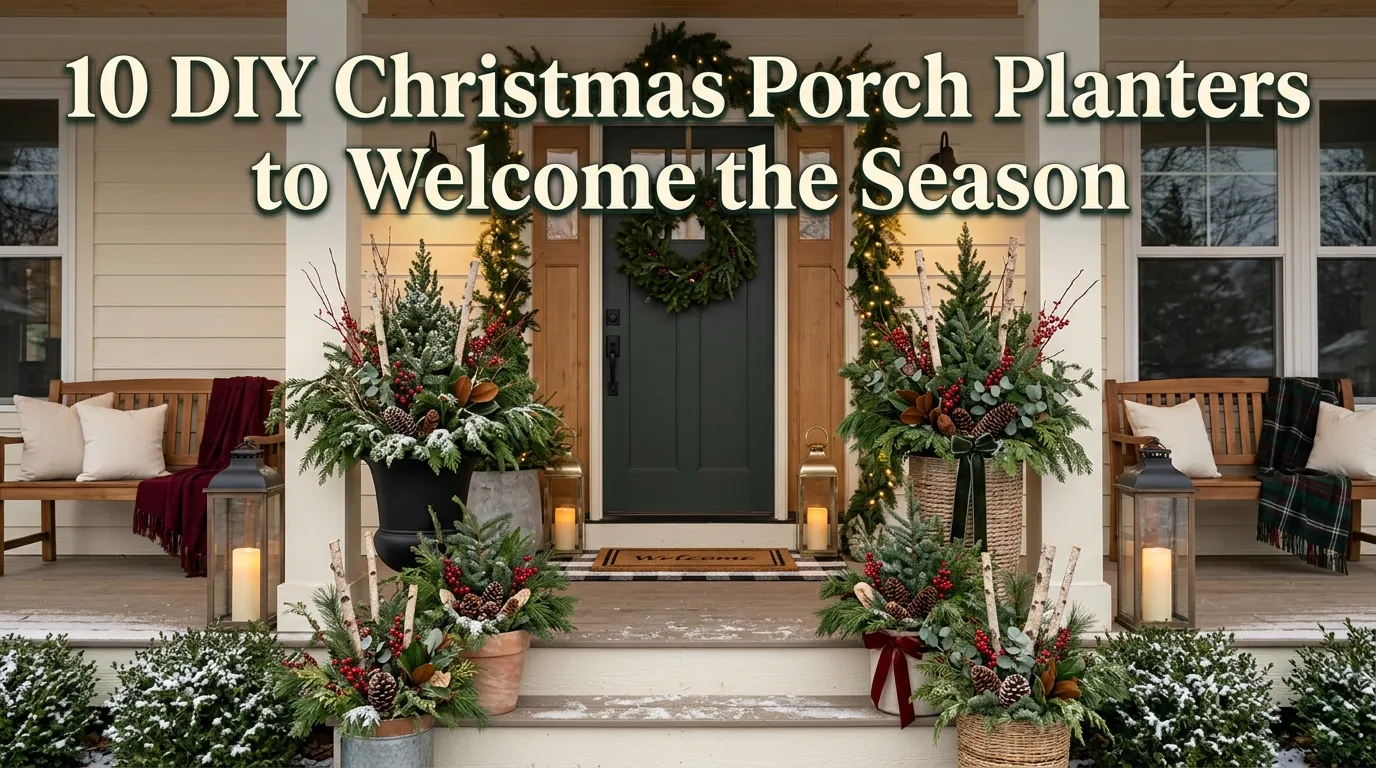
There’s a specific kind of magic in pulling up to a house with porch planters fully decked out for Christmas — even before the lights go up or the wreath goes on the door, those planters signal that the holidays have arrived. In my experience, this is one of the highest-impact, lowest-cost updates a homeowner can make each December, since it usually reuses the same planters and hardware sitting empty on the porch the rest of the year.
If you’re anything like me, you’ve probably felt a little intimidated the first time you tried to recreate one of those lush, professionally styled porch planters from Pinterest. The good news is that most of those arrangements are built from surprisingly few materials — a handful of greenery picks, some ribbon, a few sturdy branches for height — assembled with a specific structure in mind rather than any special florist training.
A mistake many homeowners make is buying a bundle of mismatched holiday picks and shoving them all into a pot at once. That’s why many designers recommend building a porch planter the same way you’d build a flower arrangement: starting with height in the back or center, filling in around it, and finishing with a few focal accents rather than distributing everything evenly.
I’ve noticed that the porch planters people save most often during the holidays share a similar shape — tall and a little asymmetrical, with a clear “spike” of branches or lights rising above a fuller base of greenery. It’s a simple structural trick that makes even a modest arrangement look full and professionally arranged.
In this guide, I’m sharing ten DIY Christmas porch planter ideas that range from quick, budget-friendly builds to slightly more involved projects worth the extra effort. Each one includes real assembly guidance, not just inspiration, so you can recreate the look with materials from a local nursery or craft store this weekend.
Table of Contents
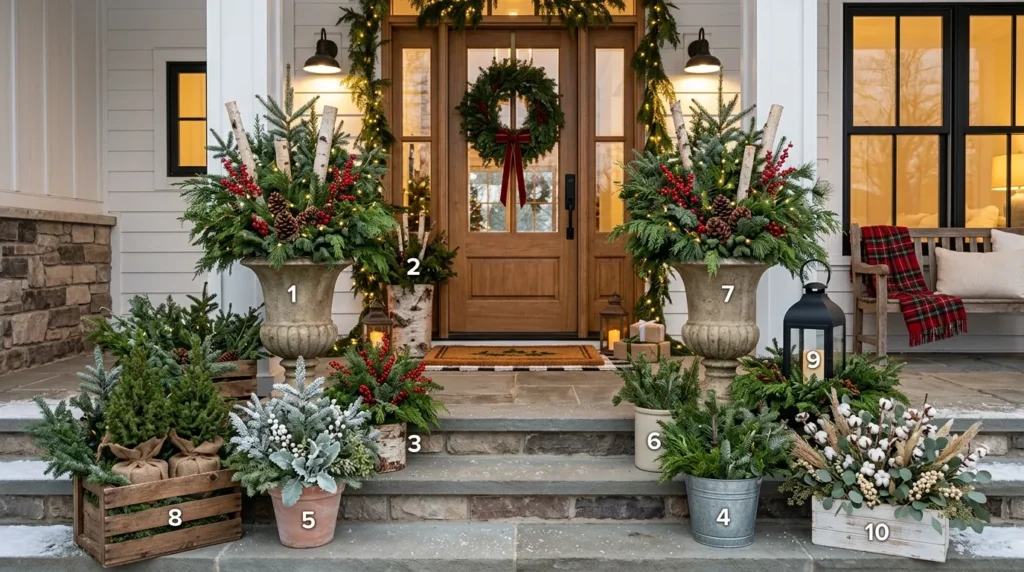
- Classic Layered Greenery Planter A traditional, full arrangement built for lasting structure.
- Birch Branch Accent Planter A rustic, natural-toned option with striking vertical lines.
- Ribbon and Pick Statement Planter A colorful, bow-heavy design for maximum curb appeal.
- Lighted Twig Planter An illuminated arrangement for evening ambiance.
- Flocked Winter White Planter A soft, snowy aesthetic for a serene entrance.
- Rustic Farmhouse Bucket Planter A relaxed, budget-friendly build using simple containers.
- Evergreen and Berry Planter A natural, woodland-inspired color combination.
- Pinecone and Magnolia Planter A textured, Southern-inspired holiday look.
- Modern Monochrome Planter A clean, single-tone arrangement for contemporary homes.
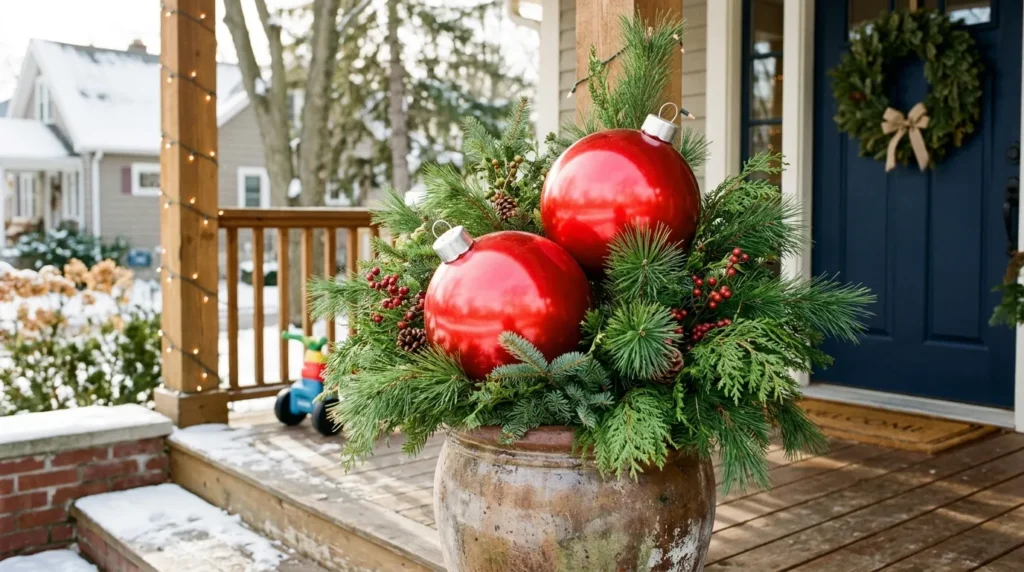
- Oversized Ornament Planter A playful, high-impact design built around large ornaments.
1. Classic Layered Greenery Planter
Quick Benefits
- Long-lasting through the entire holiday season
- Works with existing porch planters
- Classic look that suits nearly any home style
- Budget-friendly compared to florist-built arrangements
- Reusable frame for future seasons
Why It Works
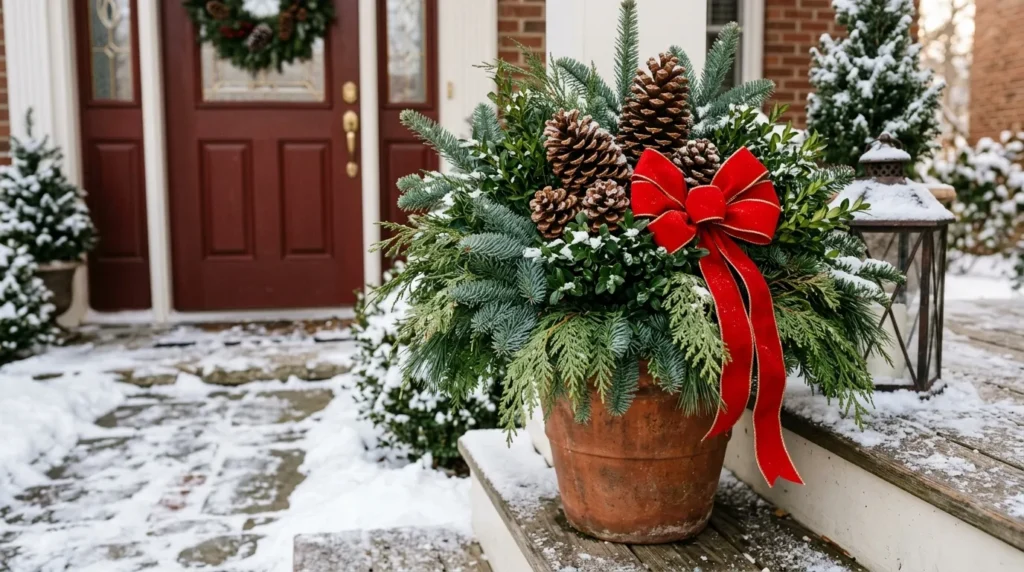
A layered greenery planter is the foundational DIY Christmas porch planter idea that most other variations on this list build from. In my experience, starting with a solid base of mixed evergreen — a combination of noble fir, cedar, and boxwood — creates the fullness that makes an arrangement look intentionally designed rather than sparse. That’s why many designers recommend layering at least two or three greenery types rather than relying on a single variety, since the slight differences in color and texture do most of the visual work before you’ve even added a single ornament or ribbon.
How To Style It
Start with a foam or floral frog secured into your existing planter, then insert taller branches — noble fir or pine — toward the back or center for height. Fill in around the base with shorter cedar or boxwood clippings to create fullness at the rim. Once the greenery structure is in place, tuck in a few pinecones or small ornaments for accent color, and finish with a simple wired ribbon bow positioned slightly off-center near the front. One simple trick I always suggest is cutting branches at an angle before inserting them, which helps them hold water longer and stay fresh through the season.
2. Birch Branch Accent Planter
Quick Benefits
- Adds striking vertical height
- Works well in modern and rustic settings alike
- Reusable year after year
- Minimal maintenance once assembled
- Pairs beautifully with string lights
Why It Works
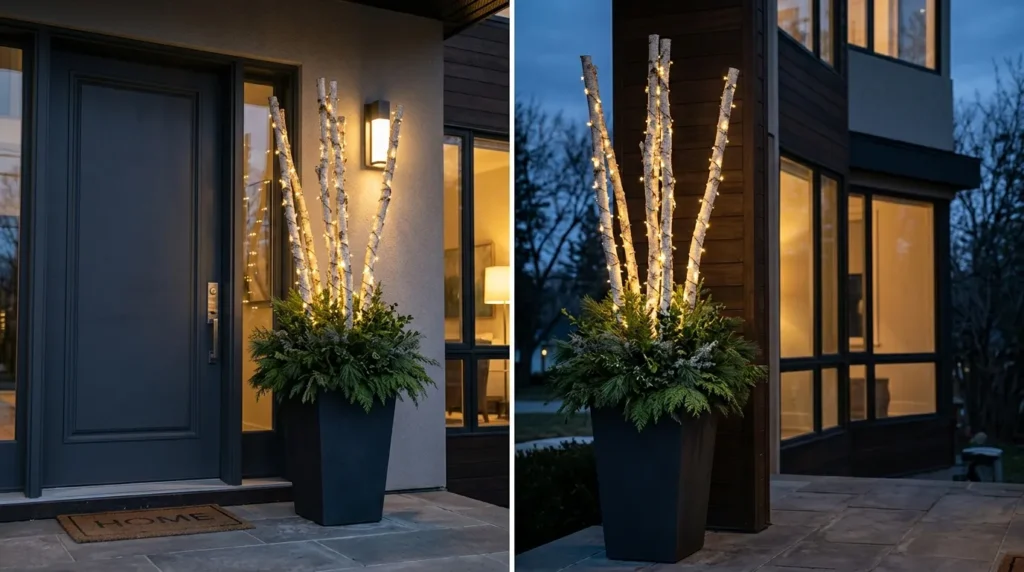
Birch branches bring a graphic, architectural quality to a porch planter that greenery alone can’t achieve, which is exactly why this idea performs so well across a wide range of home styles — from modern farmhouse to traditional colonial. I’ve seen this idea transform plain evergreen planters into something that looks noticeably more polished, simply by adding a cluster of birch branches rising above the greenery base. Because the branches are a natural, durable material, this is also one of the few porch planter elements that can be reused for multiple seasons rather than replaced each year.
How To Style It
Secure three to five birch branches, cut to varying heights, into the center or back of the planter using floral foam or gravel for stability. Build a base layer of greenery around the branches, and wrap a few strands of warm white string lights up through the branch cluster for evening impact. Add a simple ribbon or a few small ornaments at the base where the branches meet the greenery to soften the transition. This idea works especially well flanking a modern front door, where the clean, linear branch silhouette complements simpler architectural lines.
3. Ribbon and Pick Statement Planter
Quick Benefits
- Bold, high-impact color
- Highly customizable to any color scheme
- Budget-friendly with craft store materials
- Easy to refresh mid-season if needed
- Great for high-visibility entries
Why It Works
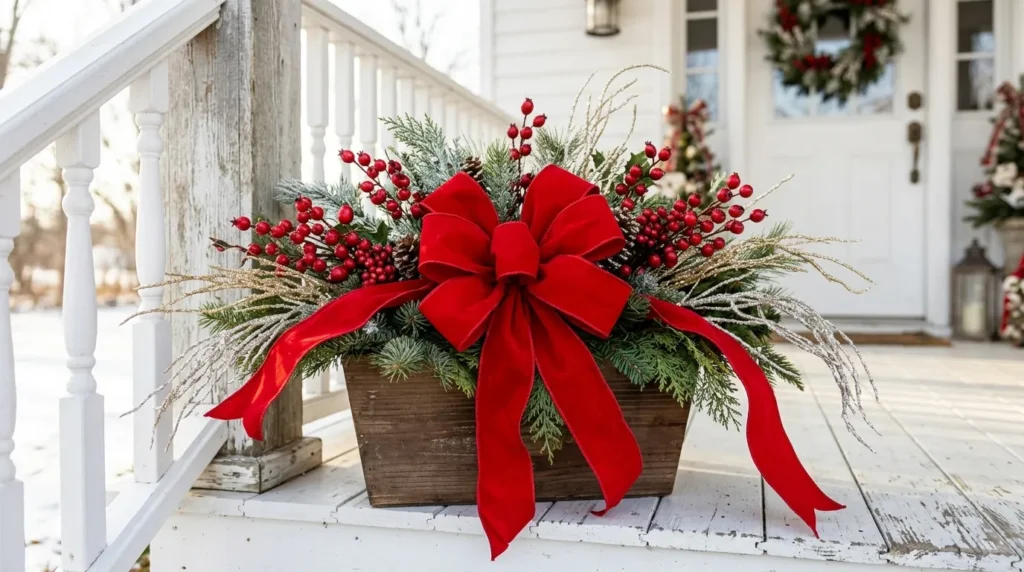
A ribbon-heavy planter design leans into color and movement rather than letting greenery alone carry the whole look. That’s why many designers recommend this approach for homeowners who want their porch to feel unmistakably festive from the street, since a large, well-placed bow catches the eye from much farther away than a subtle greenery arrangement would. One thing that works especially well is using a single dominant ribbon color paired with two or three coordinating floral picks, which keeps a bold design from tipping into visual chaos.
How To Style It
Build a simple greenery base, then add oversized floral picks — berries, glittered branches, or faux poinsettias — spaced evenly throughout. Attach a wired ribbon in a wide width, at least two and a half inches, and create a full, layered bow positioned prominently near the top or front of the arrangement. Let the ribbon tails cascade down the side of the planter for extra movement. A mistake many homeowners make is using thin, narrow ribbon here — a wider ribbon holds its shape and reads as far more substantial in photos and from the street.
4. Lighted Twig Planter
Quick Benefits
- Extends the display’s impact into the evening
- Works well in planters with less daytime greenery
- Reusable lighted branches for future seasons
- Low fire risk compared to real candles
- Highly photogenic after dark
Why It Works
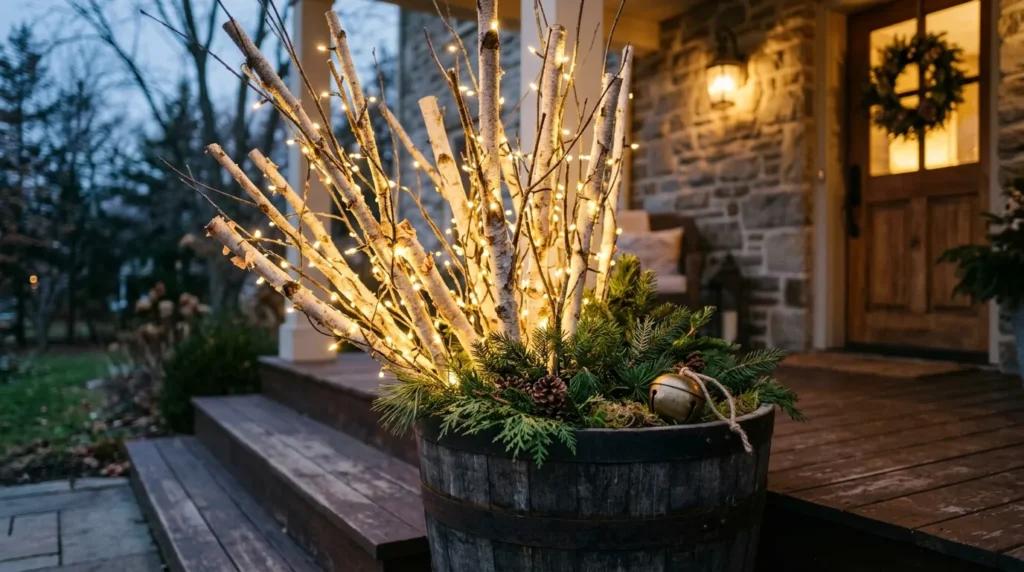
A planter built around pre-lit lighted branches solves the problem of a porch that looks great during the day but goes dark and flat once the sun sets — which, during the shortest days of the year, is a significant portion of the time anyone will actually see it. I’ve noticed that lighted twig planters have become one of the most searched Christmas porch planter styles specifically because so many holiday gatherings and photos happen in the evening. The branches themselves also add sculptural height and structure even when unlit, so the planter still looks intentional during the day.
How To Style It
Use pre-lit birch or willow branches as the tall centerpiece, securing them into floral foam at the base of the planter. Layer a modest amount of greenery around the base rather than filling the pot entirely, since the branches themselves should remain the visual focus. Add a few oversized ornaments or a ribbon accent near the base to finish the arrangement. This idea works especially well for entries without existing porch lighting, since the planter itself becomes a light source that welcomes guests after dark.
5. Flocked Winter White Planter
Quick Benefits
- Soft, serene winter aesthetic
- Works beautifully with white or neutral homes
- Distinct from traditional red-and-green displays
- Elegant, snow-inspired look
- Long-lasting through the full winter season
Why It Works
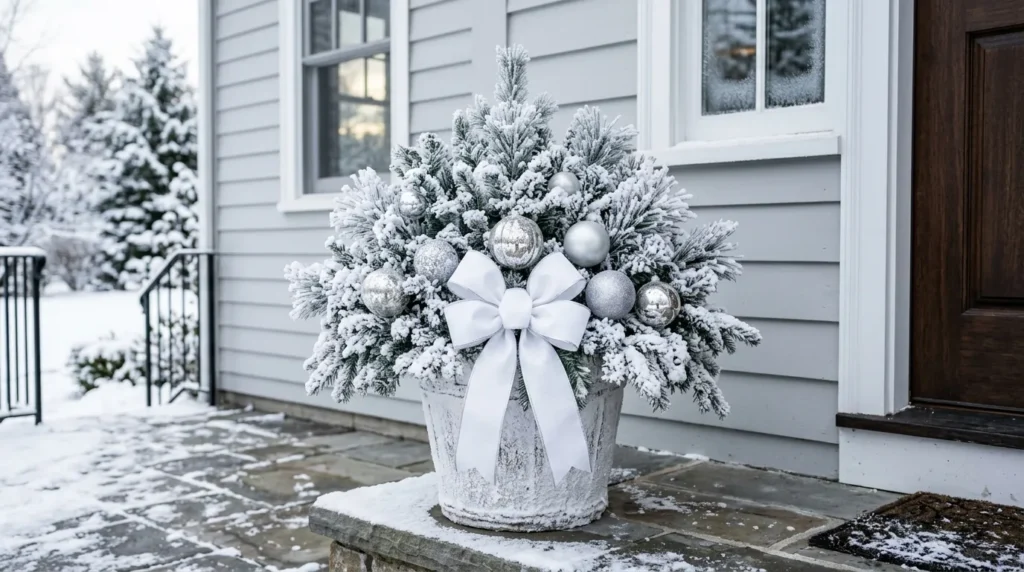
Flocked greenery — branches dusted with a faux snow coating — brings a soft, wintry look to a porch planter that feels distinctly different from traditional holiday red and green, while still reading as unmistakably seasonal. In my experience, this style tends to perform especially well on white, gray, or light-colored homes, where the flocked branches echo the exterior palette instead of contrasting sharply against it. It’s also a style that comfortably carries a porch through the entire winter season, well past Christmas itself, since the aesthetic reads as “winter” rather than strictly holiday-specific.
How To Style It
Use flocked pine or fir branches as the base, layering in a few flocked pinecones and silver or crystal-toned accents rather than traditional red or gold. Add a white or silver ribbon in a simple, understated bow, and consider a strand of cool white lights woven through for evening sparkle. Keep the overall color palette limited to white, silver, and soft gray to maintain the quiet, elegant feel that defines this look. This style pairs particularly well with the modern monochrome planter idea below for a cohesive, quietly sophisticated entry.
6. Rustic Farmhouse Bucket Planter
Quick Benefits
- Budget-friendly, repurposed container option
- Casual, welcoming farmhouse aesthetic
- Easy to source materials
- Great for porches without built-in planters
- Charming, collected-over-time appearance
Why It Works
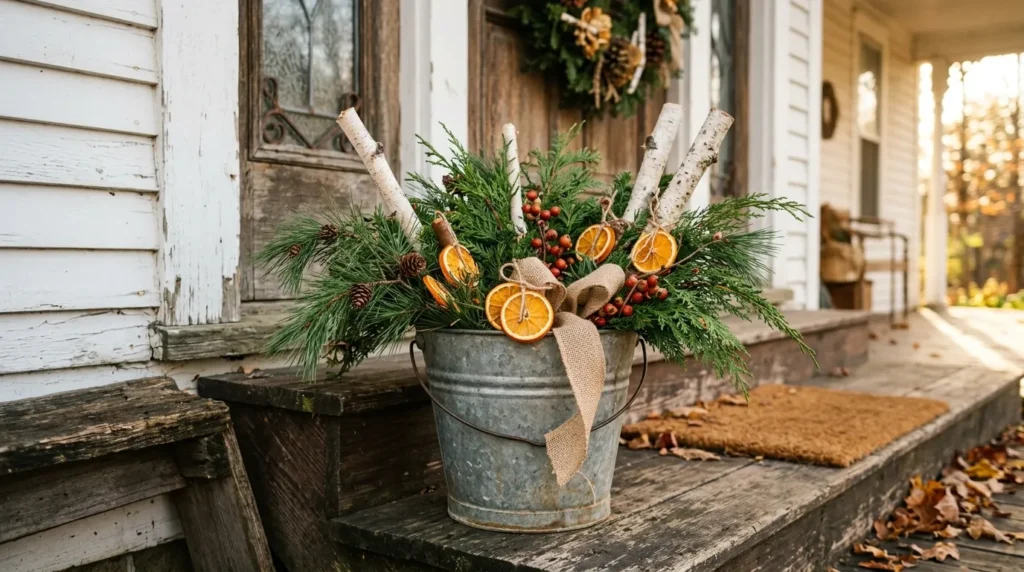
Using a galvanized bucket or vintage container instead of a traditional planter pot brings an easy, farmhouse charm to a DIY Christmas display, and it’s one of the more budget-friendly options on this list since the container itself often costs less than a dedicated outdoor planter. A mistake many homeowners make is assuming a rustic look requires expensive, curated materials, but in reality, this style thrives on a slightly imperfect, gathered feel — a few branches, some berries, and simple ribbon go a long way.
How To Style It
Fill a galvanized bucket, old washtub, or wooden crate with floral foam or sand for stability, then build a loose arrangement of cedar, pine, and a few birch branches for height. Add natural elements like pinecones, dried orange slices, or cinnamon sticks tied with twine for a warm, rustic accent. Finish with a burlap or plaid ribbon rather than a polished satin bow, which would clash with the casual container. This idea pairs especially well with a wood or brick porch, where the material palette already leans rustic.
7. Evergreen and Berry Planter
Quick Benefits
- Natural color combination that reads instantly festive
- Long-lasting through the holiday season
- Works with fresh or faux materials
- Pairs well with most home exterior colors
- Simple to assemble with minimal materials
Why It Works
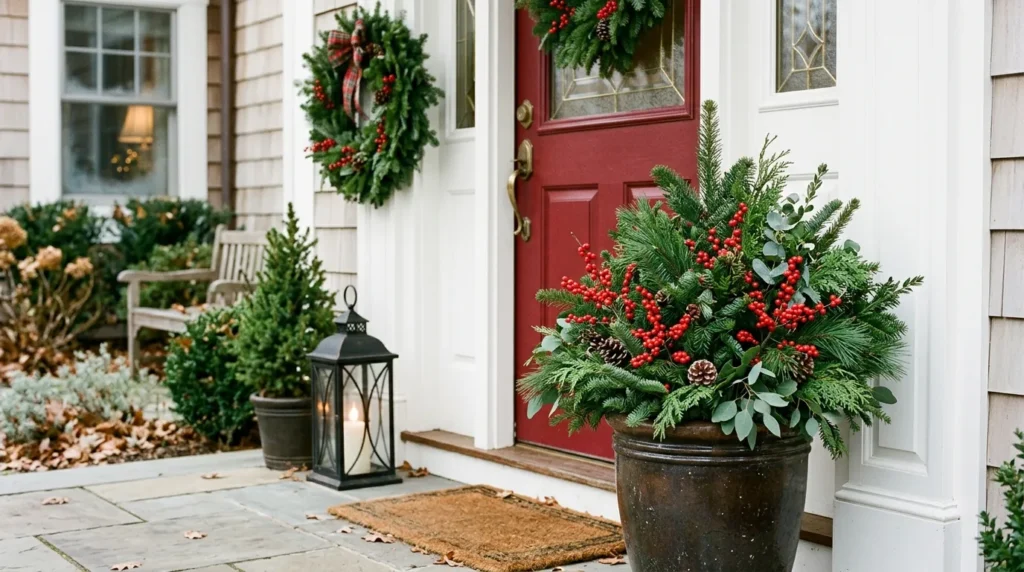
The combination of deep green evergreen and bright red berries is one of the most classic, reliable color pairings in holiday design, and it works because the contrast is bold enough to read clearly from the street without requiring any additional ornaments or ribbon. I’ve seen this idea transform a plain green planter into a fully finished holiday display with just a handful of berry stems added throughout. That’s why many designers recommend this combination as a starting point for beginners, since it requires very few materials to look complete.
How To Style It
Build a full base of mixed evergreen — noble fir, cedar, and pine all work well together — and tuck faux red berry stems evenly throughout the arrangement, concentrating a few extra clusters near the front for visual weight. Skip the ribbon entirely for a more understated look, or add a single small red bow if you want a touch more polish. This combination is versatile enough to work in a simple pot on an apartment balcony or a large urn flanking a grand entrance, scaling easily with the size of your container.
8. Pinecone and Magnolia Planter
Quick Benefits
- Rich, textured Southern-inspired look
- Long-lasting foliage that holds up well outdoors
- Elegant alternative to traditional greenery
- Works beautifully in warmer climates
- Adds glossy texture contrast
Why It Works
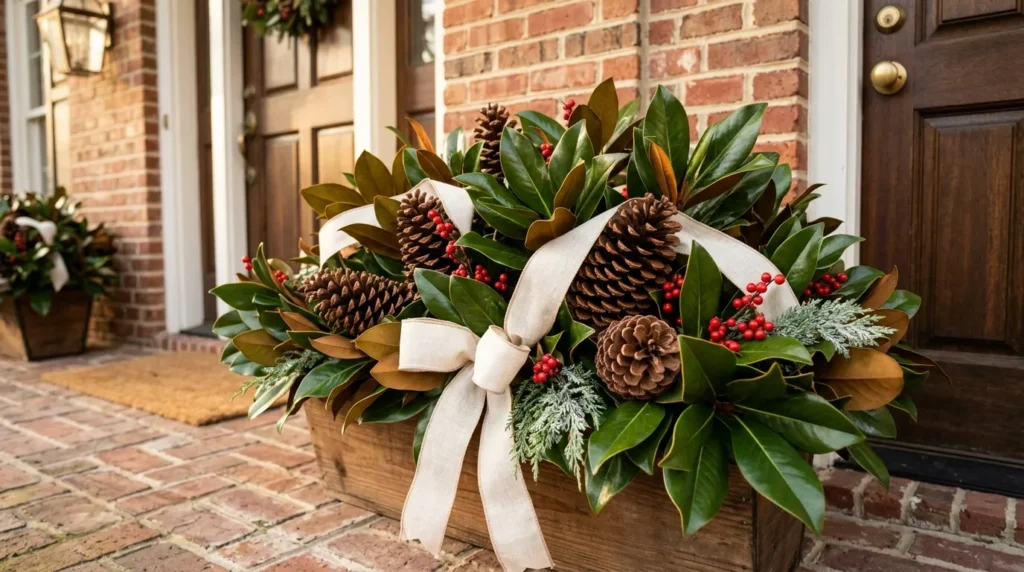
Magnolia leaves bring a glossy, dark green texture that contrasts beautifully with the matte look of traditional evergreen, giving this planter style a slightly more elevated, Southern holiday aesthetic. In my experience, this combination photographs exceptionally well because the deep green magnolia leaves and the warm brown tones of pinecones create natural depth without needing much additional color. It also holds up particularly well in warmer climates where traditional pine and fir may dry out or brown more quickly outdoors.
How To Style It
Layer magnolia branches as the base structure, positioning the glossy side of the leaves facing outward for maximum visual impact. Tuck in large pinecones throughout, along with a few sprigs of traditional evergreen for fullness. A simple burlap or cream ribbon complements this palette better than bright red or metallic tones, keeping the focus on the natural texture contrast. This idea works especially well flanking a brick or stone entryway, where the warm, earthy tones of the arrangement echo the exterior material.
9. Modern Monochrome Planter
Quick Benefits
- Clean, sophisticated aesthetic
- Works beautifully with contemporary homes
- Easy to coordinate with existing exterior colors
- Understated alternative to traditional bright displays
- High-impact with minimal materials
Why It Works
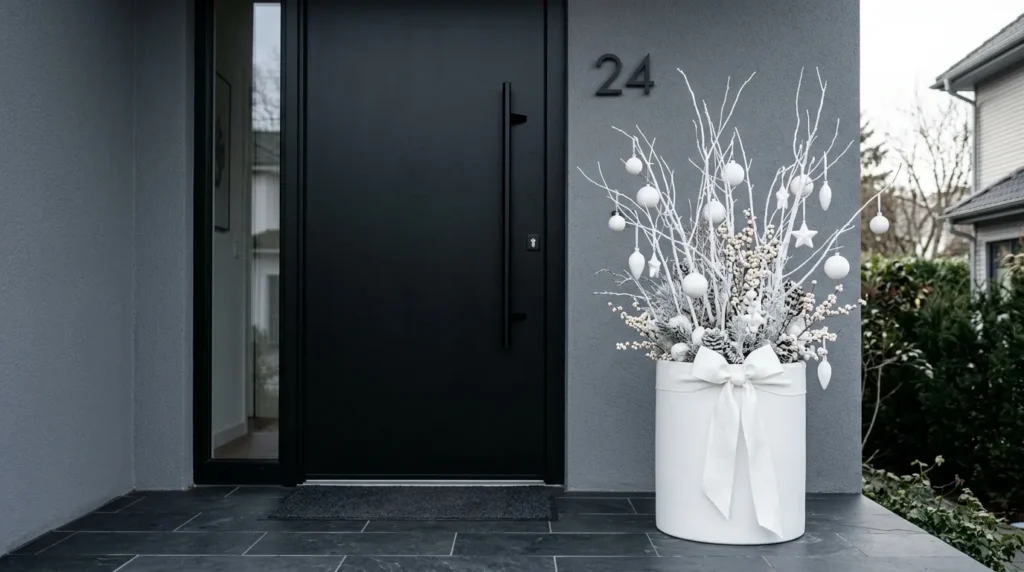
A monochrome porch planter — built entirely in a single color family, like all-white, all-silver, or all-deep-green — brings a polished, editorial quality to holiday styling that a mixed-color arrangement can’t always achieve. That’s why many designers recommend this approach specifically for modern homes, where a bold, multicolor traditional display can sometimes feel visually at odds with clean architectural lines. One simple trick I always suggest is varying the texture within the single color family — matte branches, glossy ornaments, and soft ribbon all in the same tone — to keep the arrangement from feeling flat.
How To Style It
Choose one dominant color — white, silver, or deep green are the most versatile choices — and build the entire arrangement within that palette, from the greenery itself to any ornaments, ribbon, or lights added. Keep the branch structure clean and slightly architectural rather than full and wild, echoing the same restraint found in modern landscape design. This style pairs particularly well with a black, white, or natural wood front door, where the single-color planter reads as an intentional design choice rather than competing with the door’s own color.
10. Oversized Ornament Planter
Quick Benefits
- Playful, high-impact visual statement
- Easy to execute with minimal florals
- Great for families and festive homes
- Budget-friendly using large plastic ornaments
- Highly recognizable, cheerful holiday look
Why It Works
Tucking a few oversized ornaments into a porch planter is one of the simplest ways to add a playful, unmistakably Christmas element without much floral or greenery work at all. I’ve noticed this idea works particularly well for families who want their porch to feel festive and a little whimsical rather than formal or restrained. Because large plastic ornaments are lightweight and weather-resistant, this is also one of the lower-maintenance options on this list, holding up well through wind, rain, and freezing temperatures without any special care.
How To Style It
Build a simple greenery base, then nestle two or three oversized ornaments — 10 to 14 inches in diameter — directly into the branches at varying depths so they appear to be resting naturally within the arrangement. Choose ornament colors that either match or intentionally contrast with the greenery for visual pop, such as deep red or bright gold against classic green. Skip an elaborate ribbon here, since the oversized ornaments already provide plenty of visual weight on their own. This idea works especially well for homes with kids, where the playful scale tends to be an instant hit with visitors of all ages.
Frequently Asked Questions
What do I need to make a DIY Christmas porch planter? At a minimum, you’ll need an existing planter or container, floral foam or sand for stability, and a mix of greenery branches for the base structure. Everything beyond that — ribbon, ornaments, lights, or berries — is optional styling on top of that foundation.
Should I use real or faux greenery for a porch planter? Fresh greenery offers a natural fragrance and a slightly fuller look but will dry out over the season and needs occasional misting, while faux greenery requires no maintenance and can be reused for years. Many homeowners mix the two, using faux branches for structure and fresh greenery for fragrance and fullness.
How do I keep a porch planter arrangement stable in wind? Floral foam anchored with wire, or a layer of sand or gravel at the base of the planter, both help stabilize taller branches against wind. Choosing a planter with some weight to it, rather than a lightweight plastic pot, also helps prevent the whole arrangement from tipping.
How long do fresh greenery porch planters last? Fresh evergreen typically holds up for four to six weeks outdoors in cold weather, especially if watered or misted occasionally. Cold temperatures actually help fresh greenery last longer than it would indoors, since the branches stay naturally preserved.
What’s the most budget-friendly DIY Christmas porch planter idea? An evergreen and berry planter or a rustic farmhouse bucket planter are both easy to build with minimal materials, especially if you already have a container on hand. Foraging your own pine branches or pinecones can reduce the cost even further.
Can I reuse my porch planter decorations next year? Sturdy elements like birch branches, ribbon, and faux ornaments can typically be stored and reused for several seasons if kept dry between uses. Fresh greenery and floral foam generally need to be replaced each year.
How do I make a small porch planter look full? Angle branches slightly outward rather than straight up, and layer greenery close to the rim of the pot so no bare container edge is visible. Using a few taller branches off-center, rather than centered and upright, also helps a smaller arrangement read as fuller and less stiff.
Final Thoughts
A well-built porch planter has a way of setting the tone for the entire home before anyone even reaches the front door, and the good news is that a genuinely impressive arrangement doesn’t require florist-level skill or an unlimited budget. Whether you’re drawn to the classic look of layered evergreen or the playful charm of oversized ornaments, the same structural principles apply: build height first, fill in around it, and finish with a few focal accents.
Start with one or two ideas and gradually build a look that reflects your style and holds up through the season ahead. A little planning around height, texture, and color goes a long way toward a porch planter that looks like it came straight off a Pinterest board — built with materials from your own local nursery or craft store.
Related Articles
- Front Porch Planter Ideas
- Christmas Coffee Table Decor Ideas
- Farmhouse Christmas Decorating Ideas
- Holiday Entryway Decor Ideas
- DIY Outdoor Christmas Wreath Ideas