

10 Must-Have Kitchen Cleaning Supplies
A clean kitchen feels easier to use, but keeping it that way can become surprisingly difficult without the right supplies. Greasy stovetops, cloudy sinks, sticky cabinet handles, crumbs on countertops, and food splatters each require slightly different cleaning approaches. When the basic tools are organized and ready, everyday kitchen maintenance becomes much less overwhelming.
The best kitchen cleaning supplies are not necessarily the most expensive or specialized products. A small collection of dependable essentials can handle most everyday messes while keeping your cleaning routine simple. Microfiber cloths, a good dish brush, a sturdy sponge, a gentle scrubber, and suitable surface cleaners can cover a surprising number of household tasks.
In my experience, organization matters almost as much as the supplies themselves. When everything has a designated place, it becomes easier to wipe down the counter after breakfast, clean the sink after dinner, or deal with a spill before it dries.
This guide covers 10 practical kitchen cleaning supplies worth keeping on hand. Some are reusable tools, while others are basic cleaning products that make specific jobs easier. The goal is not to fill a cabinet with dozens of items. It is to build a compact cleaning kit that works for the surfaces and messes found in a typical American kitchen.
Before using any cleaner, check the manufacturer’s instructions for your countertop, appliances, flooring, sink, and cabinet materials. A product that works beautifully on stainless steel may not be appropriate for natural stone, unfinished wood, or another delicate surface.
With a few dependable essentials and a simple routine, kitchen cleaning can become a manageable part of everyday home care rather than a large weekend project.
Table of Contents
1. Microfiber Cloths
Reusable microfiber cloths provide a versatile option for wiping counters, appliances, cabinets, and other suitable surfaces.
2. Dish Scrub Brush
A durable dish brush makes it easier to clean cookware, dishes, sink areas, and hard-to-reach corners.
3. Cleaning Sponges
Different sponge textures provide practical options for everyday wiping and gentle scrubbing.
4. Baking Soda
Baking soda offers a simple household option for deodorizing and cleaning many compatible surfaces.
5. Dish Soap
A quality dish soap helps cut through everyday grease on dishes, sinks, and washable surfaces.
6. All-Purpose Cleaner
A suitable multipurpose cleaner simplifies routine cleaning across compatible kitchen surfaces.
7. Glass Cleaner
Glass cleaner helps maintain streak-free windows, appliance surfaces, and other compatible glass areas.
8. Scrub Brush
A firm cleaning brush provides extra cleaning power for grout, sink edges, and textured surfaces.
9. Cleaning Gloves
Reusable gloves protect hands from prolonged contact with water and cleaning products.
10. Cleaning Caddy
A dedicated caddy keeps everyday kitchen cleaning supplies together and easy to carry.
1. Microfiber Cloths

Quick Benefits
- Reusable and washable
- Useful for many kitchen surfaces
- Helps capture dust and crumbs
- Works for dry and damp cleaning
- Easy to store
Why It Works
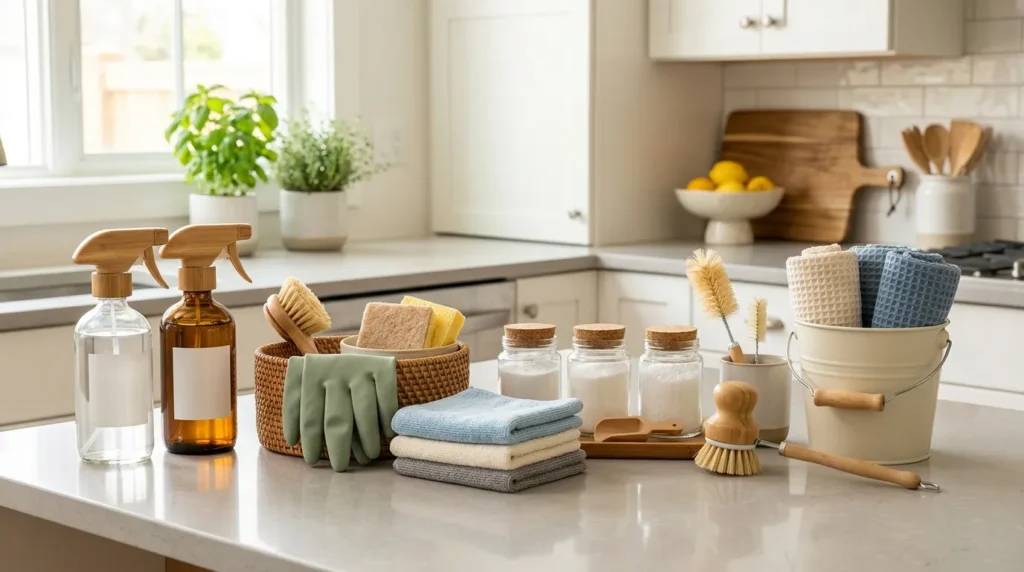
Microfiber cloths are among the most versatile items in a kitchen cleaning kit. Their fine fibers can pick up dust, crumbs, fingerprints, and everyday residue without requiring a large amount of cleaning solution.
They are particularly convenient for stainless-steel appliances, countertops, cabinet fronts, tables, and other surfaces where lint or streaks can be annoying. A dry cloth can handle light dust and crumbs, while a slightly damp cloth works well for everyday spills.
The key is using a clean cloth for each type of task. A cloth used on a greasy stovetop is not the best choice for polishing a clean appliance door. Keeping several cloths available makes it easier to separate jobs.
Always check the manufacturer’s care instructions for specialty surfaces. Some finishes require specific cleaning products or techniques.
How To Use It
Keep a small collection of microfiber cloths in your kitchen cleaning area. Use different cloths for countertops, appliances, floors, and heavier cleaning jobs.
For routine wiping, dampen the cloth lightly with water or an appropriate cleaner. Avoid soaking it unless the surface specifically allows significant moisture.
Fold the cloth into sections so you can rotate to a clean area as you work.
After use, wash microfiber cloths according to their care instructions. Avoid fabric softener if the manufacturer advises against it because residue can reduce the cloth’s effectiveness.
Allow the cloths to dry completely before storing them.
A simple stack of clean microfiber cloths can make everyday kitchen maintenance feel much more manageable.
2. Dish Scrub Brush
Quick Benefits
- Excellent for dishes and cookware
- Reaches corners easily
- Keeps hands away from dirty water
- Useful around the sink
- Easy to rinse
Why It Works
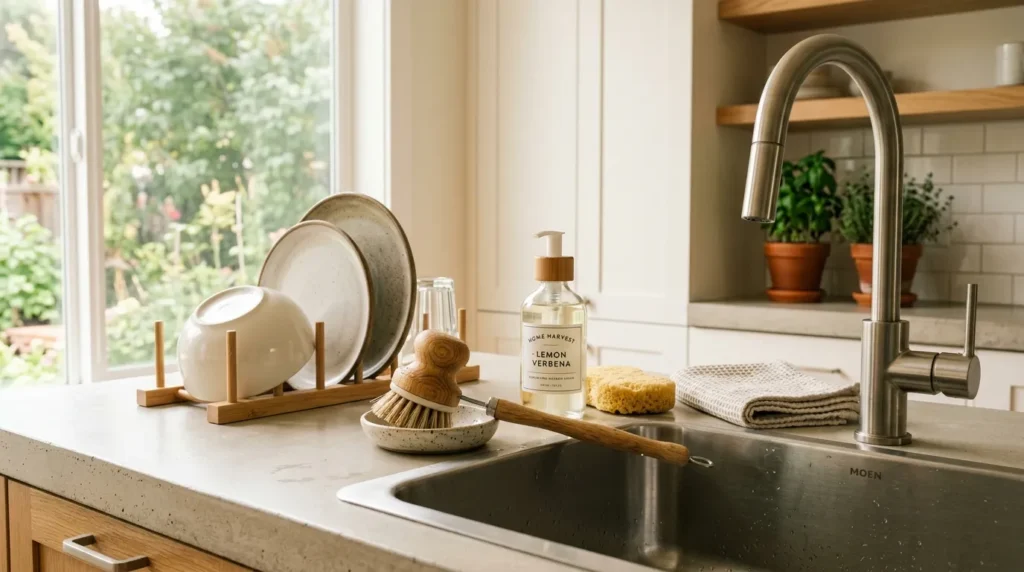
A dish scrub brush provides more control than a flat sponge when cleaning pots, pans, bottles, and textured cookware. The bristles can reach corners and grooves where a cloth may struggle.
It is also useful beyond dishwashing. A separate brush can clean sink edges, drain areas, reusable water bottles, and other kitchen items that benefit from targeted scrubbing.
Choosing the right stiffness matters. Very stiff bristles can scratch delicate coatings, while extremely soft bristles may not remove stuck-on food effectively.
A brush with a comfortable handle is especially helpful during longer cleaning sessions. Some designs also include a built-in soap reservoir, although a simple separate brush works perfectly well.
How To Use It
Keep a dedicated dish brush near the sink. Use it for cookware and dishes according to the care instructions for each item.
For stuck-on food, soak the cookware first rather than immediately applying excessive pressure. Once the residue softens, use the brush to loosen it.
Rinse the brush thoroughly after use and allow it to dry between cleaning sessions.
Consider keeping a second brush specifically for the sink and other household cleaning tasks. Separating dishwashing tools from surface-cleaning tools helps maintain a cleaner routine.
Replace the brush when the bristles become worn, bent, or difficult to rinse clean.
3. Cleaning Sponges
Quick Benefits
- Convenient for everyday spills
- Useful for gentle scrubbing
- Easy to keep near the sink
- Available in different textures
- Suitable for many washable surfaces
Why It Works
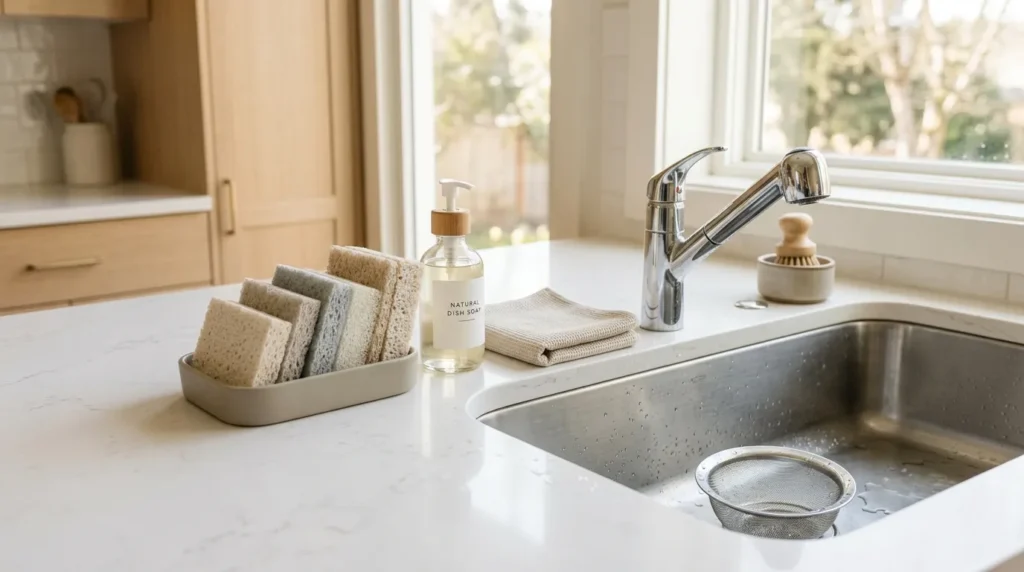
Sponges are practical for the quick jobs that happen throughout the day. A spill on the counter, food residue around the sink, or a dirty backsplash can often be handled in seconds with a damp sponge.
The important detail is choosing the right type. Some sponges have abrasive sides that can scratch delicate surfaces. Natural stone, specialty coatings, polished finishes, and nonstick cookware often require gentler tools.
Kitchen sponges also need regular care. Because they remain damp and collect food particles, they can become unpleasant if they are not rinsed, dried, and replaced appropriately.
Instead of using one sponge for everything, it can be helpful to designate different tools for dishes and household surfaces.
How To Use It
Choose a soft sponge for everyday cleaning and a more textured option only for surfaces that tolerate it.
Rinse the sponge thoroughly after each use and squeeze out excess water. Store it where air can circulate around it rather than leaving it submerged in a sink.
Use separate sponges for dishes, countertops, and heavier cleaning tasks.
Replace sponges when they develop odors, deteriorate, or become difficult to clean properly.
For delicate surfaces, test a cleaning method in an inconspicuous area first and follow the surface manufacturer’s recommendations.
4. Baking Soda
Quick Benefits
- Inexpensive household staple
- Useful for deodorizing
- Helps with gentle cleaning
- Convenient for stubborn residue
- Easy to store
Why It Works
Baking soda is a useful addition to a kitchen cleaning collection because it can serve several purposes. Its mild abrasive texture can help loosen certain residues, while its alkaline properties make it useful for some grease and odor-related cleaning tasks.
It is especially popular for sinks, refrigerator odors, cookware residue, and other compatible household surfaces.
However, baking soda is not suitable for every material. Natural stone, delicate finishes, specialty coatings, and polished surfaces may require specific care. A gentle ingredient can still damage a surface if used incorrectly.
Baking soda also works best when treated as one tool in a larger cleaning routine rather than as a universal solution.
How To Use It
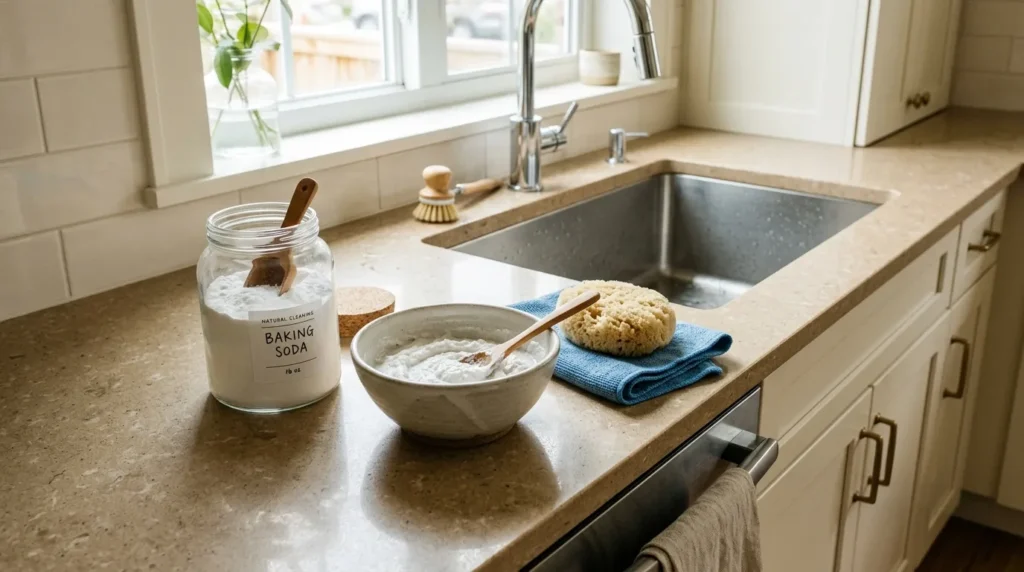
For a simple cleaning paste, mix baking soda with a small amount of water until it reaches a spreadable consistency.
Apply it only to surfaces that are compatible with the method. Allow it to sit briefly when appropriate, then wipe or rinse thoroughly.
For odor control, place a small open container of baking soda in an appropriate location such as a refrigerator, following food-storage and appliance-care recommendations.
Avoid combining baking soda with household chemicals without checking whether the combination is safe. Natural ingredients can still react with other substances.
Store baking soda in a dry, labeled container so it remains easy to identify and use.
5. Dish Soap
Quick Benefits
- Cuts through everyday grease
- Useful beyond dishwashing
- Easy to dilute
- Simple for daily cleaning
- Convenient to keep by the sink
Why It Works
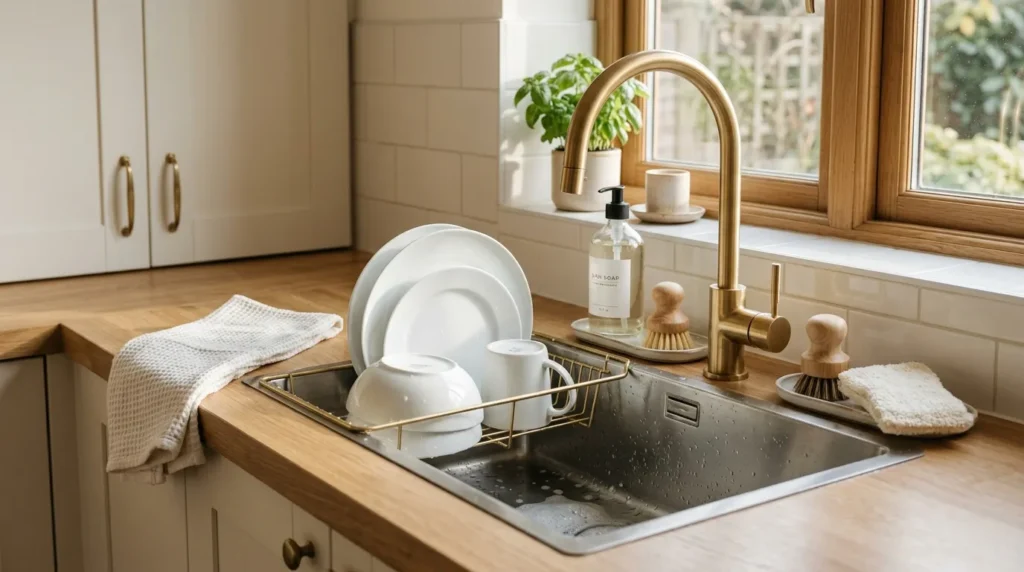
Dish soap earns a permanent place in many kitchen cleaning routines because grease is one of the most common kitchen messes. A small amount diluted in warm water can help lift oily residue from dishes, sinks, washable surfaces, and other compatible areas.
It is also useful when a heavy-duty cleaner is unnecessary. A quick wipe with diluted dish soap can handle fingerprints, cooking splatters, and everyday grime.
Still, not every kitchen surface is designed for soap and water. Natural stone, wood, specialty finishes, and certain appliances may have specific care requirements.
Using a small amount also makes rinsing easier. More soap does not automatically mean better cleaning.
How To Use It
Add a small amount of dish soap to warm water and use a cloth or sponge to clean compatible surfaces.
For greasy cookware, allow the item to soak first. This softens food and grease so less scrubbing is required.
Wipe surfaces with a clean damp cloth afterward when necessary to remove soap residue.
Keep dish soap near the sink for easy access, but store it where young children and pets cannot reach it.
Choose a formula that suits your household preferences and dishwashing needs rather than keeping several nearly identical products.
6. All-Purpose Cleaner

Quick Benefits
- Simplifies everyday cleaning
- Useful on multiple compatible surfaces
- Reduces product clutter
- Convenient for quick wipe-downs
- Easy to keep in a cleaning caddy
Why It Works
An appropriate all-purpose cleaner can reduce the number of separate bottles required for routine kitchen maintenance. Instead of reaching for a different product every time there is a small spill, you can use one suitable cleaner for several compatible surfaces.
The important word is compatible. “All-purpose” does not mean every surface. Granite, marble, butcher block, painted cabinetry, stainless steel, and specialty finishes can have different cleaning requirements.
Read the product label and surface manufacturer’s recommendations before use. If there is any uncertainty, test the cleaner in an inconspicuous area.
A simple routine also helps. Use the cleaner for general grime, while reserving specialized products for surfaces that genuinely require them.
How To Use It
Choose a cleaner labeled for the surfaces you frequently clean.
Apply it according to the product directions. In many cases, spraying the cleaner onto a cloth rather than directly onto the surface provides better control and reduces the chance of overspray.
Work from cleaner areas toward dirtier ones and change cloths when they become heavily soiled.
Never mix cleaning products unless the manufacturer explicitly states that they can be combined.
Keep the bottle labeled and stored securely after use.
A single reliable cleaner can become the foundation of a simple daily or weekly kitchen cleaning routine.
7. Glass Cleaner

Quick Benefits
- Helps reduce streaks
- Useful for windows and glass
- Improves visibility
- Good for finishing touches
- Makes kitchen surfaces look polished
Why It Works
Glass is one of those surfaces where small streaks can make a freshly cleaned kitchen look unfinished. A suitable glass cleaner can remove fingerprints, light grease, and smudges from compatible glass surfaces.
It is useful for kitchen windows, glass cabinet doors, and certain appliance surfaces. However, not every appliance finish should be treated like ordinary window glass.
Some oven doors, coated glass surfaces, screens, and specialty finishes require specific cleaning methods. Always check the manufacturer’s instructions.
The quality of the cloth also matters. A lint-free microfiber cloth generally makes the final wipe easier and reduces the small fibers that can remain behind.
How To Use It
Use a glass cleaner only on surfaces listed on its label.
Apply a small amount to the cloth when appropriate, especially near appliances where overspray could reach controls or openings.
Wipe in a consistent direction and finish with a dry microfiber cloth.
For kitchen windows, work from the top down so any drips fall toward areas you have not yet cleaned.
If streaks remain, use less product rather than repeatedly adding more.
Store the cleaner securely with your other household cleaning products.
8. Scrub Brush
Quick Benefits
- Handles stubborn grime
- Useful for textured areas
- Helps clean grout
- Reaches corners
- Reduces reliance on disposable pads
Why It Works
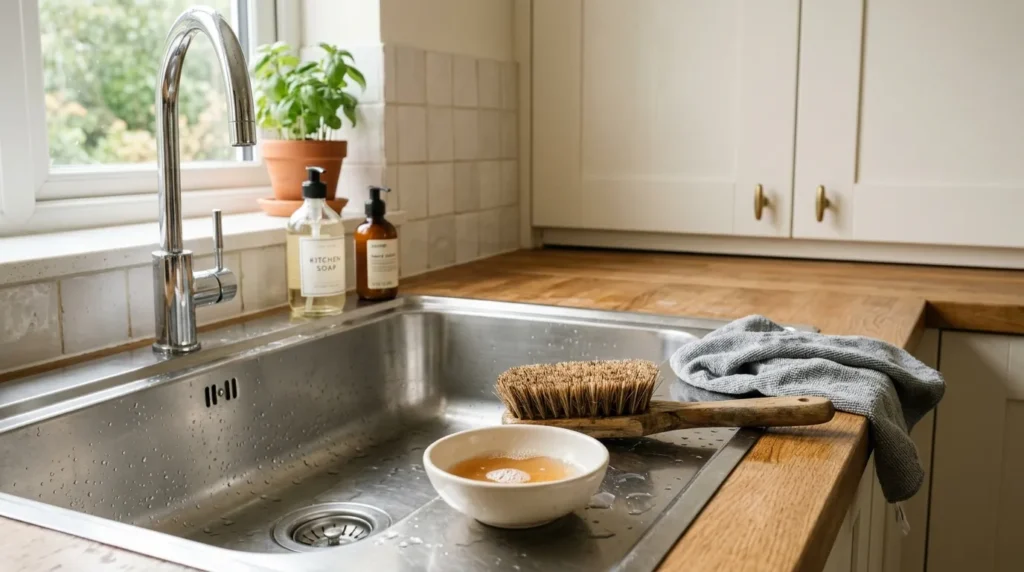
A dedicated scrub brush provides the extra friction needed for areas where a cloth or sponge is not enough. Sink edges, grout lines, textured surfaces, and certain floor areas can collect dirt in tiny spaces that flat cleaning tools cannot reach easily.
Brushes also come in different stiffness levels. A soft brush can work for delicate jobs, while a firmer brush may be appropriate for durable tile or other compatible surfaces.
The biggest advantage is control. You can focus the bristles exactly where buildup exists rather than scrubbing an entire surface unnecessarily.
As with every cleaning tool, match the brush to the material. Aggressive bristles can damage finishes that require gentle care.
How To Use It
Choose a brush based on the surface you intend to clean.
Apply an appropriate cleaning solution to the surface or brush according to product directions.
Work in small sections, using moderate pressure. Let the cleaner and moisture loosen the grime instead of relying entirely on force.
Rinse the area afterward when required and rinse the brush thoroughly.
Allow the brush to dry completely between uses.
Keep your scrub brush separate from dishwashing tools so each tool has a clear purpose.
9. Cleaning Gloves
Quick Benefits
- Helps protect hands
- Makes wet cleaning more comfortable
- Useful during longer cleaning sessions
- Creates a barrier from cleaning products
- Easy to wash and reuse
Why It Works
Cleaning gloves are a simple addition to a kitchen cleaning kit, particularly if you spend a lot of time working with water or cleaning solutions.
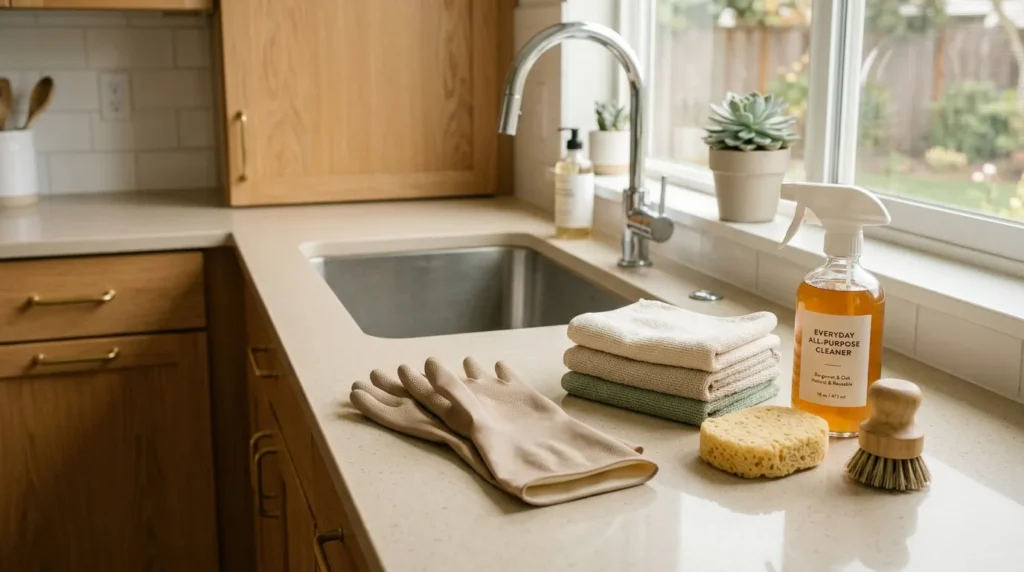
Repeated exposure to water can leave hands feeling dry, and some cleaning products can be irritating for certain people. Gloves provide a practical barrier and can make deep-cleaning tasks more comfortable.
Fit matters. Gloves that are too loose can make delicate tasks difficult, while gloves that are too tight can become uncomfortable during extended cleaning.
Gloves also require cleaning themselves. If moisture remains trapped inside, they can develop unpleasant odors.
How To Use It
Choose reusable gloves that fit comfortably and are appropriate for household cleaning.
Rinse the outside after use and allow the gloves to dry thoroughly. Turn them inside out when appropriate according to their care instructions so the interior can dry as well.
Do not use damaged gloves if they have cracks or holes.
Keep them in a dry, ventilated location rather than leaving them crumpled near the sink.
For households with multiple people cleaning, different glove sizes can make shared cleaning supplies more practical.
10. Cleaning Caddy
Quick Benefits
- Keeps supplies organized
- Makes cleaning portable
- Reduces cabinet clutter
- Speeds up routine tasks
- Creates a dedicated cleaning station
Why It Works
The cleaning caddy is not a cleaning product itself, but it can completely change how easy it is to use the supplies you already own.
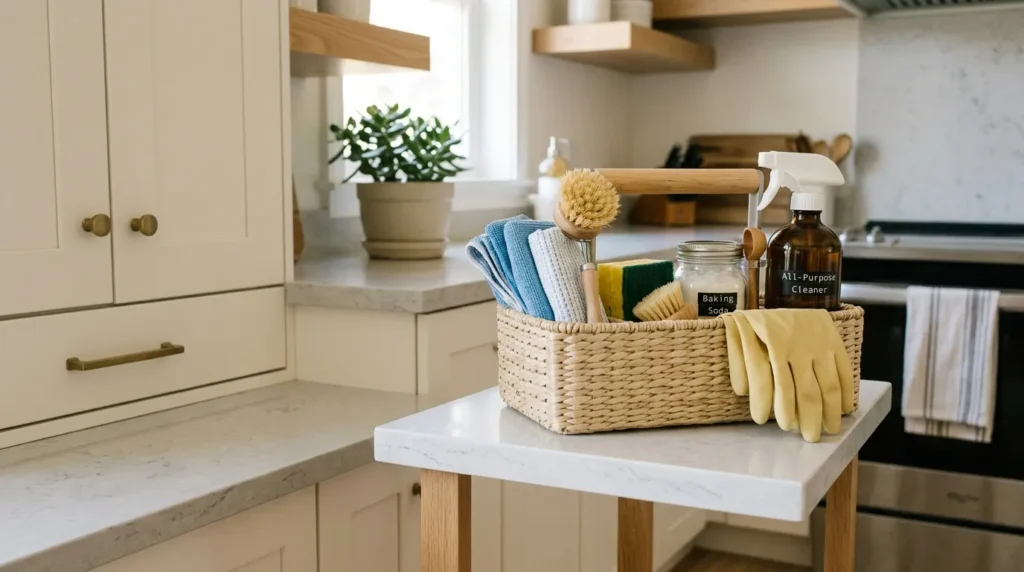
When microfiber cloths, brushes, gloves, sponges, and appropriate cleaners are scattered across different cabinets, starting a cleaning session becomes another task. A caddy keeps frequently used supplies together so you can grab everything at once.
This is particularly useful for larger homes where the kitchen cleaning area and laundry or utility space are separate.
A caddy also makes it easier to notice when supplies are running low. Instead of discovering an empty cleaner halfway through a task, you can check your kit during your regular household reset.
How To Use It
Choose a sturdy caddy with enough room for your most frequently used supplies without becoming overloaded.
Keep only everyday essentials inside. Store specialty products separately so the caddy remains lightweight and easy to carry.
A practical kitchen caddy might contain microfiber cloths, a sponge, gloves, a scrub brush, dish soap, and one suitable multipurpose cleaner.
Keep chemicals upright and separated according to their labels. Never combine products simply because they are stored together.
Wash or wipe the caddy periodically so dust, drips, and residue do not accumulate.
How to Build a Simple Kitchen Cleaning Kit
You do not need a large collection of cleaning products to maintain a kitchen. A small, organized kit can cover most everyday tasks.
A practical starting point includes microfiber cloths, a sponge, dish soap, a dish brush, baking soda, an appropriate all-purpose cleaner, a scrub brush, gloves, and a small caddy.
From there, add specialized products only when your kitchen surfaces require them.
For example, a home with extensive natural stone may need a cleaner specifically formulated for that material. A kitchen with large glass doors may benefit from a dedicated glass cleaner. Someone with textured tile flooring may find a stiff floor brush useful.
The goal is matching the tool to the surface, not collecting the largest number of products.
How to Organize Kitchen Cleaning Supplies
Good organization makes cleaning supplies easier to use and easier to maintain.
Keep everyday tools close to the area where they are most frequently used. Dish soap and a dish brush belong near the sink. Microfiber cloths can stay in a nearby drawer or cleaning caddy. Specialty products can remain in a separate, clearly labeled storage area.
Avoid storing incompatible chemicals together in a way that could lead to accidental mixing. Keep household cleaning products away from food, cookware, and children’s reach.
A small basket or caddy also prevents loose bottles and brushes from taking over an entire cabinet.
Every few months, review your supplies. Dispose of damaged tools and empty products according to local disposal guidance. Remove duplicates that no longer serve a purpose.
A smaller cleaning collection is often easier to manage than a crowded cabinet full of products you rarely use.
Kitchen Cleaning Supplies for Different Jobs
Different messes call for different tools.
For countertops: A microfiber cloth and an appropriate surface cleaner are often enough.
For dishes: Dish soap, a sponge, and a dish brush provide a practical combination.
For stubborn sink residue: A compatible scrub brush and suitable cleaner can provide additional cleaning power.
For appliances: Use microfiber cloths and products approved for the appliance’s finish.
For glass: A suitable glass cleaner and lint-free microfiber cloth can help minimize streaks.
For odors: Baking soda can be useful for certain odor-control applications.
For floors: A mop or floor-specific cleaning tool is more appropriate than a countertop sponge.
The most effective cleaning kit is one that reflects your actual kitchen rather than a generic list of every product available.
Cleaning Mistakes to Avoid
Even a well-stocked cleaning cabinet cannot compensate for using the wrong method.
Avoid these common mistakes:
- Using abrasive tools on delicate surfaces
- Applying a cleaner without checking the label
- Mixing household cleaning chemicals
- Using the same dirty cloth throughout the kitchen
- Leaving sponges wet for long periods
- Scrubbing before allowing residue to soften
- Spraying products directly around appliance controls or openings
- Using excessive amounts of cleaner
- Ignoring manufacturer’s care instructions
- Storing cleaning products near food
- Leaving chemicals where children or pets can access them
A gentle approach often produces better results than aggressive scrubbing.
When a surface is unfamiliar, identify its material first. Then choose a cleaning method designed for that material.
Frequently Asked Questions
1. What cleaning supplies do I really need for a kitchen?
A basic kitchen cleaning kit can include microfiber cloths, a sponge, dish soap, a dish brush, baking soda, an appropriate all-purpose cleaner, a scrub brush, cleaning gloves, and a small caddy. Specialized products are useful when your kitchen contains surfaces such as natural stone, specialty wood, or delicate finishes that require specific care.
2. Are microfiber cloths better than paper towels for kitchen cleaning?
Microfiber cloths are reusable and versatile, making them useful for many everyday kitchen cleaning tasks. They can capture dust, fingerprints, crumbs, and light residue while producing less waste than disposable towels. Paper towels can still be convenient for particularly messy spills or tasks where a disposable material makes more sense.
3. How often should kitchen cleaning supplies be replaced?
Replacement depends on the condition of each item rather than a fixed schedule. Sponges generally require more frequent replacement because they remain damp and collect food residue. Brushes and microfiber cloths can last much longer when washed and maintained properly. Replace any tool that develops persistent odors, damage, or deterioration.
4. What is the best cleaner for kitchen countertops?
There is no single cleaner that suits every countertop. The correct product depends on whether the surface is laminate, quartz, granite, marble, wood, tile, or another material. Check the countertop manufacturer’s care instructions before choosing a cleaner. A product that works on one material can damage another.
5. Can baking soda clean every kitchen surface?
No. Baking soda is useful for many compatible household surfaces, but it is not universally safe. Its mild abrasive texture can affect delicate or polished finishes. Natural stone and specialty materials may require specific products. Always check the surface manufacturer’s instructions before using baking soda as a scrub or paste.
6. How can I keep kitchen cleaning supplies organized?
A small cleaning caddy can hold frequently used items such as microfiber cloths, gloves, a sponge, dish soap, and a suitable cleaner. Keep specialty products separate and clearly labeled. Store cleaning chemicals away from food and inaccessible to children and pets. Review the collection periodically to remove empty or damaged supplies.
7. What should I avoid mixing when cleaning the kitchen?
Avoid mixing cleaning products unless the product manufacturer specifically states that the combination is safe. In particular, never combine bleach with ammonia or acids such as vinegar. Chemical reactions can create hazardous fumes. Using one product at a time according to its label is a safer and simpler cleaning practice.
Related Articles
- 10 Kitchen Cleaning Hacks That Save Time
- How to Deep Clean Your Kitchen in One Day
- 10 Easy Kitchen Organization Ideas for Busy Homes
- How to Declutter Your Kitchen Without Feeling Overwhelmed
- 10 Simple Habits for Keeping Your Kitchen Clean
Conclusion
A well-stocked kitchen cleaning kit does not need to take over an entire cabinet. A handful of dependable supplies can handle most everyday jobs when each tool has a clear purpose.
Microfiber cloths provide a versatile foundation, while dish brushes and sponges handle dishes and quick messes. Baking soda offers another useful household option, and dish soap remains practical for everyday grease. A suitable all-purpose cleaner can simplify routine wipe-downs, while a scrub brush provides extra help for textured areas. Gloves make wet cleaning more comfortable, and a small caddy keeps everything organized.
The most important part is not owning every possible cleaning product. It is choosing supplies that suit your kitchen’s surfaces and using them correctly. Always read product labels and follow manufacturer instructions, particularly for countertops, appliances, natural stone, wood, and specialty finishes.
Once your essential supplies have a designated place, daily cleaning becomes easier to start and easier to finish. A quick wipe after cooking, a regular sink scrub, and a weekly surface reset can prevent small messes from becoming larger projects.
Start with the essentials that match your kitchen, keep them organized, and build your cleaning routine around the tools you actually use.