
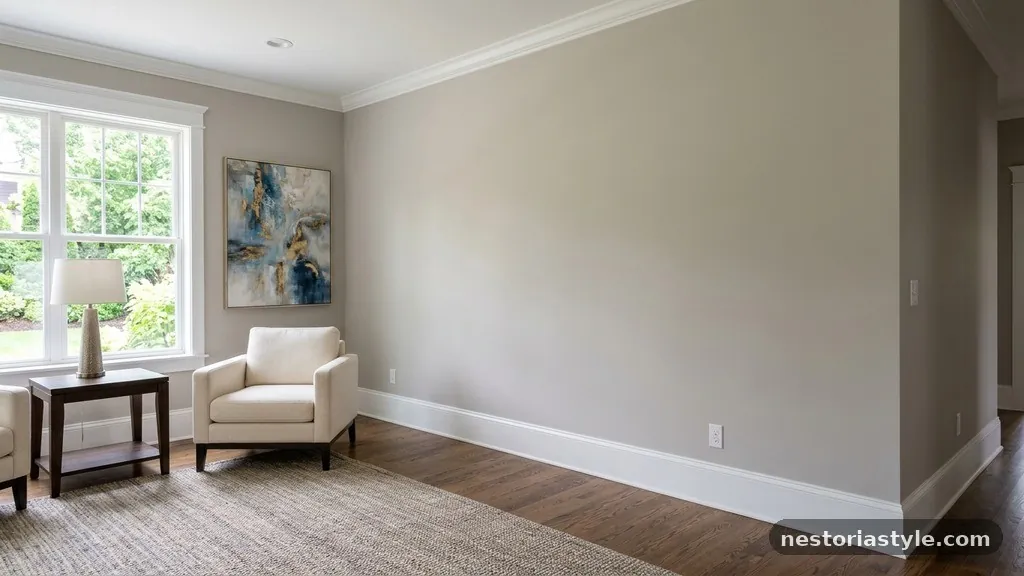
Can You Put 7-Inch Tall Baseboards in a House with 9-Foot Ceilings?
Deciding whether you can put 7-inch tall baseboards in a house with 9-foot ceilings often feels like a balancing act between personal preference and architectural standards. Many homeowners worry about whether such a substantial trim profile will overwhelm their space or create an unbalanced aesthetic. The short answer is yes, you absolutely can install 7-inch baseboards in a room with 9-foot ceilings.
In fact, this height is frequently considered a sweet spot for modern and transitional interior design. Understanding how these proportions interact with your wall height, door casing, and flooring is the key to achieving a polished, professional look throughout your home.
The Proportional Relationship Between Walls and Trim
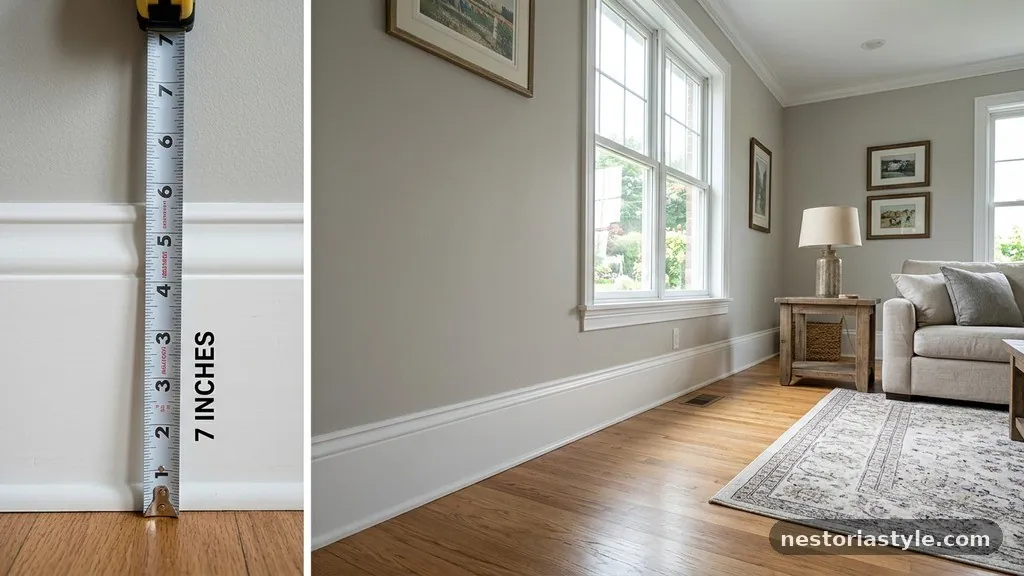
When you consider the scale of your interior, the relationship between your vertical surfaces and your horizontal trim is essential. A 9-foot ceiling provides enough vertical clearance to accommodate larger trim profiles without the room feeling cramped or “bottom-heavy.”
In professional design, a common rule of thumb suggests that for every foot of ceiling height, you should have roughly one inch of baseboard height. This is not a strict legal requirement, but it serves as a helpful guideline to ensure visual harmony.
At 9 feet, your wall height is significantly higher than the standard 8-foot construction found in many mid-century homes. If you were to use a standard 3-inch or 4-inch baseboard, the trim might look thin or insignificant against the expansive wall surface.
A 7-inch profile adds a sense of weight and architectural presence that grounds the room. It creates a stronger transition between the floor and the wall, which is especially effective in open-concept living areas.
Why 7 Inches Works for 9-Foot Ceilings
The primary reason 7-inch baseboards succeed in a 9-foot room is the way they define the perimeter. Because 9-foot ceilings allow for more wall space, smaller trim can sometimes disappear or look like an afterthought.
A 7-inch board, by contrast, commands attention and defines the footprint of the room clearly. This size is large enough to be noticeable, yet it doesn’t compete with the architectural features of the room.
Another factor is the visual weight of your furniture and doors. If you have tall doors or large windows, standard thin trim will look disproportionate.
By moving to a 7-inch profile, you create a cohesive visual language that connects your baseboards to the height of your door casings. This creates a balanced look where the trim feels intentional rather than accidental.
Calculating Your Ideal Baseboard Height
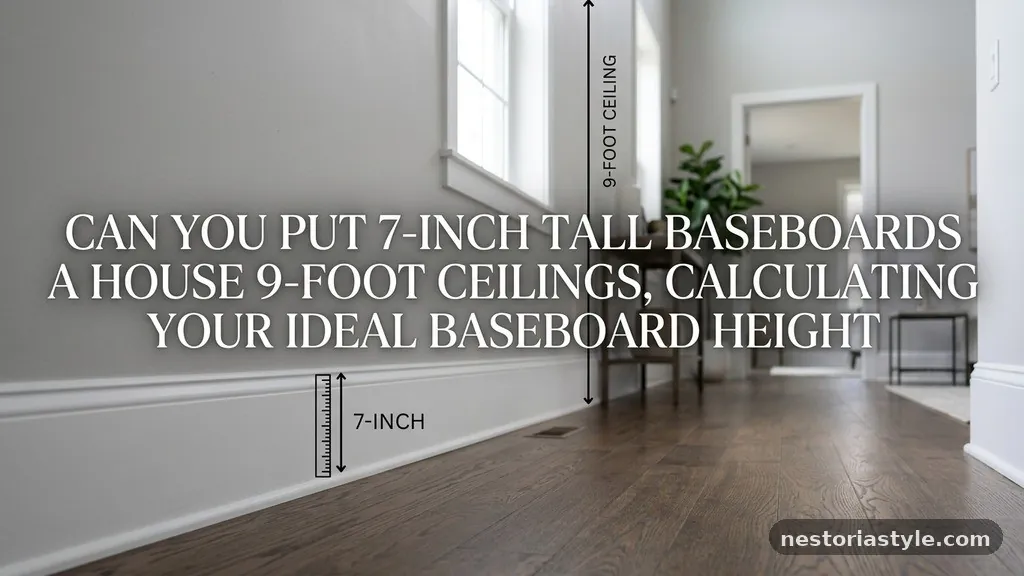
If you are trying to determine if 7 inches is the right fit, you should look at the International Association of Certified Home Inspectors’ guide to interior trim to understand standard installation practices. While 7 inches is a popular choice, you must also consider the other architectural elements in your space.
Your door casing is the most important companion to your baseboard. If your casing is flat and thin, a very ornate 7-inch baseboard might look out of place.
You should also measure the distance between your floor and the bottom of your window sills. If your windows are set very low to the floor, a 7-inch baseboard might interfere with the apron of the casing.
Taking these measurements before purchasing materials prevents costly mistakes. Use a piece of cardboard cut to 7 inches and tape it to your wall to visualize the scale before committing to a full installation.
Comparing Common Baseboard Profiles
Not all 7-inch baseboards are created equal, as the profile—the shape and thickness of the trim—plays a huge role in how it feels. A simple, flat-stock board with a small cap provides a modern, minimalist look. Conversely, a more traditional colonial or Victorian profile with intricate curves will change the character of the room entirely.
| Profile Type | Visual Effect | Best For |
|---|---|---|
| Flat Stock | Clean, Modern | Contemporary homes |
| Colonial | Traditional, Classic | Period-style renovations |
| Ogee/Coved | Elegant, Soft | Formal dining or living rooms |
| Stepped | Architectural, Bold | High-end, custom interiors |
The profile you choose should reflect the overall architecture of your home. If your home has clean lines and minimal detail, a heavy, ornate profile will feel jarring.
If you have a historic home, a simple flat board might look too sparse. Selecting the right profile is just as important as selecting the right height.
Integrating Baseboards with Door Casings
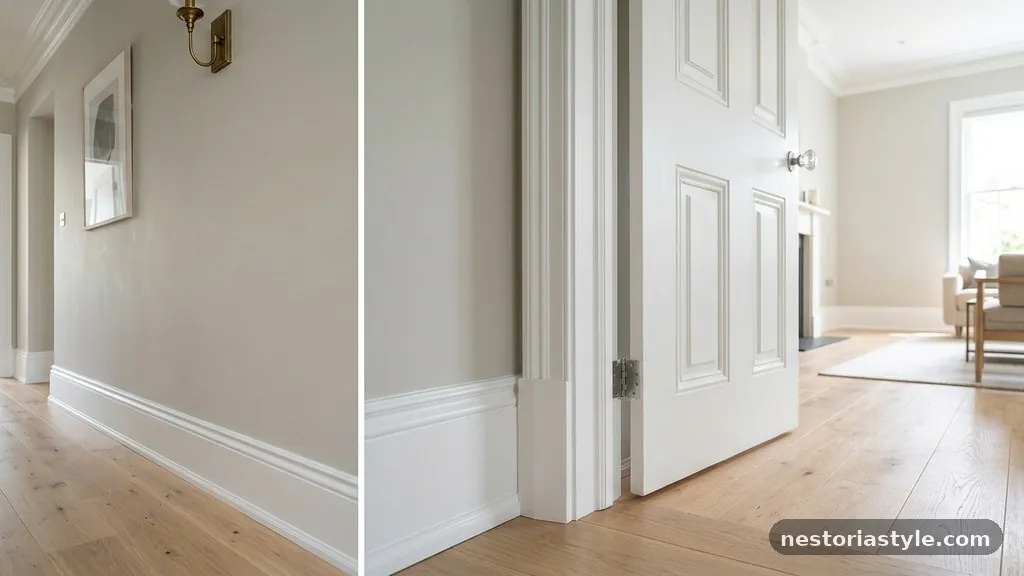
One of the most common pitfalls when installing tall baseboards is the intersection with door casings. If your baseboard is thicker than your casing, the transition will look awkward and unfinished.
Your baseboard should ideally be slightly thinner than, or equal to, the thickness of your door casing. This allows the casing to “sit” properly against the baseboard.
If you have already installed thin door casings, you may need to use a plinth block. A plinth block is a thicker, square piece of wood placed at the bottom of the door casing.
It acts as a buffer, allowing you to run your 7-inch baseboard into the block without a messy transition. This detail is a hallmark of high-quality finish carpentry and makes a significant difference in the final look of your home.
The Role of Crown Molding
When you use 7-inch baseboards in a house with 9-foot ceilings, you should also consider whether to add crown molding to the top of the wall. Crown molding balances the visual weight of the baseboard, creating a “frame” for the wall. Without it, a tall baseboard can sometimes make the ceiling feel slightly disconnected from the floor.
If you choose to use crown molding, aim for a size that complements your baseboard. A common mistake is using a tiny piece of crown molding with a large baseboard, which makes the top of the room feel unbalanced.
For 9-foot ceilings, a 4-inch to 6-inch crown molding is usually sufficient to create a sense of symmetry. This pairing creates a classic, finished look that frames the entire room beautifully.
Material Considerations and Installation
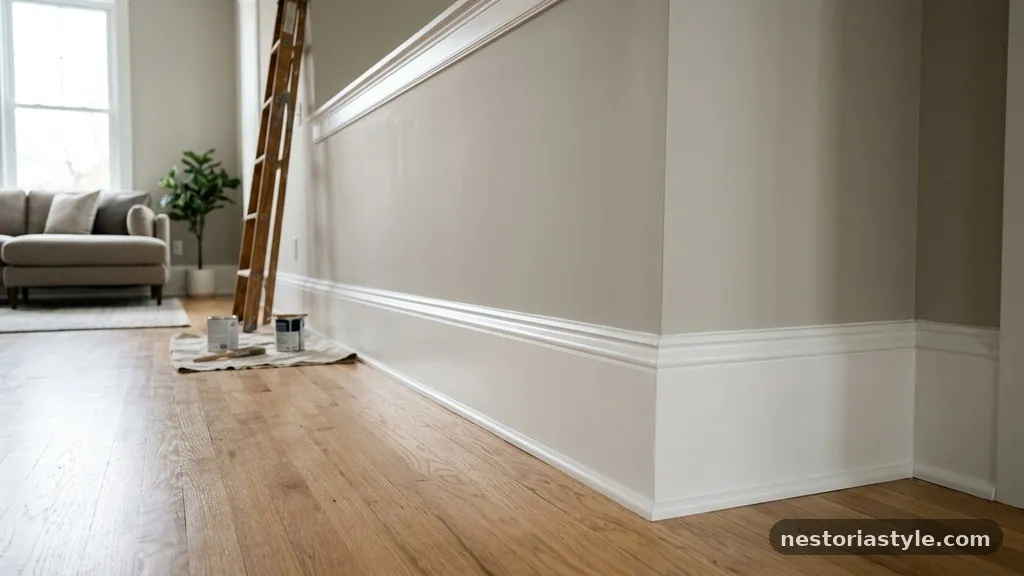
The material you choose for your 7-inch trim affects both the cost and the final appearance. Solid wood is a premium choice that provides a high-end feel, but it can be susceptible to expansion and contraction. Medium-density fiberboard (MDF) is a popular, budget-friendly alternative that is incredibly stable and easy to paint.
Because 7-inch boards are wider than standard trim, they are more prone to warping if they are not installed correctly. You must ensure that your walls are relatively flat, or you will have gaps that require excessive caulking.
Using a high-quality wood glue at the joints and ensuring your nails are driven into the studs is essential for a long-lasting finish. If you are DIYing this, take your time with the corners to ensure they are perfectly mitered.
Managing Wall Imperfections
Tall baseboards are less forgiving than short ones when it comes to wall irregularities. If your drywall is not perfectly plumb or has bows, a 7-inch board will highlight these imperfections. You might find that you need to scribe the board to the floor if your flooring is uneven.
You should also expect to use a significant amount of caulk along the top edge of the board. This fills the gap between the trim and the wall, creating a seamless appearance.
When you paint the trim, the caulk will blend in, making the baseboard look like an integrated part of the wall structure. Do not skip this step, as it is what separates a professional job from an amateur one.
Impact on Flooring Transitions
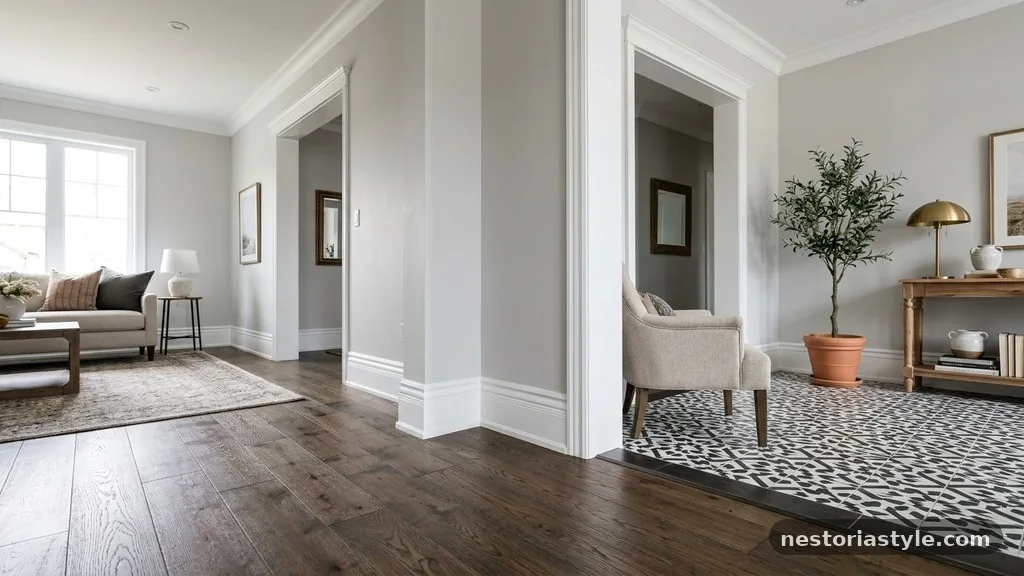
Your choice of flooring will dictate how you install your 7-inch baseboards. If you have thick carpet, you must account for the pile height so the baseboard doesn’t look like it’s sinking into the floor. Often, you will install the baseboard with a small gap above the subfloor before the carpet is laid.
If you have hardwood or tile, you will need to account for expansion gaps. Most flooring manufacturers require a gap between the flooring and the wall to allow for natural movement.
Your 7-inch baseboard will easily cover this gap, provided you have chosen a profile with enough thickness. Always check the flooring manufacturer’s specifications before finalizing your trim installation.
Budgeting for Larger Trim Projects
Upgrading to 7-inch baseboards is a larger investment than using standard 3-inch trim. You will be paying for more raw material, and the installation process is more labor-intensive. If you are hiring a professional carpenter, expect the labor costs to be higher due to the weight and size of the boards.
* Materials: MDF is cheaper than solid wood or finger-jointed pine.
* Labor: Complexity of corners and plinth block installations increases time.
* Finishing: Larger surfaces require more paint and more time for sanding and caulking.
* Waste: You will likely have more offcuts when working with larger profiles.
When budgeting, always add 10-15% to your total square footage for waste. You will inevitably make a bad cut or find a damaged section of wood. Having extra material on hand keeps the project moving without constant trips to the hardware store.
Frequently Asked Questions
Is 7 inches too tall for a 9-foot ceiling?
No, 7 inches is generally considered an ideal height for a 9-foot ceiling. It provides a substantial, high-end look without dominating the vertical space of the room.
What is the rule for baseboard height?
A common guideline is to use 1 inch of baseboard height for every foot of ceiling height. For a 9-foot ceiling, this suggests a 9-inch baseboard, but 7 inches is a widely accepted and aesthetically pleasing alternative.
Should I use a plinth block with 7-inch baseboards?
Yes, using a plinth block is highly recommended if your door casing is thinner than your 7-inch baseboard. It creates a clean transition and prevents the trim from looking mismatched.
Does tall baseboard make a room feel smaller?
Not necessarily. When chosen in a color that matches your walls, tall baseboards can actually make a wall feel more expansive and grounded. They add architectural character that often makes a room feel more custom and intentional.
Can I use flat-stock baseboards in a traditional home?
You can, but the effect will be quite modern. If you want to maintain a traditional feel, you might prefer a profile with more detail, like an ogee or colonial style, to match the home’s existing aesthetic.
Final Thoughts on Choosing Your Trim
Choosing to install 7-inch tall baseboards in a house with 9-foot ceilings is a sound design decision that adds significant character to your living space. By focusing on the relationship between your wall height, door casings, and chosen profiles, you can achieve a look that feels both balanced and intentional. Remember that the quality of your installation—specifically your caulking, mitering, and attention to transitions—will matter just as much as the height of the board itself.
Whether you are aiming for a clean, modern aesthetic or a more traditional, ornate style, this specific size provides the versatility to make your home feel finished and polished. Take the time to measure your space, test your profiles, and plan your transitions, and you will be rewarded with a result that elevates the entire feel of your home. If you have questions about your specific room layout, consulting with a local trim carpenter can provide further clarity on what will work best for your unique walls.