
What Size Crown Molding Works on Low 8-Foot Ceilings Without Looking Heavy?
Choosing the right size crown molding works on low 8-foot ceilings without looking heavy by focusing on the ratio between the wall and the ceiling. When you select a trim profile that respects the room’s proportions, you avoid the dreaded boxed-in effect that often plagues smaller spaces. Many homeowners fear that adding architectural detail will shrink their living area, but the right approach actually directs the eye upward.
By understanding the relationship between molding scale and total wall height, you can create a refined look that feels intentional rather than cluttered. This exploration provides the specific measurements and design strategies needed to balance your home’s aesthetics while maintaining an airy, open feel.
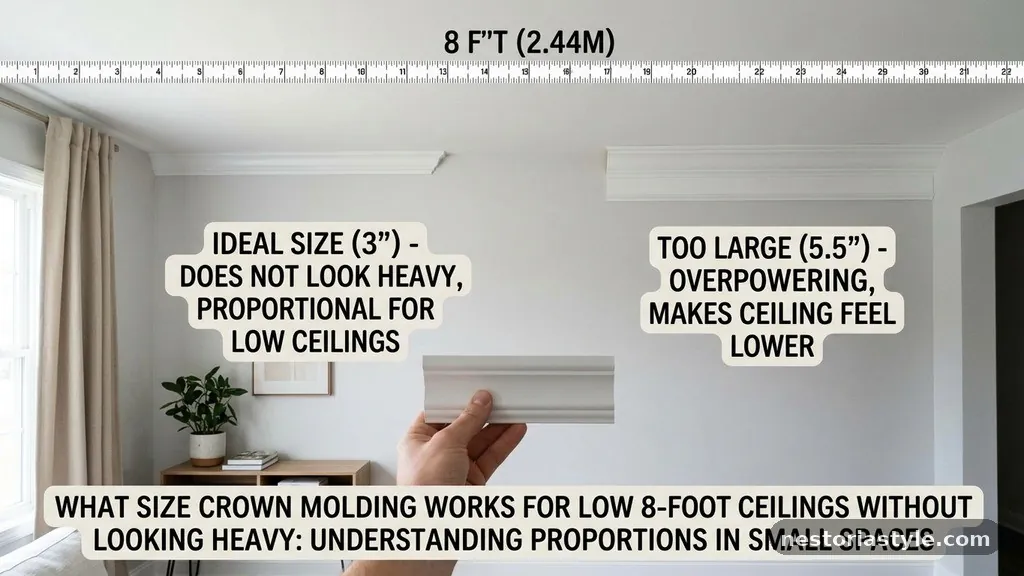
Finding the ideal size crown molding works on low 8-foot ceilings without looking heavy when you stick to a width of 2.5 to 4 inches. Anything larger than 5 inches tends to draw too much attention to the low ceiling, making the room feel compressed. For an 8-foot ceiling, a 3-inch profile is often the “sweet spot” that provides enough architectural interest without sacrificing vertical space.
If your room is small, err on the side of a thinner, simpler profile to maintain balance. Larger, more ornate designs are generally better reserved for 9-foot or 10-foot ceilings where they have the room to breathe.
Understanding Proportions in Small Spaces
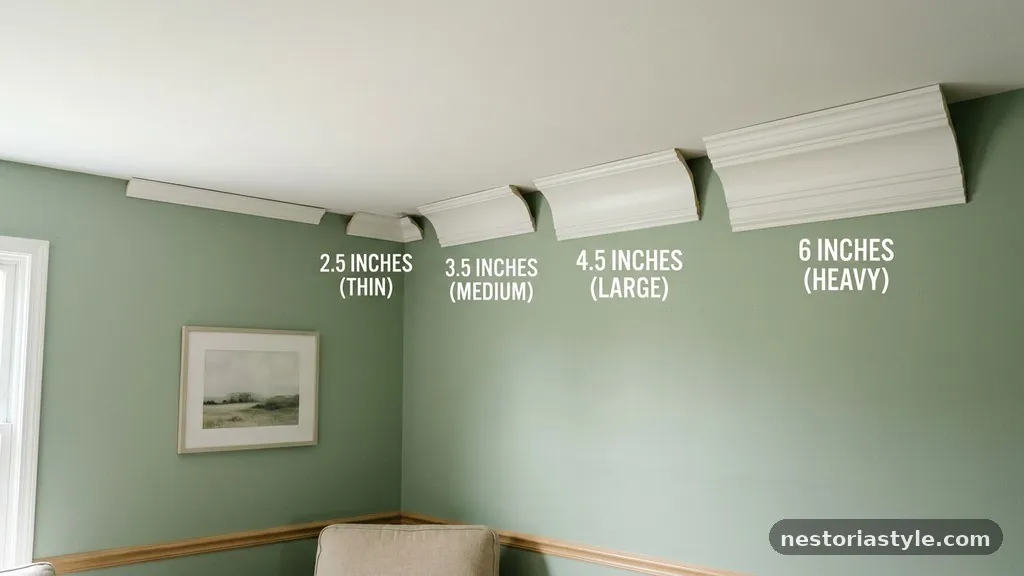
The visual impact of molding depends entirely on the ratio of the trim size to the ceiling height. When you install a large, heavy molding in a room with an 8-foot ceiling, you effectively lower the visual ceiling height.
This creates a psychological sense of confinement that even light paint colors struggle to offset. To avoid this, keep the molding width in proportion to your baseboard height and the overall volume of the room.
If your baseboards are also quite tall, you might be tempted to match them with equally substantial crown molding. However, in an 8-foot room, it is often better to keep the crown slightly smaller than the baseboard.
This creates a visual foundation that grounds the room, preventing the top of the walls from feeling top-heavy. Remember that the goal is to enhance the wall-to-ceiling transition, not to make the trim the focal point of the interior design.
Selecting the Right Molding Profile
The shape of the trim profile is just as critical as its physical width. Avoid heavy, complex profiles that feature multiple deep shadows, as these can make the molding appear much thicker than it actually is.
Instead, look for designs with simple geometry and clean, sweeping curves. A profile that hugs the ceiling more than it pushes down onto the wall will help maintain the feeling of height.
Popular Profiles for Lower Ceilings
- Colonial Profile: Features a classic, gentle S-curve that adds elegance without being overly busy.
- Cove Molding: A concave shape that provides a soft, subtle transition between the wall and the ceiling.
- Stepped or Flat-Back Profiles: These offer a modern, clean look that minimizes visual clutter and maintains a sharp edge.
- Small Dentil Patterns: If you must use detail, ensure the teeth are small and tightly spaced to prevent a heavy look.
When choosing your material, consider the weight and ease of installation. Polyurethane is an excellent choice for DIY projects because it is lightweight and comes in a vast array of precise, consistent profiles. Wood molding is traditional and beautiful, but it can be heavier and harder to cut, especially when you are working with complex mitre joints.
The Role of Color in Visual Height
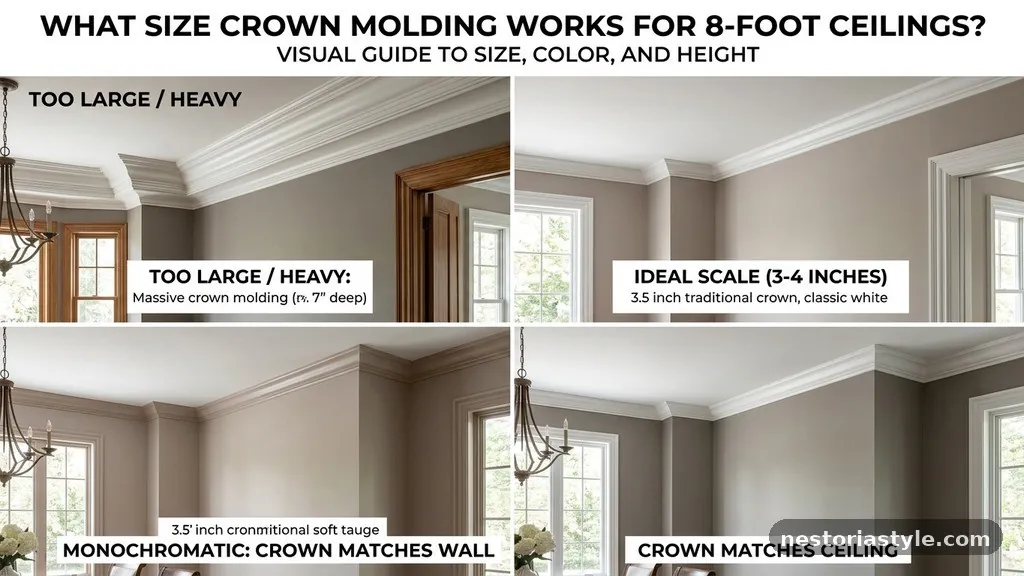
Color is your most powerful tool for manipulating how a room feels. If you want to make the molding disappear into the ceiling, paint the trim the exact same color as the ceiling itself.
This technique extends the ceiling plane all the way to the top of the wall, which can make the room feel significantly taller. If you prefer a more defined look, consider painting the trim a slightly lighter shade than the wall color.
Contrast between the wall and the ceiling can actually highlight the ceiling height, but you must be careful. If the wall is dark and the molding is bright white, you create a distinct horizontal line that draws the eye directly to the ceiling.
In a low-ceiling room, this line acts as a “cap” on the space. By keeping the color palette cohesive, you soften the transition and prevent the boxed-in effect.
Comparing Molding Sizes for 8-Foot Ceilings
To visualize how different sizes affect your space, consider the following data. While personal preference matters, these general rules of thumb help maintain the intended architectural interest without overwhelming the room.
| Molding Width | Visual Impact on 8′ Ceiling | Recommended Use |
|---|---|---|
| 2.0 – 2.5 inches | Minimal, subtle | Tiny rooms, bathrooms, hallways |
| 3.0 – 3.5 inches | Balanced, classic | Living rooms, bedrooms, kitchens |
| 4.0 – 4.5 inches | Noticeable, bold | Large open-concept areas only |
| 5.0+ inches | Heavy, constricting | Avoid in rooms under 9 feet |
These figures represent standard industry recommendations for residential trim carpentry. Always hold a sample of the molding up to the ceiling corner before committing to a full installation. Sometimes, a profile that looks small on the floor looks much larger once it is mounted 8 feet in the air.
Material Considerations for Installation
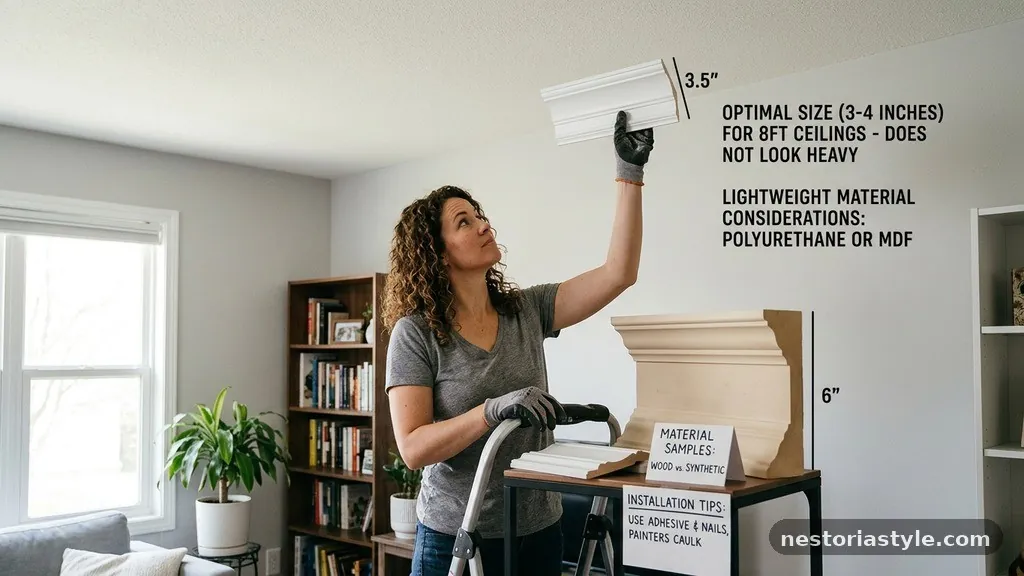
Choosing between wood and synthetic materials changes how the finished product interacts with the room. Wood molding offers a high-end feel and can be stained to show off natural grain, which adds texture and warmth.
However, wood is prone to movement with temperature changes, which can lead to cracks at the mitre joints over time. If you live in an area with high humidity, these gaps can become more apparent.
Polyurethane, on the other hand, is dimensionally stable and resists moisture, making it ideal for bathrooms or kitchens. Because it is manufactured in molds, the details are crisp and uniform, which is helpful if you are doing the installation yourself.
Many modern versions of this material are designed to mimic the look of traditional plaster at a fraction of the cost. Ultimately, the material should serve your maintenance preferences as much as your aesthetic goals.
Avoiding the Boxed-In Effect
The boxed-in effect occurs when the crown molding creates a harsh, dark frame around the top of the room. To avoid this, ensure the profile doesn’t have deep, recessed areas that trap shadow.
Light reflects differently off of matte, satin, and semi-gloss finishes. Using a satin or semi-gloss finish on your trim can help reflect light, which makes the molding feel less “solid” and heavy.
Another strategy is to avoid running the molding around every single obstruction, such as built-in shelves or tall cabinets. If the trim has to wrap around a cabinet that is already close to the ceiling, it creates a cluttered appearance.
In these cases, it is often better to terminate the molding at the cabinet or use a smaller, flatter piece of trim to bridge the gap. Simplicity is almost always the best path for maintaining an open, airy atmosphere.
Techniques for Professional Installation
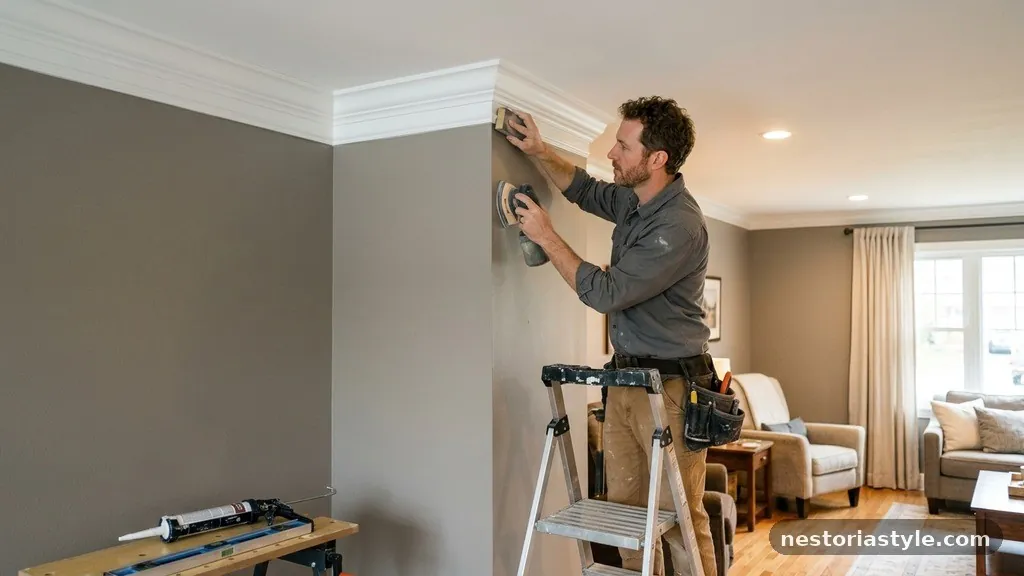
Even the most beautiful molding will look cheap if the installation is sloppy. Proper mitre joints are essential for a clean look, especially when you are using a smaller, more delicate profile.
If your corners are not perfectly flush, the gaps will draw the eye and highlight the imperfection. Use a high-quality wood filler or caulk to bridge these gaps before painting, ensuring a seamless wall-to-ceiling transition.
Before you begin, use a stud finder to locate the wall studs and ceiling joists. You will need a solid surface to nail the molding into, as gravity will pull on it over time.
If you cannot find enough studs, use a construction-grade adhesive to supplement the nails. This ensures the molding stays tight against the wall, preventing the “sag” that can make even the most expensive trim look poorly installed.
Integrating Modern Trim Trends
Modern interior design often favors a “less is more” approach, which is perfect for 8-foot ceilings. You don’t need heavy, colonial-style crown molding to add value and character to your home.
Many homeowners are opting for simple, flat-stock trim that provides a clean, architectural line without the bulk of traditional curves. This style works exceptionally well in contemporary or minimalist homes.
Another growing trend is the use of “shadow gap” or recessed molding. This involves leaving a small gap between the ceiling and the top of the wall, creating a floating effect.
While this is more common in high-end, custom-built homes, it is a fantastic way to handle the ceiling transition without adding any “weight” at all. For more information on architectural standards, you can consult resources like the National Park Service’s guidelines on architectural character to see how trim has evolved historically.
Strategies for Visual Height

If your primary goal is to make the room feel taller, focus on your wall treatments. Vertical elements, such as floor-to-ceiling curtains or tall, thin artwork, draw the eye up.
When paired with a modest 3-inch crown molding, these elements create a sense of verticality that distracts from the actual ceiling height. You can also use tall baseboards to balance the room, as this creates a “frame” that stretches the wall surface.
Avoid using dark colors on the ceiling, as this visually pulls the ceiling toward the floor. A crisp, clean white or a very pale version of your wall color is the safest choice for keeping the space feeling expansive.
If you have crown molding, ensure it is painted the same color as the ceiling so it does not “cut” the wall short. This creates a continuous plane of color that tricks the eye into seeing more space.
Frequently Asked Questions
Are 8-foot ceilings too low for crown molding?
No, 8-foot ceilings are not too low for crown molding, provided you choose the right size and profile. The key is to avoid oversized, heavy trim that dominates the wall space. A 2.5 to 3-inch profile is usually the perfect size to add architectural interest without sacrificing height.
Does crown molding make a room look smaller?
Crown molding can make a room look smaller if it is too large or if it contrasts sharply with the wall and ceiling colors. When the molding is proportional to the ceiling height and painted to blend in, it actually adds a sense of finished, intentional space that can make a room feel more sophisticated and structured.
Should crown molding be the same color as the ceiling?
Painting crown molding the same color as the ceiling is a classic design trick to maximize vertical space. It makes the molding feel like a natural extension of the ceiling, which prevents the “capping” effect that can occur when trim is painted a different, contrasting color. However, if you have very high-quality wood trim, you might prefer to stain it to highlight the material.
Can I use crown molding in a small bathroom?
Yes, but you should choose a very simple, small profile and a moisture-resistant material like polyurethane. In a small, humid space, you want to avoid complex details that are difficult to clean. A simple 2-inch cove molding is often enough to add a touch of luxury to a bathroom without making it feel cramped.
Choosing the Right Fit for Your Home
The decision to add architectural detail should always be balanced against the reality of your floor plan. While crown molding is a desirable feature that can increase home value, it must be applied with restraint in rooms with 8-foot ceilings.
By focusing on smaller, simpler profiles and using color to minimize the visual impact of the trim, you can enjoy the benefits of a finished look without the boxed-in effect. Remember that the best design choices are those that feel natural and proportional to the existing structure.
Start by measuring your space and testing a small sample of the molding in the corner of your room. Observe how the light hits the profile at different times of the day to ensure it doesn’t create heavy shadows.
With the right size crown molding works on low 8-foot ceilings without looking heavy, you can transform a standard room into a refined, custom-feeling space. Take your time with the installation, prioritize clean lines, and enjoy the subtle upgrade to your home’s character.