
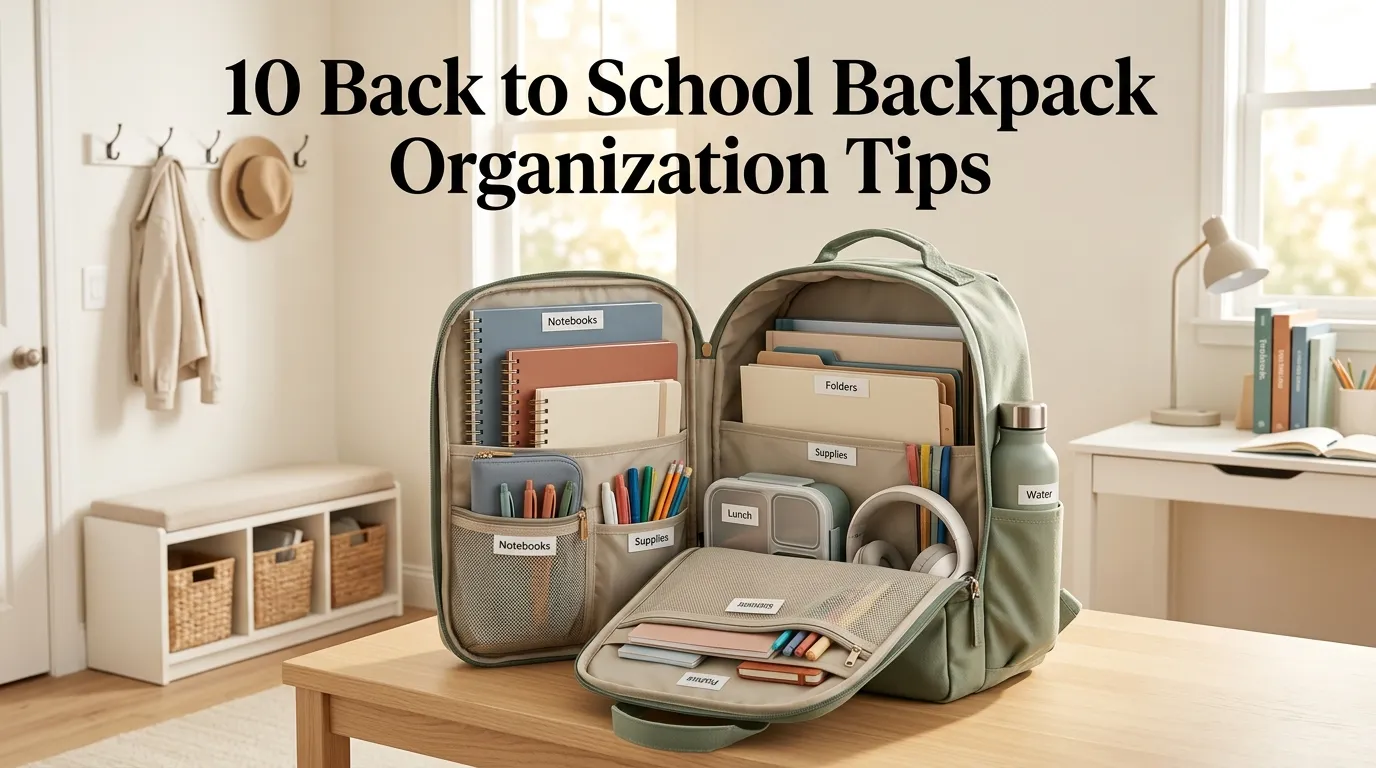
10 Back to School Backpack Organization Tips
A new school year often begins with the best intentions: a clean backpack, neatly arranged supplies, and a plan to keep everything in its place. Then a few weeks pass, worksheets get folded into random pockets, pencils disappear beneath books, and the bottom of the backpack somehow becomes a collection of crumbs, wrappers, and forgotten supplies.
A well-organized backpack can make school mornings feel noticeably easier. Students can find what they need faster, avoid carrying unnecessary weight, and develop simple habits that keep their school supplies manageable throughout the year. The goal isn’t to create a perfectly arranged bag every single day. It’s to make organization simple enough that it can actually be maintained.
The best backpack systems are also realistic. Kids and teens need organization methods they can remember without turning packing up into another complicated assignment. A few clearly defined pockets, lightweight pouches, color coding, and a short weekly reset can go a long way.
Whether you’re preparing an elementary school student for the first day, helping a middle schooler manage multiple classes, or trying to make a high school student’s backpack less chaotic, these ideas can be adapted to different ages and schedules.
Think of the backpack as a small mobile workspace. Every item should have a logical home, frequently used supplies should remain easy to reach, and anything that doesn’t belong there should leave regularly.
Here are 10 practical back-to-school backpack organization tips that make everyday school routines simpler while keeping the bag neat, functional, and ready for whatever the school day brings.
Table of Contents
1. Sort Everything First
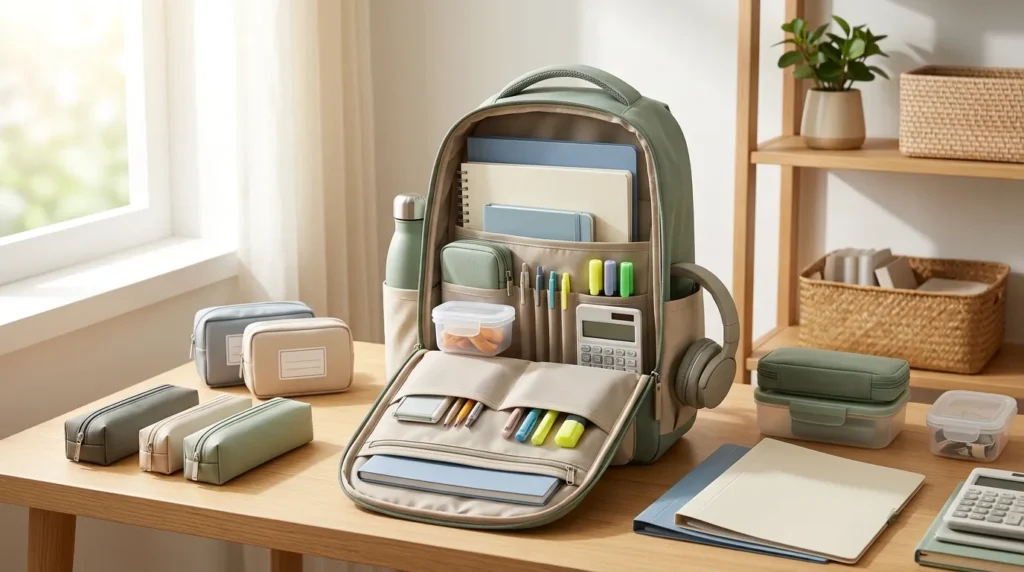
Start the school year with a complete inventory so unnecessary items don’t take up valuable backpack space.
2. Assign Every Pocket
Give each compartment a specific purpose so students know exactly where belongings belong.
3. Create Supply Pouches
Group small school supplies together so pencils, chargers, and personal items don’t get lost.
4. Use Color Coding
Assign colors to classes or categories to make supplies easier to identify.
5. Pack By Priority
Place everyday essentials where they are easy to reach while keeping occasional items separate.
6. Manage Paperwork
Create a simple system for keeping important papers flat, organized, and easy to find.
7. Keep Tech Protected
Store electronics and accessories safely to reduce damage and tangled cords.
8. Limit Extra Items
Remove unnecessary belongings so the backpack stays lighter and easier to manage.
9. Add A Weekly Reset
Use a short weekly routine to clear trash, organize supplies, and prepare for the week ahead.
10. Build Daily Habits
Make organization automatic by creating simple routines students can repeat every school day.
1. Sort Everything First
Quick Benefits
- Removes unnecessary clutter
- Creates a clean starting point
- Makes supplies easier to evaluate
- Reduces backpack weight
- Prevents duplicate items
Why It Works
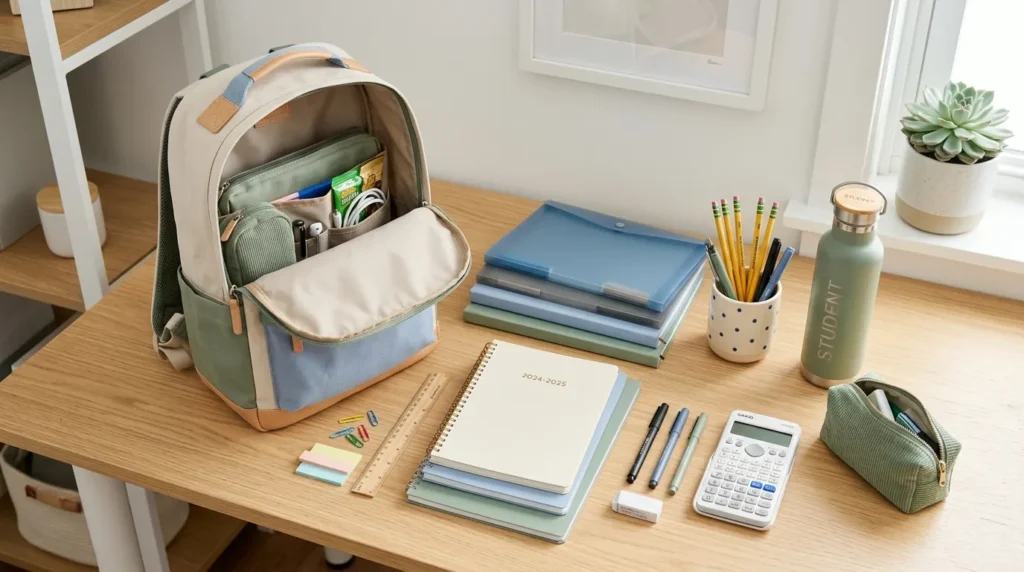
The easiest way to organize a backpack is to avoid putting unnecessary things inside it in the first place. Before packing for a new school year, take everything out and spread the supplies across a table or another open surface.
Create simple categories such as school supplies, technology, paperwork, personal items, snacks, and items that don’t belong in the backpack.
This is also a good time to check whether students are carrying multiple pens, broken pencils, old worksheets, dried-out markers, or forgotten items from the previous school year.
If you’re helping a younger student, make the sorting process visual and straightforward. Older students can usually handle a more detailed inventory themselves.
The goal is not minimalism for its own sake. It is making sure every item serves a purpose.
How To Style It
Start with an empty backpack and clean the inside using the care instructions provided by the manufacturer. Shake out crumbs and inspect the lining for stains or damage.
Lay supplies on a table and create several small groups. Keep only what the student’s current schedule requires.
Check the number of notebooks, folders, writing tools, calculators, chargers, and personal items. If certain supplies are school-specific, wait until you have the class supply list before adding them.
For younger students, use a small basket to hold approved school supplies. For teens, a simple checklist can make the process faster.
Once everything is sorted, pack only the items that genuinely belong in the backpack.
2. Assign Every Pocket
Quick Benefits
- Makes items easier to locate
- Reduces digging through the bag
- Creates consistent organization
- Helps students pack faster
- Prevents random clutter
Why It Works
Backpacks often contain several compartments, but having multiple pockets doesn’t automatically create organization. Each pocket needs a clear purpose.
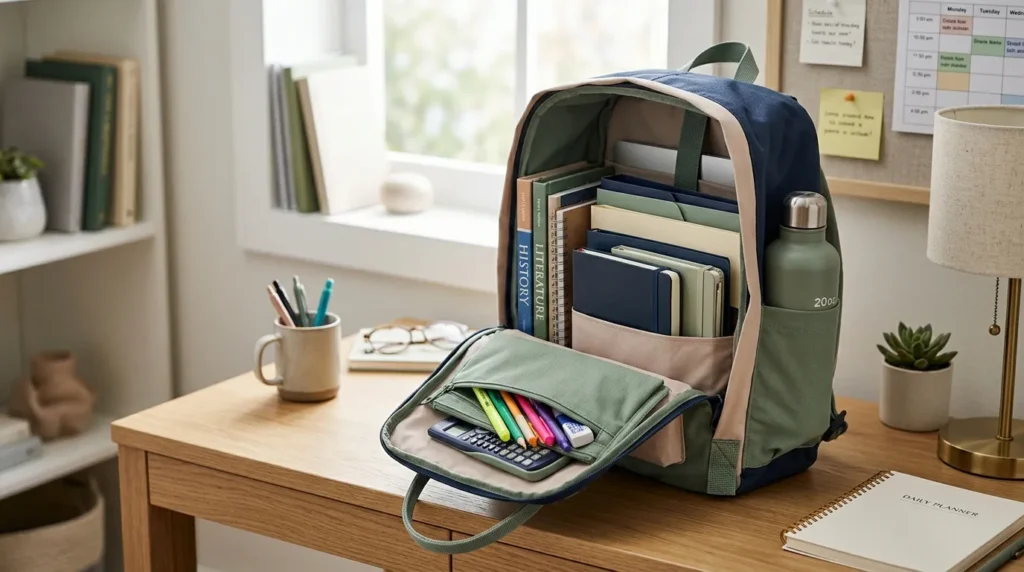
For example, the largest compartment can hold books and notebooks, a medium section can hold folders, and smaller pockets can hold pencils, technology accessories, or personal items.
When each category has a designated location, students don’t have to remember where they randomly placed something. They simply return it to its assigned pocket.
This is particularly helpful during busy school mornings when searching for a missing pencil or assignment can create unnecessary stress.
How To Style It
Before filling the backpack, open every compartment and decide what belongs there.
You might use:
- Main compartment: textbooks and notebooks
- Middle compartment: folders and worksheets
- Small front pocket: pencils and small supplies
- Side pocket: water bottle
- Interior zip pocket: headphones or small personal items
Adapt the system to the backpack rather than forcing a complicated arrangement.
Avoid placing heavy objects in tiny pockets simply because they fit. Keep heavier books and electronics positioned close to the student’s back where the backpack design allows.
Once the system is established, use the same arrangement every day.
3. Create Supply Pouches
Quick Benefits
- Keeps small items together
- Prevents pencils from disappearing
- Makes supplies portable
- Reduces pocket clutter
- Simplifies classroom changes
Why It Works
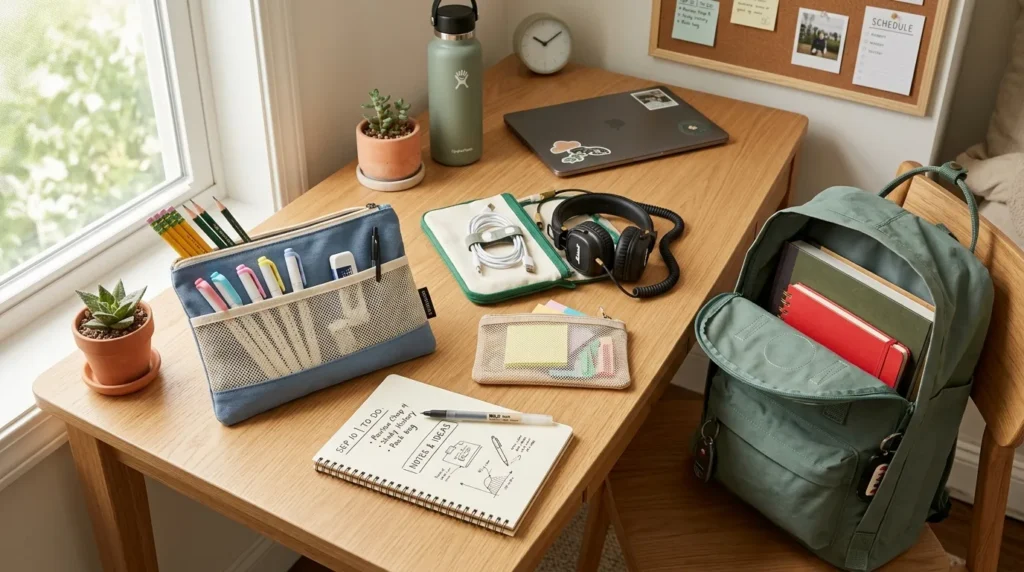
Small supplies are responsible for a surprising amount of backpack chaos. Pencils, erasers, highlighters, earbuds, charging cables, and other little objects can quickly spread throughout multiple compartments.
A few lightweight pouches can solve this problem by grouping similar items together.
For example, one pencil pouch can contain everyday writing supplies, while another small pouch can hold technology accessories. Students can remove the pouch they need without unpacking the entire backpack.
This system is particularly useful for students who move between classrooms throughout the day.
How To Style It
Choose soft, lightweight pouches that fit comfortably inside the backpack. Avoid adding bulky containers that take up more space than the supplies themselves.
A simple setup might include:
- Writing pouch
- Technology pouch
- Personal-care pouch
- Art or specialty-supply pouch
Don’t create a pouch for every tiny category. Too many containers can make organization more complicated.
Clear or mesh pouches can help students see what is inside, while durable fabric pouches can be easier to maintain.
Label pouches for younger students if necessary.
4. Use Color Coding
Quick Benefits
- Makes class supplies easier to identify
- Speeds up packing
- Helps younger students build routines
- Creates visual consistency
- Simplifies paper organization
Why It Works
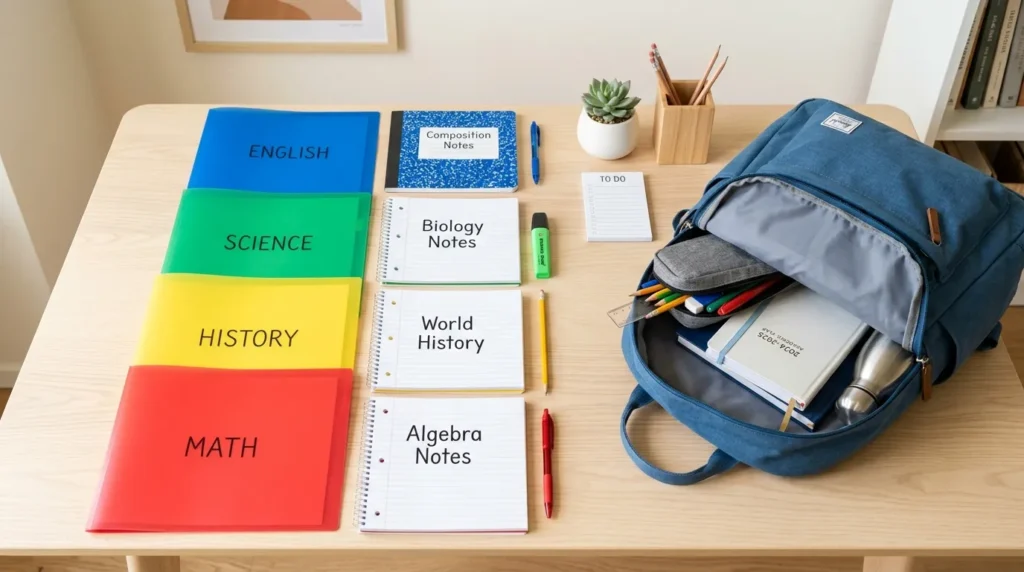
Color coding gives students a visual shortcut. Instead of reading every label, they can recognize a color and immediately know which subject or category they are looking for.
For example, math might use blue, science green, English yellow, and social studies red. The exact colors don’t matter as long as the system stays consistent.
You can use the same color across notebooks, folders, labels, and digital files when appropriate.
This is especially helpful during the first few weeks of school when students are still learning their schedules.
How To Style It
Choose a limited color palette that the student enjoys and can remember.
Assign one color to each major subject and use matching folders or notebook covers. Small colored labels can be added to supplies without purchasing entirely new products.
For younger students, bright colors may be easiest to distinguish. Older students may prefer muted or neutral shades.
Keep the system simple. If there are too many classes or categories, use color coding only for the most frequently used materials.
5. Pack By Priority
Quick Benefits
- Keeps everyday supplies accessible
- Reduces unnecessary unpacking
- Makes mornings faster
- Improves weight distribution
- Helps students prepare for class
Why It Works
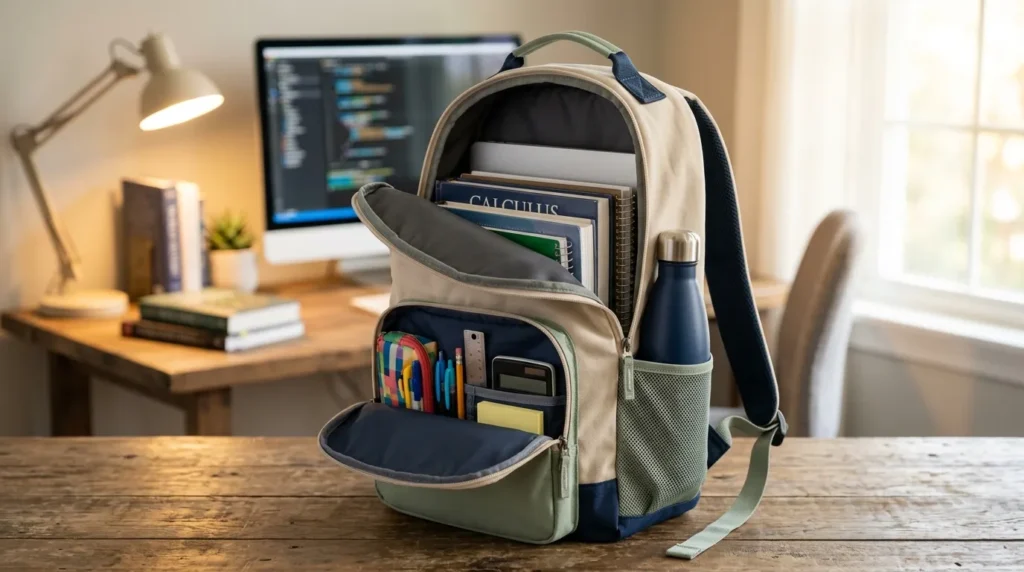
Not everything inside a backpack needs to be equally accessible. Items used several times each day should be easier to reach than supplies used once a week.
Think about the student’s actual school routine. Which books are needed every day? Which folders are used constantly? Which supplies can stay in a smaller pocket?
Packing according to priority creates a more functional backpack.
It also helps prevent the common habit of placing everything in the main compartment, where small items eventually become buried beneath heavier books.
How To Style It
Place frequently used notebooks and folders in the easiest-to-access compartment.
Keep heavier books positioned close to the student’s back where the backpack’s design allows. Avoid letting loose items sit at the very bottom if they need to be accessed frequently.
Use smaller pockets for lightweight items such as pencils, tissues, or headphones.
At the end of the school day, repack according to the next day’s schedule instead of automatically carrying every book home.
If a school provides a locker or classroom storage, use it appropriately to avoid carrying unnecessary materials.
6. Manage Paperwork
Quick Benefits
- Prevents papers from becoming crumpled
- Makes homework easier to find
- Keeps important notices separate
- Reduces loose-paper clutter
- Creates a simple filing system
Why It Works
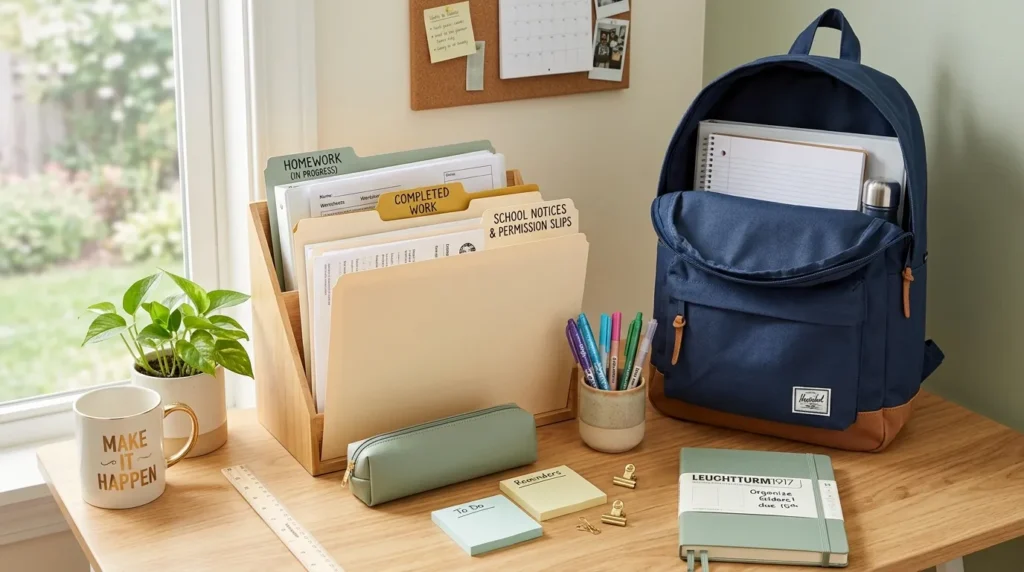
Loose papers can quickly turn an organized backpack into a messy one. Worksheets, permission slips, homework assignments, and school notices often end up folded into random compartments.
A folder system provides a clear solution.
Consider creating separate spaces for completed work, homework to complete, and papers that need to be taken home or returned to school.
Students should also develop a habit of removing papers that no longer belong in the backpack.
How To Style It
Use durable folders that fit comfortably inside the backpack.
For younger students, labeled folders such as “Homework,” “Bring Home,” and “Return to School” can make the system intuitive.
Older students may prefer subject-specific folders or an accordion file if their school workload requires more paper storage.
Avoid stuffing papers into the main backpack compartment. Flat folders protect important documents and make them much easier to locate.
At the end of the week, remove outdated worksheets and archive anything that needs to be kept at home.
7. Keep Tech Protected
Quick Benefits
- Reduces damage risk
- Prevents tangled cables
- Keeps accessories together
- Makes charging easier
- Protects valuable school equipment
Why It Works
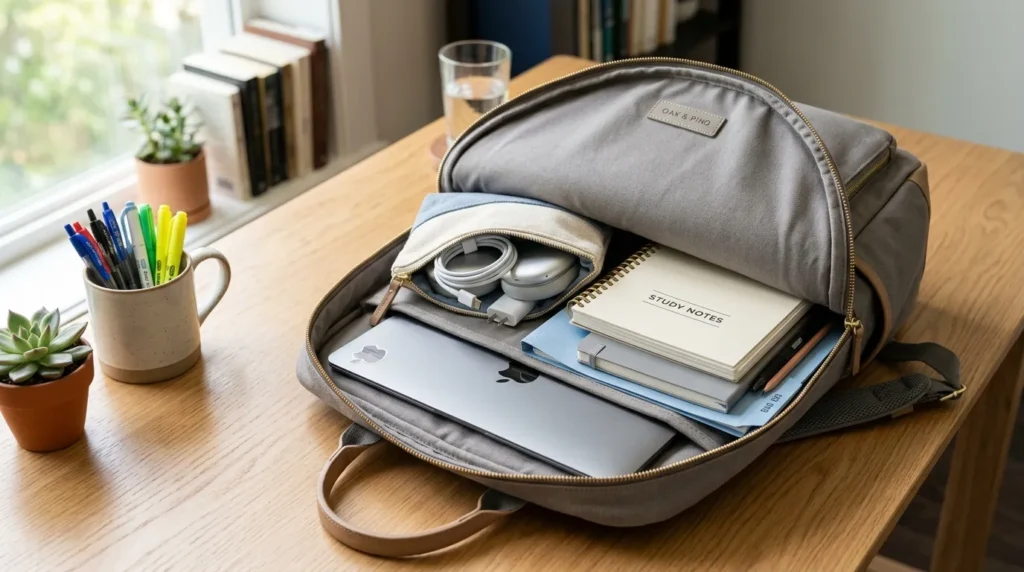
Many students now carry laptops, tablets, calculators, headphones, or charging cables. These items require a little more organization because they can be damaged when mixed loosely with books and supplies.
Technology should have a dedicated padded area whenever the backpack provides one.
Cables also need a home. If chargers are allowed to float freely inside the main compartment, they can become tangled around notebooks or other objects.
How To Style It
Use the backpack’s padded laptop or tablet compartment for larger electronics. Make sure the device fits securely rather than forcing it into an overfilled section.
Place charging cables and small accessories in a compact pouch.
Avoid placing water bottles next to electronics unless the backpack has a separate, secure compartment designed for them.
Students should also check whether their school requires certain technology items to remain at home rather than carrying them back and forth every day.
8. Limit Extra Items
Quick Benefits
- Keeps the backpack lighter
- Creates more usable space
- Reduces clutter
- Makes organization easier
- Helps protect important supplies
Why It Works
A backpack can be beautifully organized and still be overloaded. The key is periodically asking whether each item actually needs to travel between home and school.
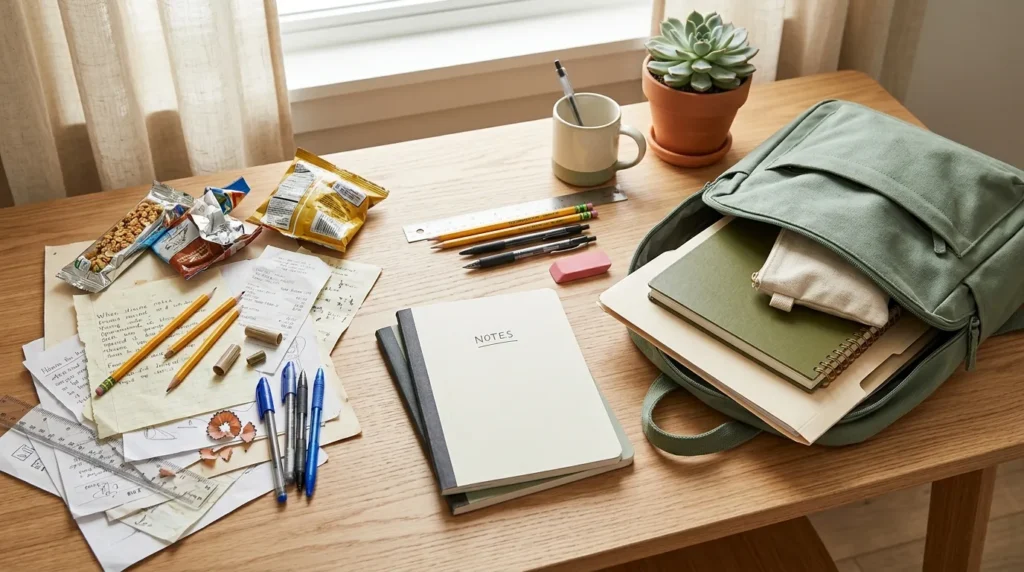
Old snacks, extra notebooks, toys, sports equipment, receipts, empty containers, and random personal belongings can gradually accumulate.
A weekly decluttering routine is one of the simplest ways to prevent this.
For younger students, check the backpack together. For teenagers, give them responsibility for identifying what can stay at home.
How To Style It
Create three categories during a weekly cleanout:
Keep: Items needed for school.
Remove: Trash, old papers, wrappers, and objects that don’t belong.
Store: Items needed occasionally but not every day.
Keep the process quick. Five to ten minutes can be enough for a routine reset.
Avoid turning the backpack into a storage system for every extracurricular activity. If sports gear, art supplies, or other equipment has a separate place at home, keep it there until needed.
9. Add A Weekly Reset
Quick Benefits
- Prevents clutter from accumulating
- Creates a predictable routine
- Keeps supplies stocked
- Makes Monday mornings easier
- Encourages responsibility
Why It Works
Even the best organization system will eventually become messy. That’s normal. The solution isn’t creating a more complicated system; it’s scheduling a short reset before clutter becomes overwhelming.
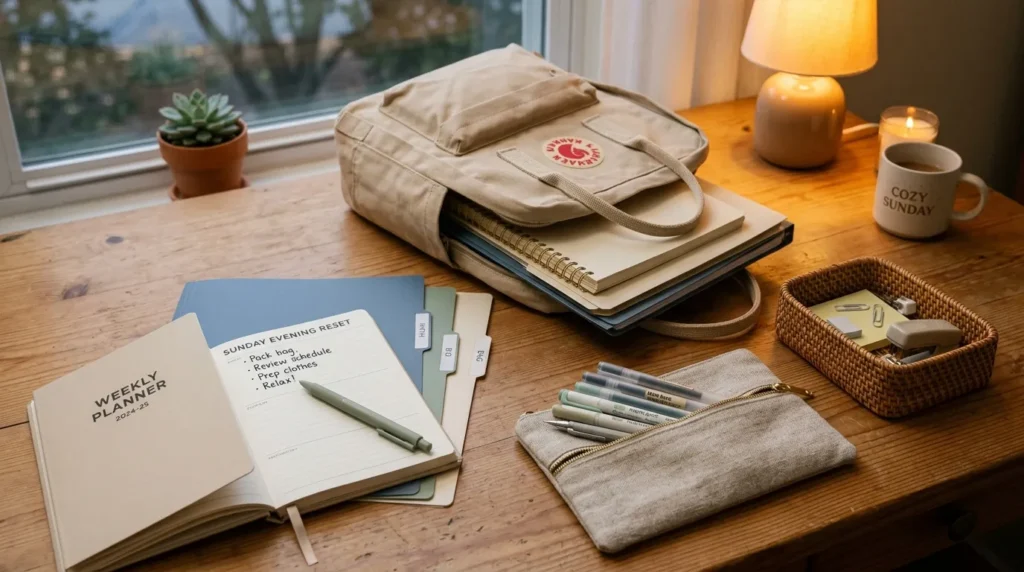
Friday afternoon or Sunday evening can work well. Empty the backpack, remove trash, sort paperwork, check supplies, and prepare materials for the upcoming week.
A weekly reset also gives students an opportunity to notice what they are running out of before they discover the problem during class.
How To Style It
Create a five-to-ten-minute routine:
- Empty the backpack.
- Throw away trash.
- Remove old papers.
- Check pencil and supply pouches.
- Review the upcoming schedule.
- Pack the materials needed for the next school day.
You can keep a small supply basket at home with replacement pencils, erasers, paper, and other commonly used items.
For younger children, make the reset part of the Sunday evening routine. Older students can handle it independently once the process becomes familiar.
10. Build Daily Habits
Quick Benefits
- Makes organization automatic
- Reduces morning stress
- Prevents clutter
- Builds independence
- Keeps the system sustainable
Why It Works
The most effective organization system is one that doesn’t require constant effort. A student shouldn’t have to perform a full backpack makeover every morning.
Small habits are easier to maintain. Put supplies back in their assigned pocket after use. Remove trash before leaving school. Take unnecessary books out at home. Return homework to the correct folder.
These actions take seconds, but they prevent the accumulation of clutter that eventually requires a major cleanout.
The goal is consistency rather than perfection.
How To Style It
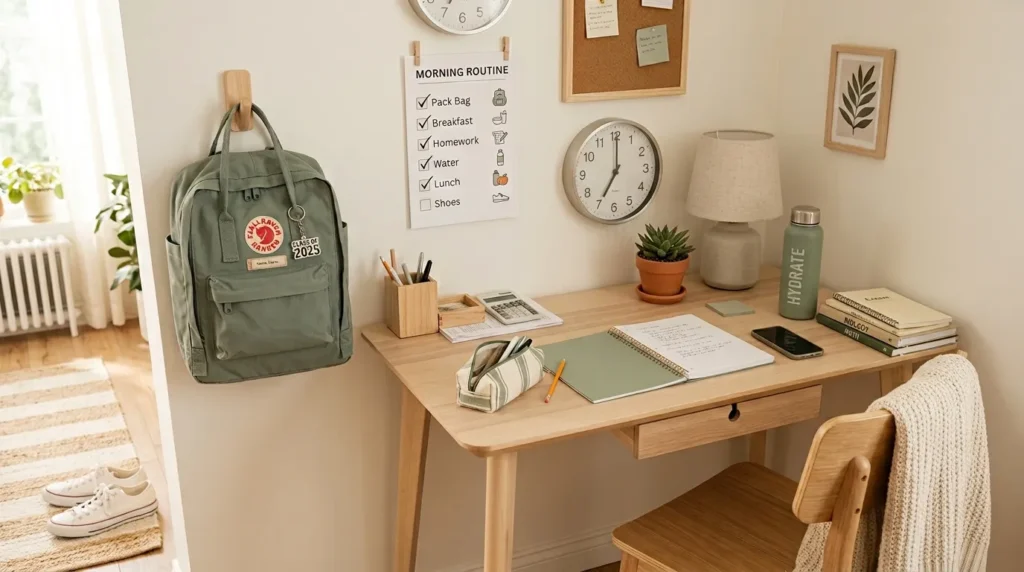
Create a simple end-of-day routine that students can follow:
Before leaving school: Check the desk, collect assignments, and remove trash.
When arriving home: Take lunch containers and personal items out of the backpack.
Before bedtime: Check tomorrow’s schedule and pack only what is needed.
Before leaving in the morning: Confirm homework, water bottle, and essential supplies.
Post the routine near the student’s study area if helpful.
For younger children, a visual checklist can make the process easier. Older students may prefer using their school calendar or phone reminders.
Frequently Asked Questions
How do I organize my child’s backpack for school?
Start by emptying the backpack and removing trash, old papers, and unnecessary items. Assign each compartment a purpose, then group small supplies into pouches. Keep books and notebooks in the main section, paperwork in folders, and technology in padded compartments. A short weekly reset can keep the system manageable throughout the school year.
What should go in the main compartment of a backpack?
The main compartment is generally best for larger, heavier items such as textbooks, notebooks, folders, and binders. Place heavier objects close to the student’s back when the backpack design allows. Smaller supplies can go into front or interior pockets so they don’t become buried beneath books.
How can I keep school papers from getting lost?
Use folders with clearly defined purposes or subject labels. Students can have separate spaces for homework, completed work, and papers that need to be returned. Encourage them to remove old papers regularly. Color coding folders by subject can also make paperwork much easier to identify quickly.
How do I keep a backpack from getting messy?
Give every category of item a specific home and make returning items part of the daily routine. Remove trash and unnecessary papers regularly, keep small supplies in pouches, and perform a five-to-ten-minute weekly reset. The simpler the system, the easier it is for a student to maintain independently.
How often should a school backpack be cleaned?
A quick inspection once a week is useful for removing trash, crumbs, old papers, and unnecessary items. The backpack itself can be cleaned according to the manufacturer’s care instructions whenever it becomes visibly dirty or develops odors. Avoid washing or soaking a backpack unless the care label specifically allows it.
How can I organize a backpack for multiple classes?
Color coding can be especially helpful. Assign each class a color and use matching folders, notebooks, or labels. Keep frequently used materials in accessible sections and group small supplies into pouches. At the end of each day, check the next day’s schedule and pack only the materials required.
How can students keep their backpacks lighter?
Remove items that aren’t needed for the next school day. Use lockers or classroom storage when available and permitted. Avoid carrying duplicate supplies, old papers, extra books, and personal items unnecessarily. Review the backpack weekly and use the student’s schedule to decide what needs to travel between home and school.
Conclusion
A well-organized backpack doesn’t have to look perfect every morning. It simply needs to make the student’s day easier.
The most useful systems are built around simple decisions: every pocket has a purpose, small supplies stay together, papers have a designated home, technology is protected, and unnecessary items leave the backpack regularly.
Start by emptying everything out and creating a clean slate. Then build an organization system around the student’s actual schedule rather than trying to fill every pocket just because the space is available.
Color coding, supply pouches, folders, and priority packing can make a noticeable difference, but the most important piece is the daily habit of putting things back where they belong.
A five-minute reset at the end of the week can prevent small messes from becoming overwhelming. Over time, students can take more ownership of the process and learn organization skills that extend well beyond their backpack.
Whether you’re preparing for the first day of school or trying to rescue a backpack that has already become chaotic, start small. Choose two or three changes, make them easy to repeat, and build from there.
Related Articles
- 10 Back to School Organization Ideas for a Smooth School Year
- 15 Small Study Space Organization Ideas
- How to Organize a Homework Station at Home
- 10 Easy School Morning Routine Ideas
- Back to School Desk Organization Ideas for Kids